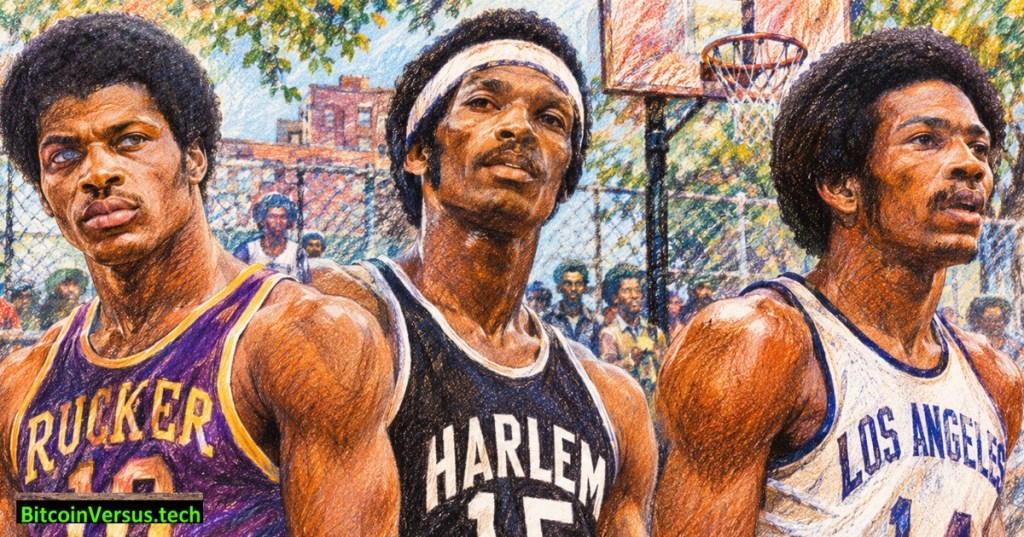
NBA POLITICS | Historical Countdown — Some of basketball’s greatest playground players never appeared in an NBA regular-season game. The most persuasive cases are not based on extravagant Rucker Park scoring legends alone. Three men earned actual NBA draft selections, and each had a documented record beyond an afternoon of pickup basketball. Ranking their chances requires separating contemporary professional evaluations from anecdotes repeated decades later.
The criteria are straightforward: verified draft recognition, performance against organized or high-level competition, a plausible NBA skill set and evidence explaining why no league career followed. None can be proved a future NBA star, but all three were genuine NBA candidates. For modern context, see our seven established players currently outside the NBA.
No. 3 — Richard “Pee Wee” Kirkland: Twice Drafted by Chicago
Richard “Pee Wee” Kirkland developed his reputation at Harlem’s Rucker Park, but his strongest basketball credential came from Norfolk State. Playing alongside future NBA champion Bob Dandridge, he helped lead the Spartans to the 1968 CIAA championship and received the tournament’s most valuable player award. Norfolk State University confirmed those accomplishments when Norfolk honored him in 2023. Chicago selected Kirkland in the 20th round, No. 212 overall, of the 1968 NBA Draft and returned to select him in the 13th round, No. 172 overall, in 1969, according to Basketball-Reference’s draft register. Those late-round selections represented genuine interest, although not the security of a modern first-round contract.
VICE Sports documentary interview about Kirkland’s basketball career, decisions and later community work; archival documentary, not a contemporary game highlight Watch the source on YouTube.
Kirkland’s strongest tools were speed, improvisational handling, confidence and offensive creativity. NBA veterans including Julius Erving and Nate Archibald later praised his offense, but testimonials cannot substitute for NBA performance data. He did not complete an NBA regular season; accounts differ in emphasis between his choices, camp circumstances and his separate involvement in criminal activity. A Fresh Air interview allows readers to hear Kirkland’s own description of the era. A fair NBA comparison is a high-tempo ballhandler in the broad stylistic family of Tiny Archibald, not a claim he would have matched Archibald’s NBA impact.

No. 2 — Joe “The Destroyer” Hammond: The Lakers’ Hardship Selection
Joe Hammond built his reputation on the Harlem courts against renowned opponents, including Julius Erving. The New York City Basketball Hall of Fame, which inducted Hammond in 2024, reports that he competed professionally for the Allentown Jets and Garden State Colonials and won an Eastern league championship with Allentown. The Lakers then selected him fifth in the 1971 supplemental hardship draft, a special selection process separate from the ordinary NBA Draft. Records from RealGM confirm his draft position. Unlike many streetball legends, Hammond had both organized professional experience and tangible NBA interest.
NBABrothers’ 2015 on-camera interview with Joe Hammond during a Rucker Park legends event; firsthand testimony, not archival 1970s gameplay Watch the source on YouTube.
Hammond’s strongest case was tough-shot scoring, range and the ability to create offense without a structured system. Stories credit him with a 50-point half against Erving at Rucker Park, but the surviving record is a historical account rather than a modern verified box score. Basketball scout accounts and the Lakers’ interest support the broader conclusion that his offense warranted serious evaluation. Hammond reportedly declined the Lakers’ opportunity for personal reasons; he also declined an ABA contract, according to the Hall of Fame. His professional future is therefore a story of opportunity and individual choice, not evidence that executives uniformly rejected his ability. The closest illustrative NBA style is Earl Monroe’s improvisational scoring, while their eventual professional achievements remain incomparable.

No. 1 — Raymond Lewis: The NBA’s Most Compelling What-If
Raymond Lewis had the strongest verifiable case. A prodigious scorer from Watts, he led Verbum Dei to three consecutive California high-school championships and later starred at Cal State Los Angeles. Contemporary accounts document a 73-point college game and an extraordinarily high freshman scoring average. Philadelphia selected him 18th overall in the first round of the 1973 NBA Draft, a fact also recorded in the 76ers’ transaction history. Lewis was not merely a playground celebrity admired by friends; an NBA club spent a first-round pick on him.
Official trailer from the producers of Raymond Lewis: L.A. Legend, examining his Philadelphia contract dispute and testimony from people who knew him Watch the source on YouTube.
Lewis’s transition collapsed amid a dispute over his Philadelphia contract, tensions at camp and conflicting accounts of his behavior. Reporting in the Philadelphia Inquirer describes a low-paying contract, a request for renegotiation and his inability to move to a rival ABA team. Former executives and teammates interviewed for the documentary considered his talent substantial; their recollections do not establish he would have become an NBA All-Star. Lewis made later attempts to return but never logged a league appearance. The comparison is a creative, high-volume NBA scoring guard, rather than a projection of any particular Hall of Fame career. For more on modern roster selection, read our D’Angelo Russell NBA Politics analysis.
What NBA politics explains, and what it cannot
The ranking identifies a practical difference between basketball capability and an NBA career. Draft recognition demonstrates professional interest, but roster opportunities can end because of contract negotiations, personal decisions, conduct, coaching preferences and simple uncertainty about how playground skills translate against elite systems. Talent alone is not a signed contract, and one-on-one dominance cannot establish team defense or an ability to thrive in a supporting role. Our guard scouting framework illustrates those questions, while the Bol Bol analysis shows why projected offense is only part of the evaluation.
Verdict: Lewis ranks first for a first-round NBA selection and elite organized scoring; Hammond second for his professional league record and Lakers hardship-draft selection; Kirkland third for a championship college career and two Bulls selections. Ranking order measures the documented strength of the NBA case, not the entertainment value of their streetball highlights.
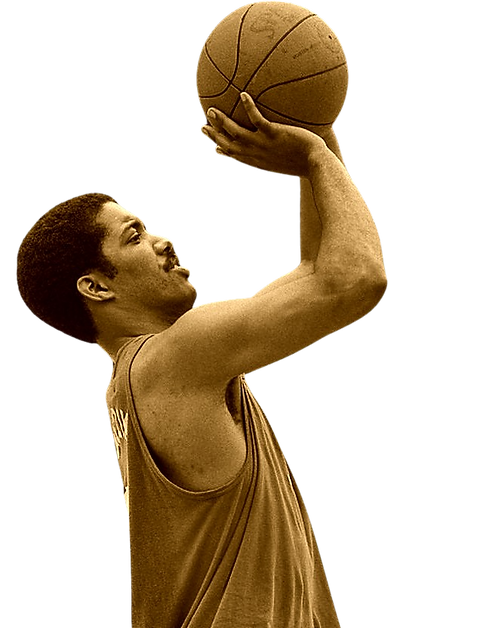
Sources and media note: The videos are original uploader documentaries and interviews, not mislabeled live game highlights. The three photographs come from identified historical publishers. The featured colored-pencil cover is a conceptual illustration, not an archival portrait of the named players.
Editor’s Note: We volunteer daily to ensure the credibility of the information on this platform is Verifiably True. If you would like to support to help further secure the integrity of our research initiatives, please scan the QR code below

For mobile scanning, open the article on another display and scan the QR code with a Bitcoin wallet. The voluntary donation amount is 5,000 sats. Verify the receiving address 3C9o19EH5HSiwEPyCTmEKzxhNCbo2X6TTb before sending.
BitcoinVersus.Tech publishes technology and financial journalism for informational purposes and does not provide financial, investment, or legal advice.


Leave a Reply