NBA POLITICS | Historical Investigation — In 1973, the Philadelphia 76ers used the 18th pick of the NBA Draft to select Raymond Lewis, a prolific college scorer from Watts, California. Philadelphia also chose Doug Collins with the first overall pick. Collins would become an NBA All-Star, while Lewis never appeared in an NBA regular-season game. The difference was not that Lewis failed to attract professional interest. A dispute over money, training-camp events and league contract restrictions prevented a promising career from getting started.
The most important source is the 76ers’ 1973 draft history, which confirms the selection. Accounts in the Philadelphia Inquirer and Los Angeles Times reconstruct the contract negotiations. A later documentary, Raymond Lewis: L.A. Legend, adds testimony from coaches, family and basketball executives. Because several details remain disputed, firsthand recollections must not be treated as complete records.
Official Raymond Lewis: L.A. Legend trailer from the documentary’s producers, presenting the central historical dispute and interview footage Watch on YouTube.
A scorer with evidence beyond playground legend
Lewis grew up in Watts and built his basketball identity in neighborhood gyms and parks before becoming one of Southern California’s most celebrated high-school scorers. He helped Verbum Dei win three consecutive CIF championships and enrolled at Cal State Los Angeles. The documentary production’s historical archive credits him with an average of nearly 39 points as a college freshman while shooting close to 59 percent from the field. The Los Angeles Times reported that he scored 53 against Long Beach State in a double-overtime game, and other biographical sources document a 73-point college outing. The strongest conclusion is not that his old totals guarantee professional success, but that he had an outstanding body of organized scoring work before the draft.
Lewis’s game reportedly combined sudden pull-up shooting, movement without elaborate setup and the confidence to attack established stars. His style invited later comparisons to explosive modern scoring guards. Those comparisons are descriptive, not statistical equivalents: no NBA regular-season shot chart exists to calculate Lewis’s three-point efficiency, spacing impact or defensive on-off numbers. Scouts were evaluating a different era, played before the NBA three-point line and with far fewer filmed possessions available to researchers.
The 1973 contract dispute
Philadelphia had finished the 1972–73 season with a 9–73 record, creating genuine opportunities for new talent. The club drafted Collins at No. 1 and Lewis at No. 18, reportedly hoping that both could strengthen its backcourt. Lewis entered negotiations without established professional representation. A 2001 Los Angeles Times reconstruction described Collins as earning $200,000 per year while Lewis’s deal totaled $190,000 across three years. Those figures describe reported historical contracts, not present-dollar values and not independently audited payroll data.
Lewis performed impressively during summer rookie activities, according to witnesses and later reporting. He sought an improved contract but the 76ers declined to renegotiate an agreement he had signed. Missed practices, camp absences and disputes over his treatment followed. Collins told the Los Angeles Times that Lewis could play but had received poor advice, an opinion worth noting rather than accepting as a complete explanation. Lewis and those sympathetic to him viewed the terms as unfair, especially given his ability. Both perspectives can coexist: an athlete can negotiate badly while still being undervalued by an organization.
Why an ABA escape route failed
The rivalry between the NBA and American Basketball Association might appear to have offered Lewis another route to professional basketball. He attempted to join the ABA’s Utah Stars, but the Sixers asserted their contractual rights and threatened legal action, according to the Los Angeles Times. Lewis therefore did not establish a career with the rival league. The Philadelphia Inquirer reports that he sat out significant time and was later invited back to the 76ers in 1975. By then, Philadelphia had added more backcourt players and his opportunity narrowed. A return to camp did not produce a regular-season roster place.
Full Raymond Lewis: L.A. Legend documentary uploaded by producer Beach City Media. Its interviews offer historical testimony; competing claims remain attributed rather than accepted as settled facts Watch on YouTube.
Was Raymond Lewis blackballed?
The term blackballed appears frequently in accounts of Lewis’s career. The documentary explores an argument that the dispute damaged his reputation with NBA teams, and the Inquirer reports that subsequent unsuccessful tryouts fueled suspicions of league-wide exclusion. Yet the public historical record does not establish a coordinated agreement among all franchises to deny him employment. Later teams could also have weighed rust, conditioning, past absences and fit against an already established roster. A careful investigation separates a documented contractual exclusion from the more sweeping claim of a league-wide conspiracy.
Race and bargaining power also deserve examination. Lewis was a young Black player from Watts negotiating with a professional institution in an era of much weaker player leverage. Documentary creators argue that race shaped the context, but broad structural inequalities cannot prove the motives of each individual 76ers executive. The more securely documented failure is a system in which a first-round draft pick lost a prime opportunity through a rigid contract and deteriorating trust. Such arrangements offer a historical contrast with today’s guaranteed salaries, established agents and collective bargaining mechanisms.
What NBA scouts could reasonably have expected
Lewis’s organized achievements and first-round selection establish that serious evaluators considered him an NBA prospect. His dominant college shooting suggested he could generate offense against strong defenders. Opponents at the professional level, however, would have tested his ability to share the ball, read a full NBA defense, maintain conditioning and accept a coaching role. There is no defensible way to assign him an imagined NBA points-per-game average, All-Star count or career win share. The relevant question is whether he deserved a stable opportunity to be judged on the floor. The documented talent makes the answer compelling, even without pretending his eventual greatness was guaranteed.
The broader Top 3 streetball countdown places Lewis ahead of Joe Hammond and Pee Wee Kirkland for the strength of his draft and college credentials. Our D’Angelo Russell analysis examines modern roster choices, while the Bol Bol case and guard scouting framework illustrate how organizational trust, contracts and defensive fit shape opportunities.
A career lost, rather than a career statistically disproved
Lewis died in 2001 at age 48, having never played an NBA regular-season game. The lasting significance of his career is neither a claim of secret NBA superstardom nor a simple morality tale about contract negotiations. Verified performance created a credible first-round professional opportunity; recorded negotiations and events ended it. His absence from the league means researchers must live with uncertainty about the player he might have become. The most responsible way to preserve his legacy is to recognize documented talent without manufacturing results.
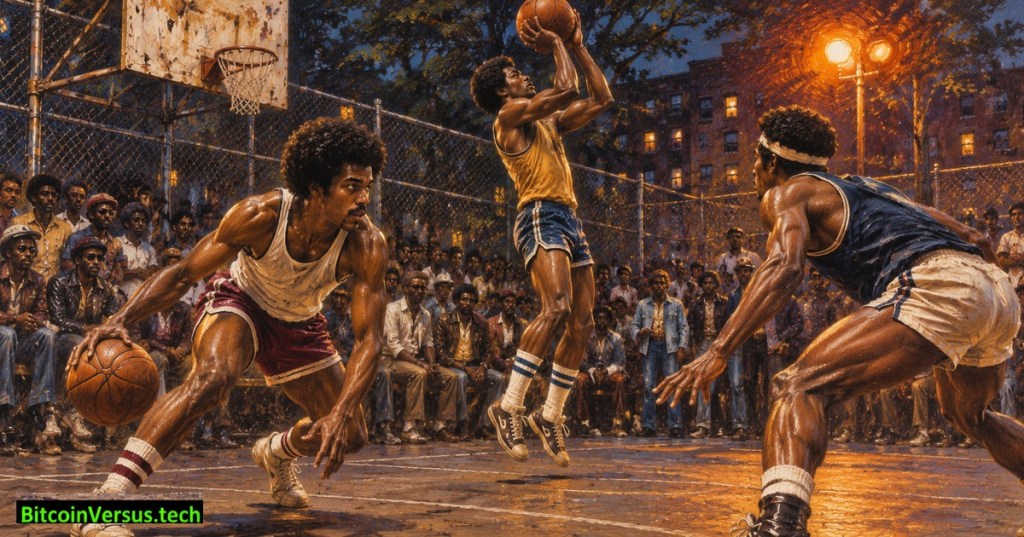
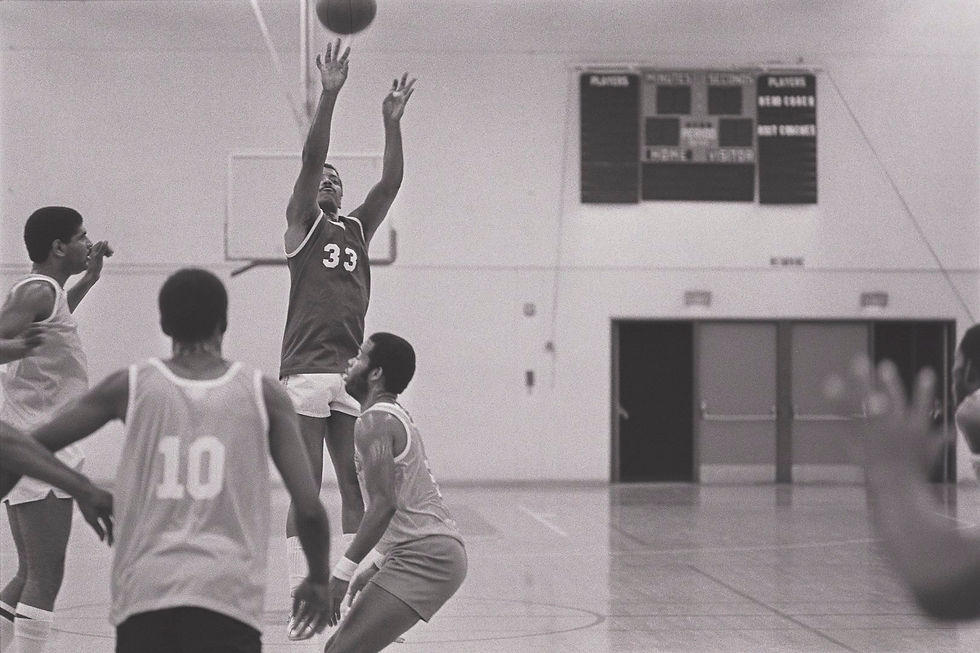
Editor’s note: The featured oil-painting cover is a conceptual illustration, not a photograph or verified likeness of Lewis. The trailer and full film come from the original documentary producers. Archival images are attributed to their publishers. Claims of blackballing are treated as contested interpretations, not confirmed league findings.
Editor’s Note: We volunteer daily to ensure the credibility of the information on this platform is Verifiably True. If you would like to support to help further secure the integrity of our research initiatives, please scan the QR code below

For mobile scanning, open the article on another display and scan the QR code with a Bitcoin wallet. The voluntary donation amount is 5,000 sats. Verify the receiving address 3C9o19EH5HSiwEPyCTmEKzxhNCbo2X6TTb before sending.
BitcoinVersus.Tech publishes technology and financial journalism for informational purposes and does not provide financial, investment, or legal advice.


Leave a Reply