A giant electrical substation is taking shape 105 feet beneath the streets of Cambridge, Massachusetts. The 35,000-square-foot facility in Kendall Square will sit underneath a future public plaza rather than occupy an entire above-ground city block. On November 19, 2026, the Edison Electric Institute released an interview with Eversource engineers explaining the design. The substation is under construction, not yet delivering electricity.
Why put major power equipment underground?
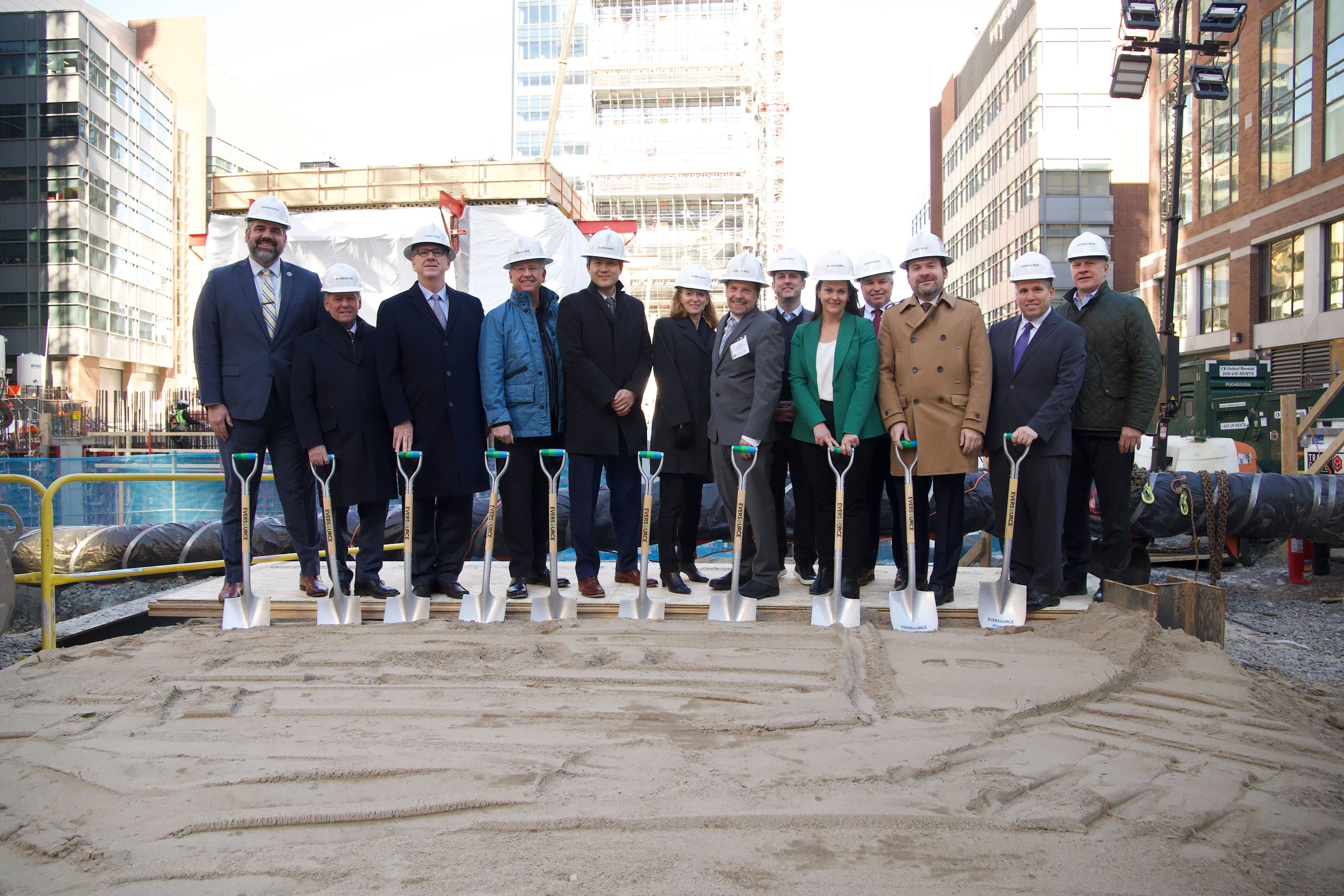
Kendall Square is crowded with research laboratories, offices, homes and expanding technology institutions. Power demand is rising as buildings shift heating and transport toward electricity. Eversource needed additional capacity, but a conventional surface substation would compete with valuable urban land. Developer BXP and the city worked with the utility to place the facility inside a purpose-built underground vault with public open space above it. Cambridge announced the design when construction began in January 2025.
Official Eversource groundbreaking video from January 2025. Historical footage of project initiation, not a November 2026 completion report. Original YouTube video.
How the new underground electrical network works
The Massachusetts siting record specifies eight new 115-kilovolt transmission lines organized into five underground duct banks, covering approximately 8.3 miles across Cambridge, Somerville and Boston’s Allston/Brighton area. The new substation transforms incoming transmission voltage to approximately 13.8 kilovolts for local distribution. Kilovolts represent voltage, not electricity consumption or generation capacity. Our transmission-versus-subtransmission lesson explains the difference between bulk delivery and local distribution.
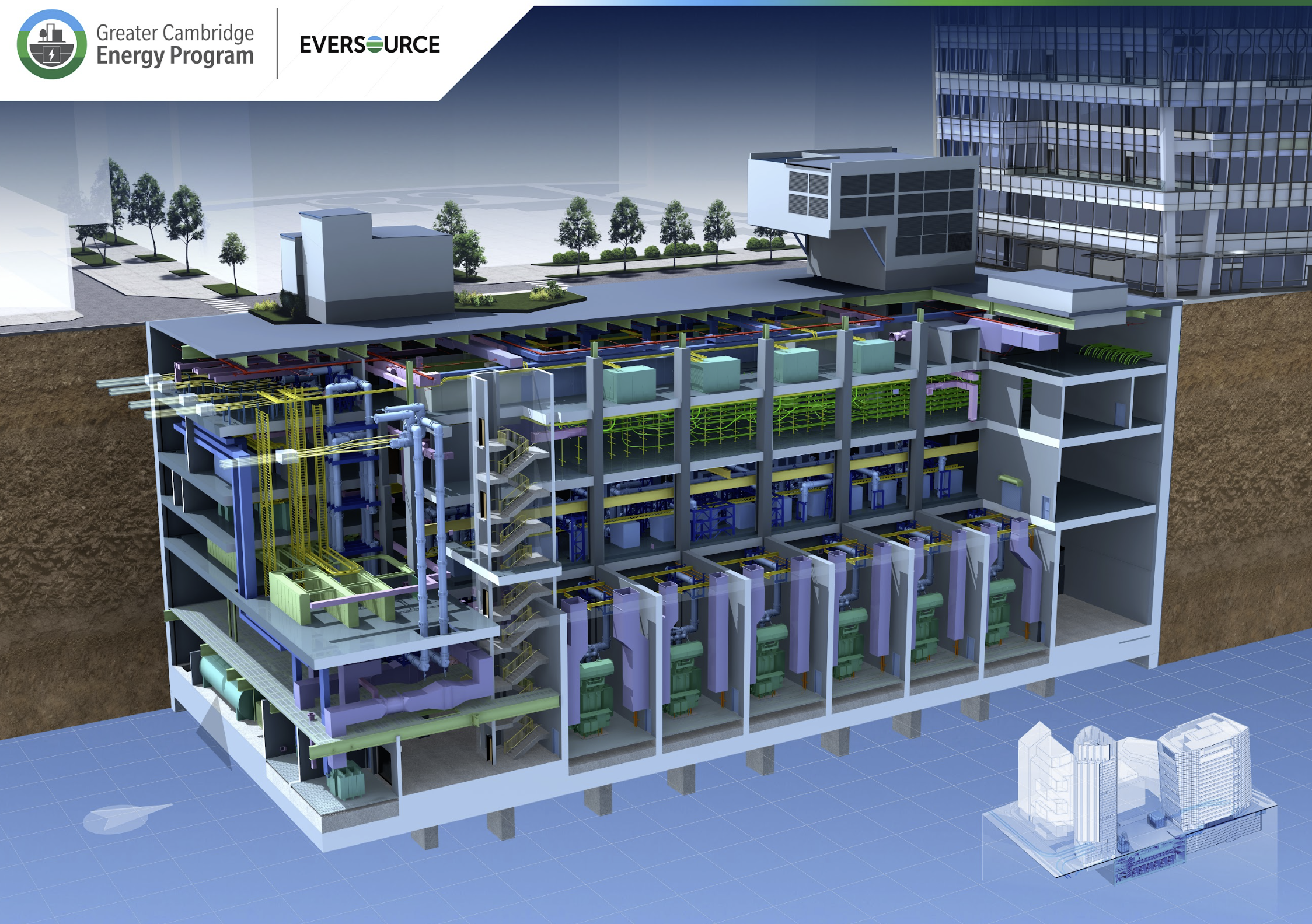
The latest Eversource Form 10-Q describes three distribution transformers serving 36 circuits in the initial project scope. A detailed engineering account describes an ultimate configuration of four 90-megavolt-ampere transformers and 48 circuits. Those are different buildout stages, not conflicting readings from a running power station. Megavolt-amperes express apparent electrical power; conversion to megawatts requires a power-factor assumption.
The engineering problems are bigger than the hole
At substantial depth, equipment heat cannot simply dissipate into open air. Designers must provide reliable ventilation, maintainable cable paths, safe access and emergency egress. Drainage and flood protection also matter when electrical equipment occupies multiple below-grade levels. Fire protection, fault containment and the ability to replace a heavy transformer are essential considerations. Engineers developed coordinated three-dimensional models because the vault must coexist with neighboring buildings, foundations, utilities and streets.
The project engineering report also describes compact gas-insulated components and complex transmission routing where conventional open-air clearances would be impractical. Such space constraints help explain why equipment selection, protection engineering and commissioning cannot be treated as ordinary real-estate construction. Related BitcoinVersus.Tech reporting examines compact switchgear and buried transmission connections at other sites.
Eversource’s official February 2025 program overview explains the proposed network. Earlier background video; not a filmed demonstration of energized transformers. Watch the original on YouTube.
What $1.84 billion buys, and when power arrives
Eversource now estimates $1.84 billion for the entire Greater Cambridge Energy Program, including $1.38 billion in transmission and $460 million in distribution. The utility reported $300.4 million spent as of September 30, 2026. Initial service is targeted for June 2029, with additional transmission and distribution circuits scheduled through 2030 and 2031. Those are current company estimates rather than delivered operating results.
Construction affects surrounding neighborhoods before the electrical benefits arrive. MIT’s facilities notices anticipate disruptions along several local streets through 2028. The new installation is expected to strengthen supply options and support electrification, although final reliability gains will require operational evidence. Other utilities are approaching comparable bottlenecks with high-capacity overhead conductors and additional grid sensors. Cambridge shows how major electrical infrastructure can share a densely developed city site.
Primary documentation and video context
- Eversource Q3 2026 SEC report, costs and phased in-service dates
- Edison Electric Institute November 19, 2026 engineer interview
- Massachusetts siting board, eight lines and station voltage
- Cambridge city announcement, 105-foot depth and public plaza
- T&D World: engineering design and ventilation constraints
- Cambridge Redevelopment Authority: official station illustration
Visual and methods note: The oil-painting featured artwork is conceptual; it does not portray a documented completed station. The exact existing neon-green-on-black BitcoinVersus.tech watermark was copied once at the bottom-left. The groundbreaking photo and engineering illustration are separately credited. The two YouTube videos predate 2026, and iframe rendering is not the same as verified playback.
We volunteer daily to ensure the credibility of the information on this platform is Verifiably True. If you would like to support to help further secure the integrity of our research initiative, please scan the QR code below.



Leave a Reply