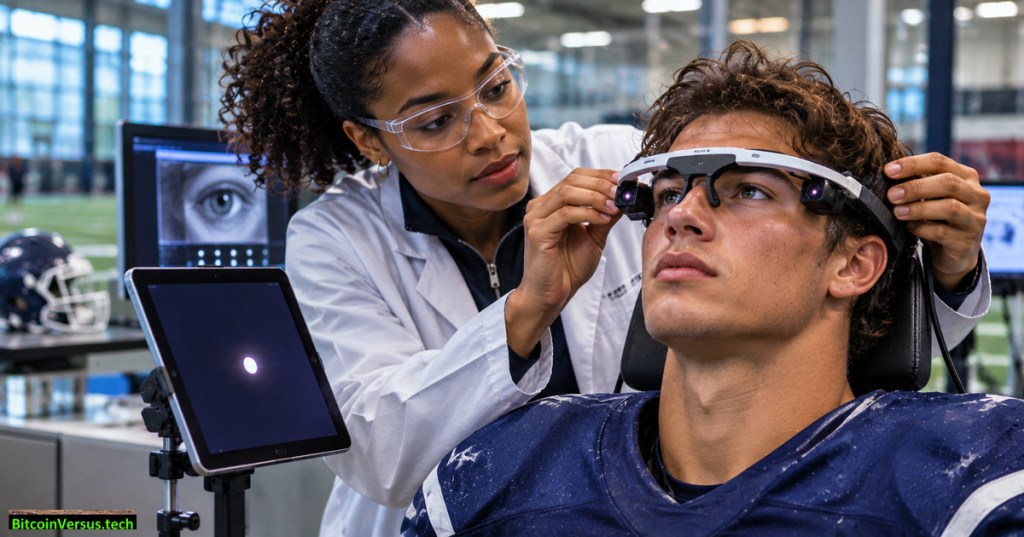
A suspected concussion can require a decision beside the playing field, long before a clinic visit. Three Harvard design-engineering students believe a low-cost eye-tracking headset could provide one more objective signal. Their invention, Rumble Rims, won the 2026 James Dyson Award’s global medical category on November 4. Inventors Cleo Pontone, Radhika Saran and Sophia DeVito say their existing prototype cost under $350 to build and is designed for a two-to-three-minute sideline assessment. Neither figure establishes clinical accuracy or a final retail price.
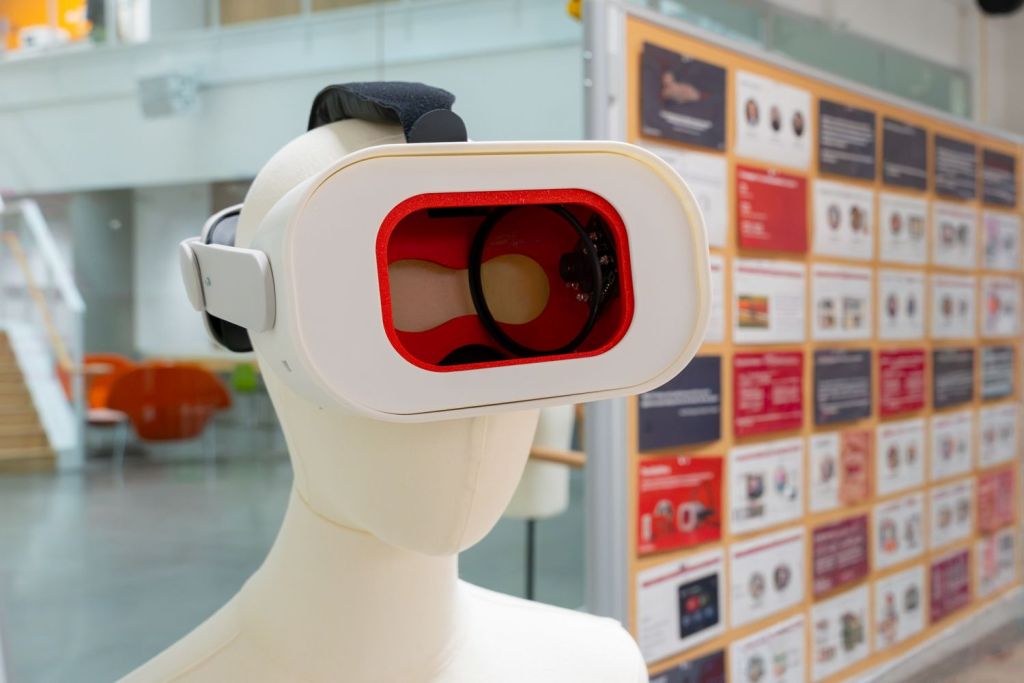
Infrared cameras watch how the eyes move
The athlete puts on a headset and follows a target displayed on a tablet at arm’s length. Side-mounted infrared cameras observe eye movement through 45-degree dichroic mirrors, which redirect selected wavelengths while allowing a view of the target. Software measures how the eyes pursue moving objects, shift between locations and maintain fixation. The proposed mobile interface summarizes the readings for a coach or clinician. Researchers have studied altered eye movements after concussion, but recognizing an impairment still requires validated thresholds and clinical interpretation.
Fauquier ENT’s January 2026 educational video demonstrates six eye-movement examination techniques after concussion. The examples explain ocular signs; they do not evaluate Rumble Rims or provide a sideline diagnosis. Watch the original physician-led demonstration.
What under $350 and three minutes actually mean
The creators reported the sub-$350 figure as their current prototype build cost, rather than a commercially quoted purchase price. They compare their concept with some eye-tracking systems requiring specialist equipment and costing tens of thousands of dollars. The two-to-three-minute duration describes the intended eye-movement task, not the entire medical evaluation, observation period or safe return-to-play process. Those distinctions matter when comparing laboratory prototypes with clinical tools.
A prototype, not clearance to return
The inventors explicitly describe Rumble Rims as a screening aid, not a concussion diagnosis. Their team has yet to publish a clinical trial showing sensitivity, specificity, false-negative rates or reliability among athletes with confirmed injuries. An apparently normal eye-tracking result cannot rule out concussion. The CDC’s HEADS UP guidance recommends removing athletes with suspected concussion from play and obtaining a healthcare professional’s assessment. Return-to-play clearance remains a medical decision, not an app notification.
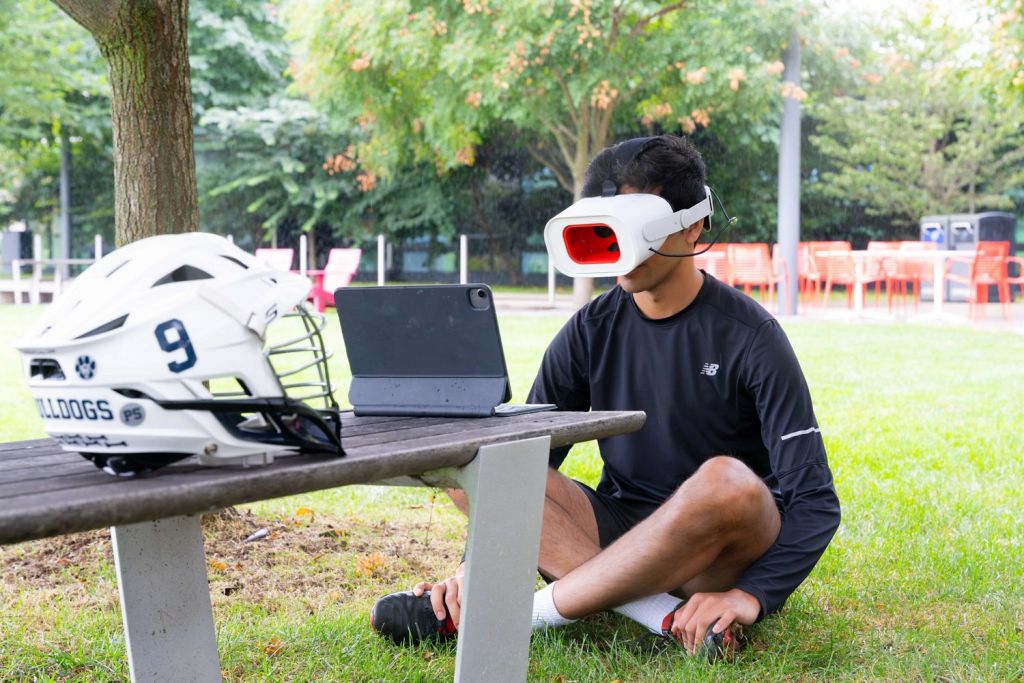
A $40,000 award funds the next tests
The award provides $40,000 toward development, according to Dyson’s November 4 announcement. The student team plans a more accurate headset, improved eye-movement assessment and testing with athletes, coaches, trainers and medical advisers. The design previously used alternative concepts, including helmets and chin rests. Longer-term ambitions include school and youth-sports pilots and appropriate medical-device validation. No broad rollout date or independently established clinical detection rate was announced.
The American Academy of Neurology’s 2022 instructional video explains sideline concussion assessment and why clinical examination matters. Educational background, not validation or footage of Rumble Rims. Watch the academy’s original video.
Sports technology needs a high evidence bar
Eye-tracking could complement, rather than replace, other sports safety techniques. BitcoinVersus.Tech has reported on NFL helmet safety comparisons, impact sensors in shoulder pads, athlete biometric broadcasting and the NFL’s player-tracking data infrastructure. Each measures different signals. None can substitute for careful clinical concussion evaluation.
The next meaningful Rumble Rims milestone is a blinded study comparing its readings with an accepted clinical reference assessment across diverse ages and sports, measuring both missed cases and false alarms. A compact headset and short test are compelling engineering achievements. Only rigorous clinical results can establish whether the device safely improves real sideline decisions.
Primary sources: James Dyson Award inventor interview, November 4, 2026; Dyson award announcement; Harvard Graduate School of Design; CDC HEADS UP. The cost, test duration and plans are inventor statements, not independently verified medical performance metrics.
We volunteer daily to ensure the credibility of the information on this platform is Verifiably True. If you would like to support to help further secure the integrity of our research initiative, please scan the QR code below.



Leave a Reply