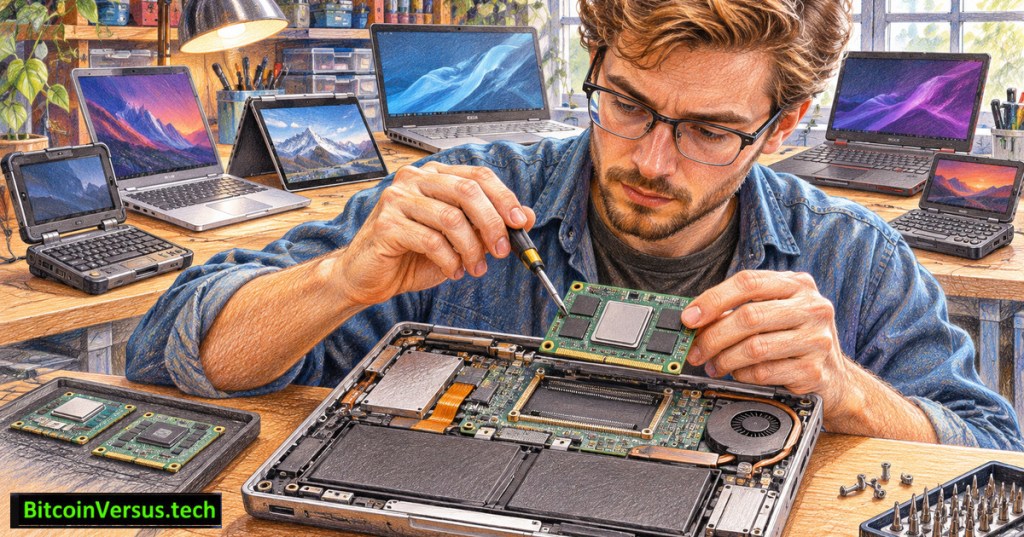
Most laptop processors are soldered permanently to a motherboard. A failed CPU or a desired upgrade can therefore mean buying a costly replacement board, sometimes an entire computer. Yet seven real laptops take a different approach, preserving the screen, enclosure and input devices while their processor-bearing module or mainboard changes.
The distinction matters: MNT’s Reform laptops exchange small system-on-module boards, while Framework machines replace a larger mainboard with its processor already attached. Neither approach resembles swapping a socketed desktop CPU. Availability, firmware and compatibility must be checked before purchasing an upgrade.
1. MNT Reform Next: the newest open-hardware design
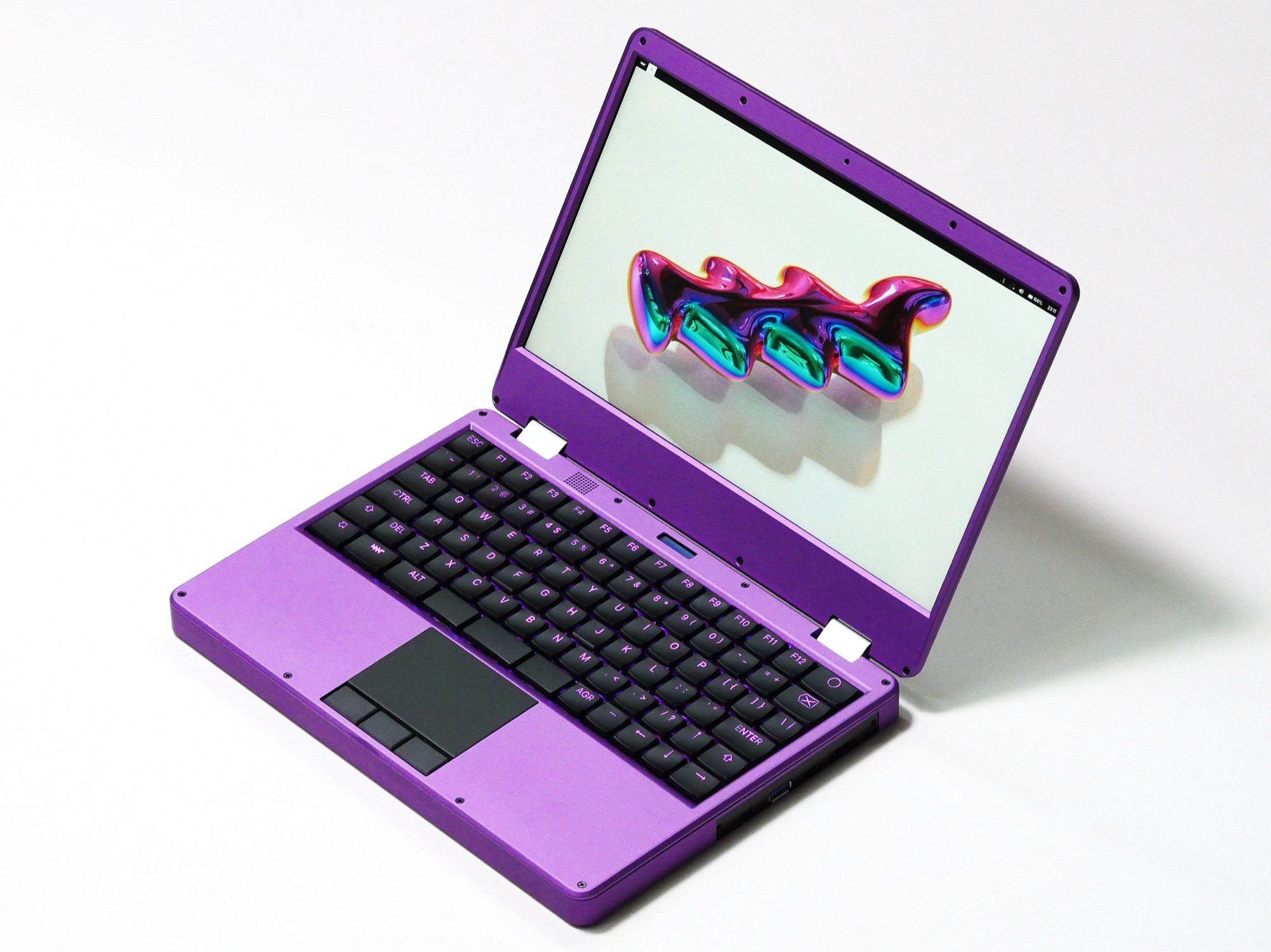
The 12.5-inch Reform Next accepts interchangeable processor modules through a 200-pin mainboard connector. Its standard RCORE module uses a Rockchip RK3588 with eight ARM CPU cores and up to 32 GB RAM. MNT’s first production shipments began in 2026; broader retail availability remains dependent on order fulfillment. See our original Reform Next report.
2. MNT Pocket Reform: a seven-inch modular Linux computer
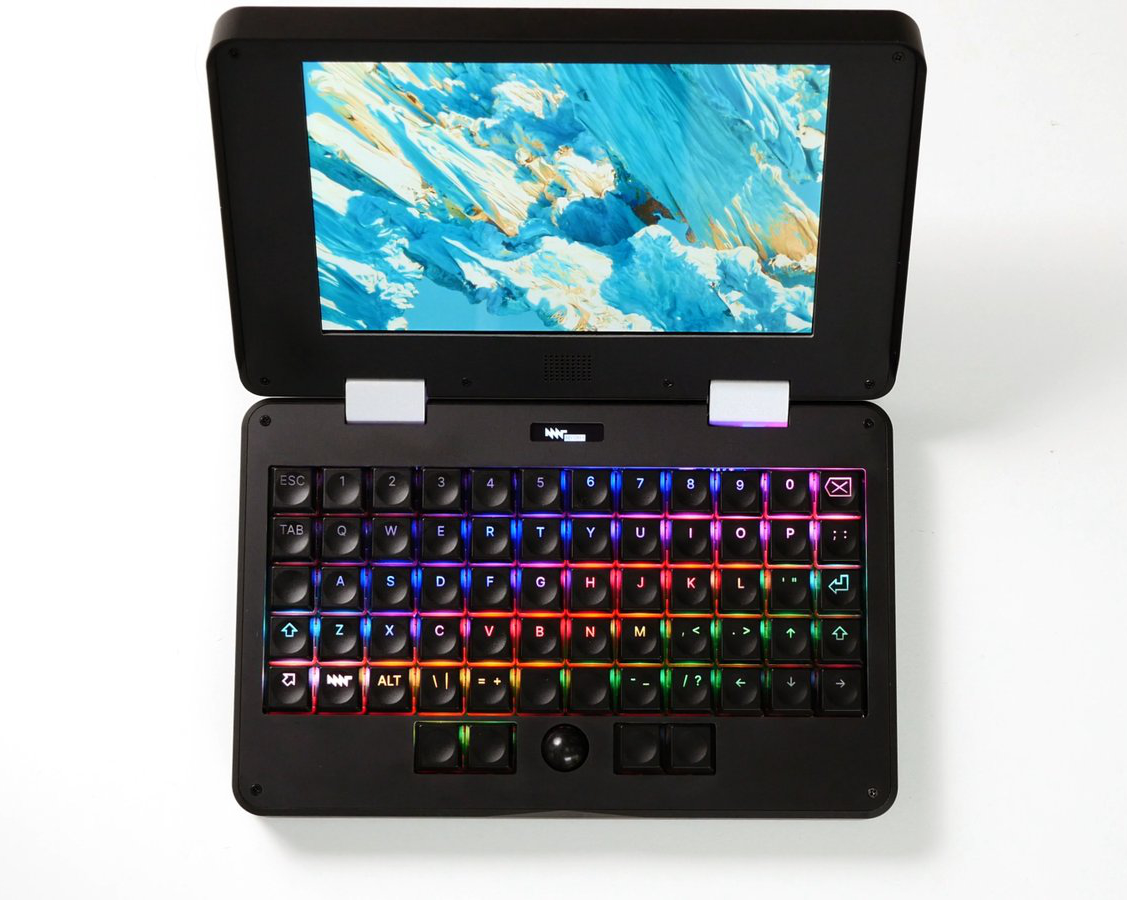
The miniature Pocket Reform uses plug-in processor modules rather than a conventional laptop CPU socket. Its developer-oriented options include i.MX8M Plus, RK3588 and Qualcomm-based variants, with compatibility depending on supporting boards and firmware. MNT and iFixit publish documented processor-module replacement procedures. The compact keyboard and trackball suit coding, terminal work and hardware experiments.
3. MNT Reform Classic: processor swapping from the beginning
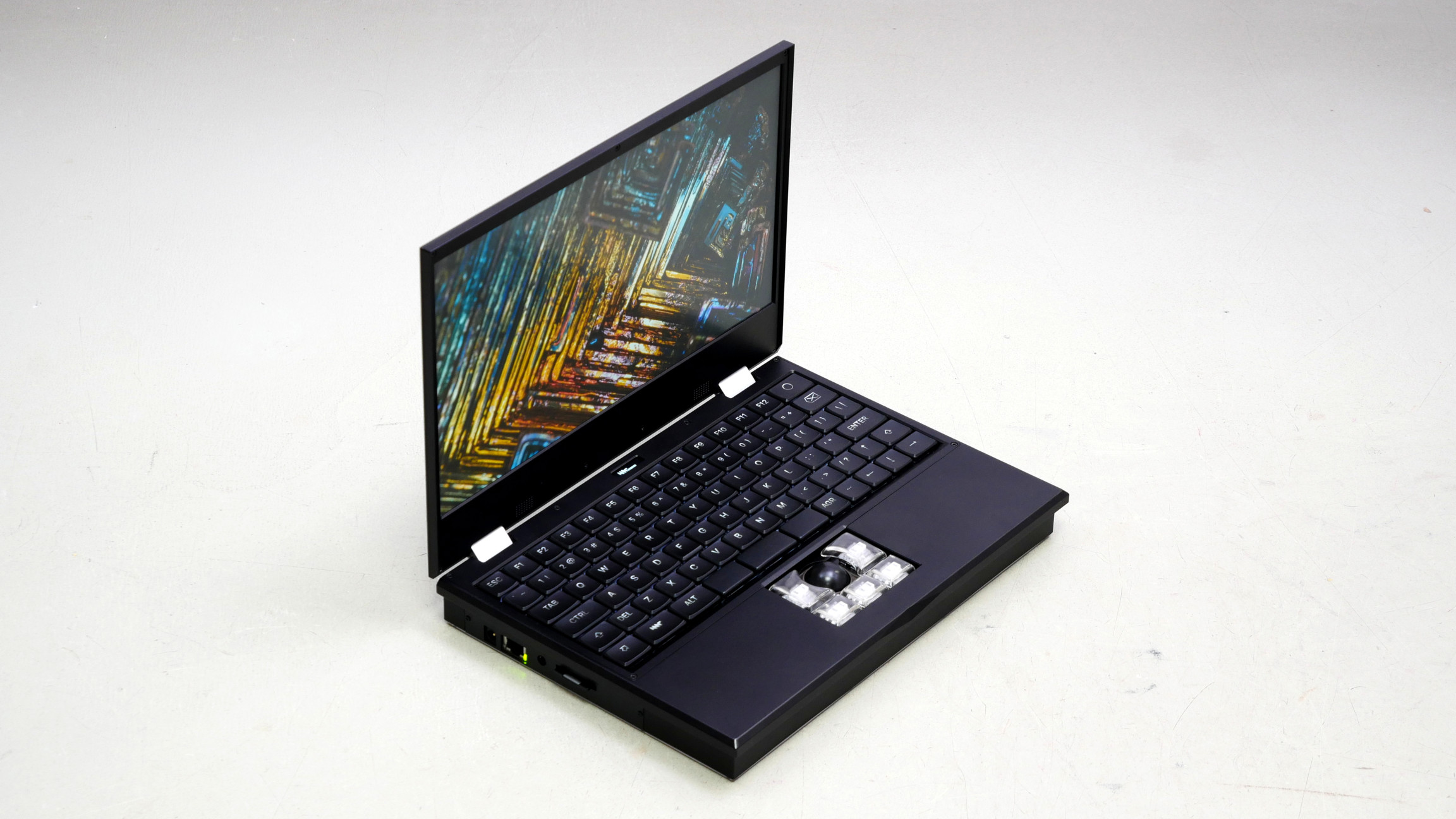
The original 13-inch MNT Reform began with NXP i.MX8M silicon and has since supported other ARM-based modules. Buyers can replace the CPU-and-memory board, along with independently serviceable batteries, keyboard and storage. MNT publishes schematics and module templates. Compared with mainstream x86 machines, application compatibility and performance still depend on Linux software support.
4. Framework Laptop 13: replace the CPU mainboard, even change architectures
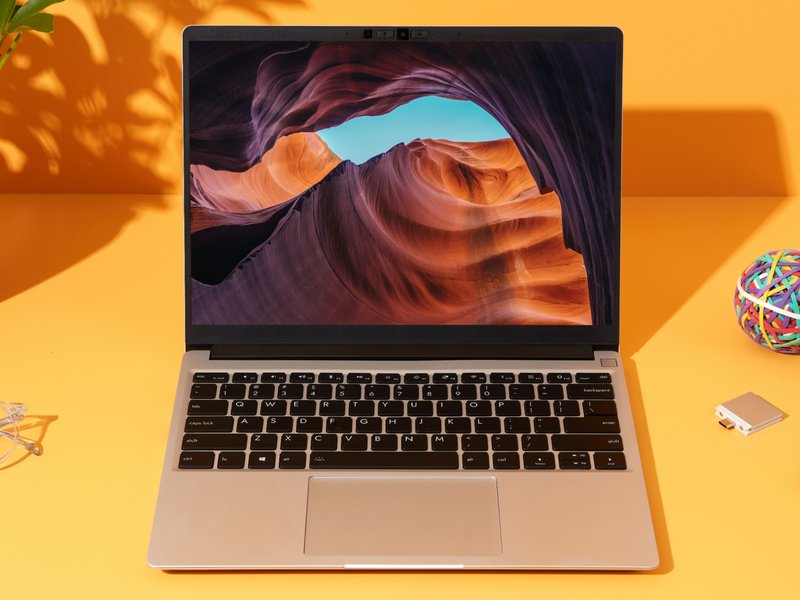
Framework’s 13-inch notebook has replaceable Intel and AMD mainboards; DeepComputing even sells a RISC-V board fitting the same chassis. Upgrading changes an entire board rather than an individual chip, and a developer-oriented RISC-V configuration is not equivalent to a fully compatible x86 daily driver. Several generations share compatible chassis interfaces, subject to parts and firmware requirements.
DeepComputing’s demonstration shows replacing a Framework Laptop 13 x86 mainboard with a RISC-V board. Actual hardware upgrade footage. Watch directly on YouTube.
5. Framework Laptop 16: CPU board plus graphics module
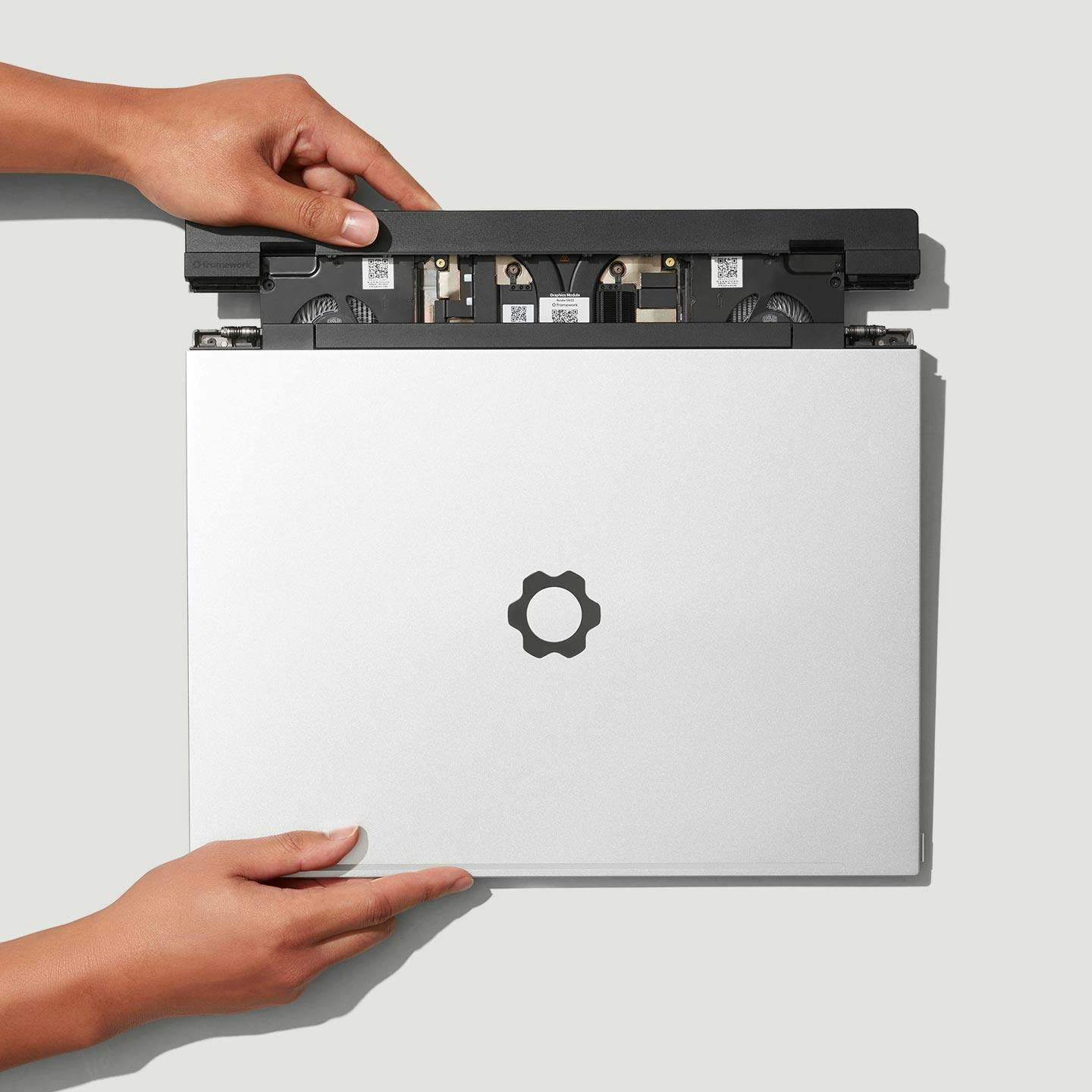
The Framework Laptop 16 separates its replaceable processor mainboard from a swappable graphics expansion module. The manufacturer documents upgrades across AMD Ryzen generations and offers discrete GPU options. That design is especially relevant to Linux gaming, rendering and local AI, though a new graphics module is not necessarily compatible with every older thermal or power configuration.
6. Framework Laptop 12: an upgradeable convertible
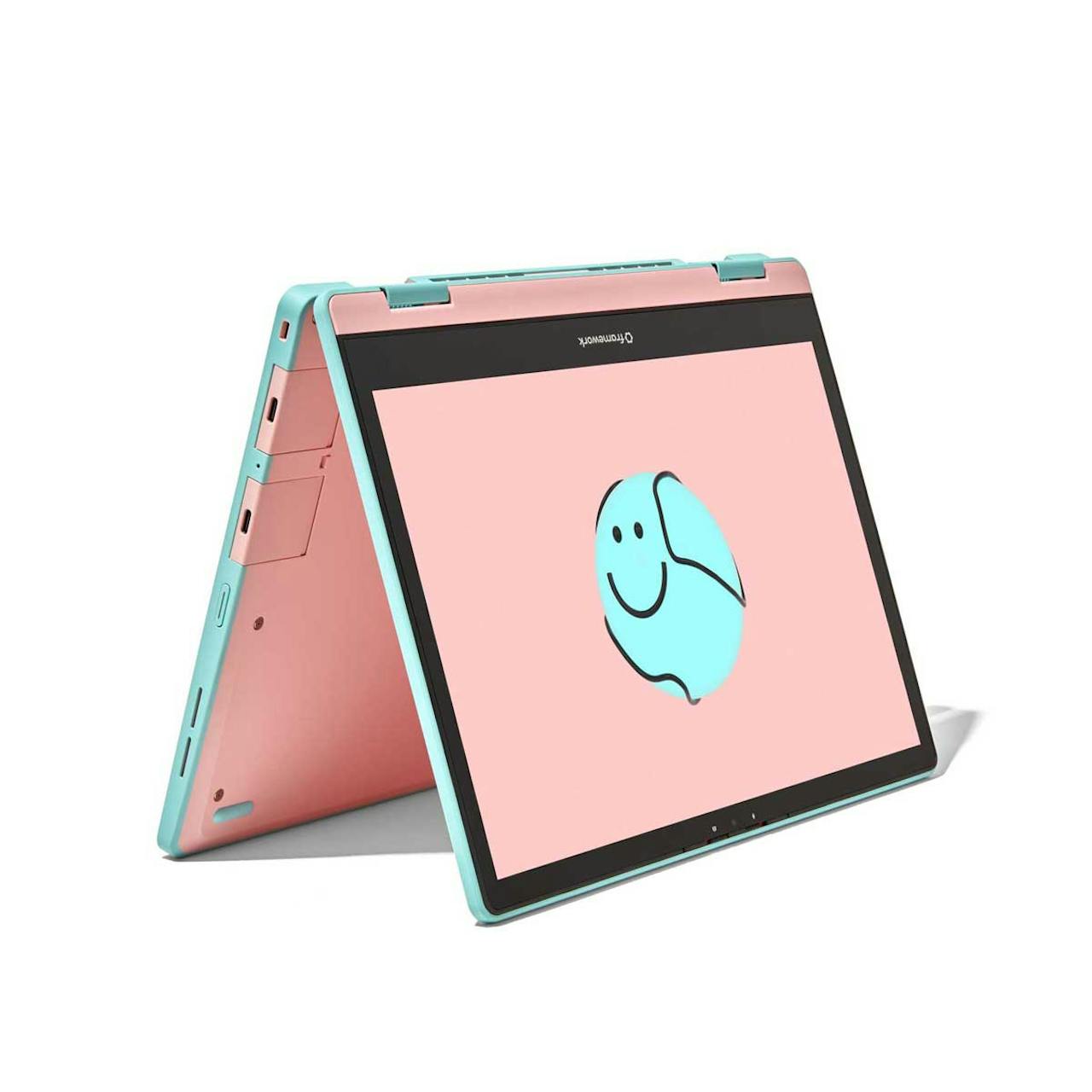
Framework’s 12.2-inch touchscreen convertible uses a replaceable CPU mainboard. Its 2026 Intel Core Series 3 mainboard upgrades remain compatible with the preceding chassis, according to the manufacturer. Memory, storage and ports are independently replaceable. Owners must confirm BIOS, cooler, power and component compatibility before buying an upgrade kit.
Framework’s official August 2026 walkthrough explains the Laptop 12 processor-mainboard upgrade and backward compatibility. Watch directly on YouTube.
7. Olimex TERES-I: the DIY motherboard approach
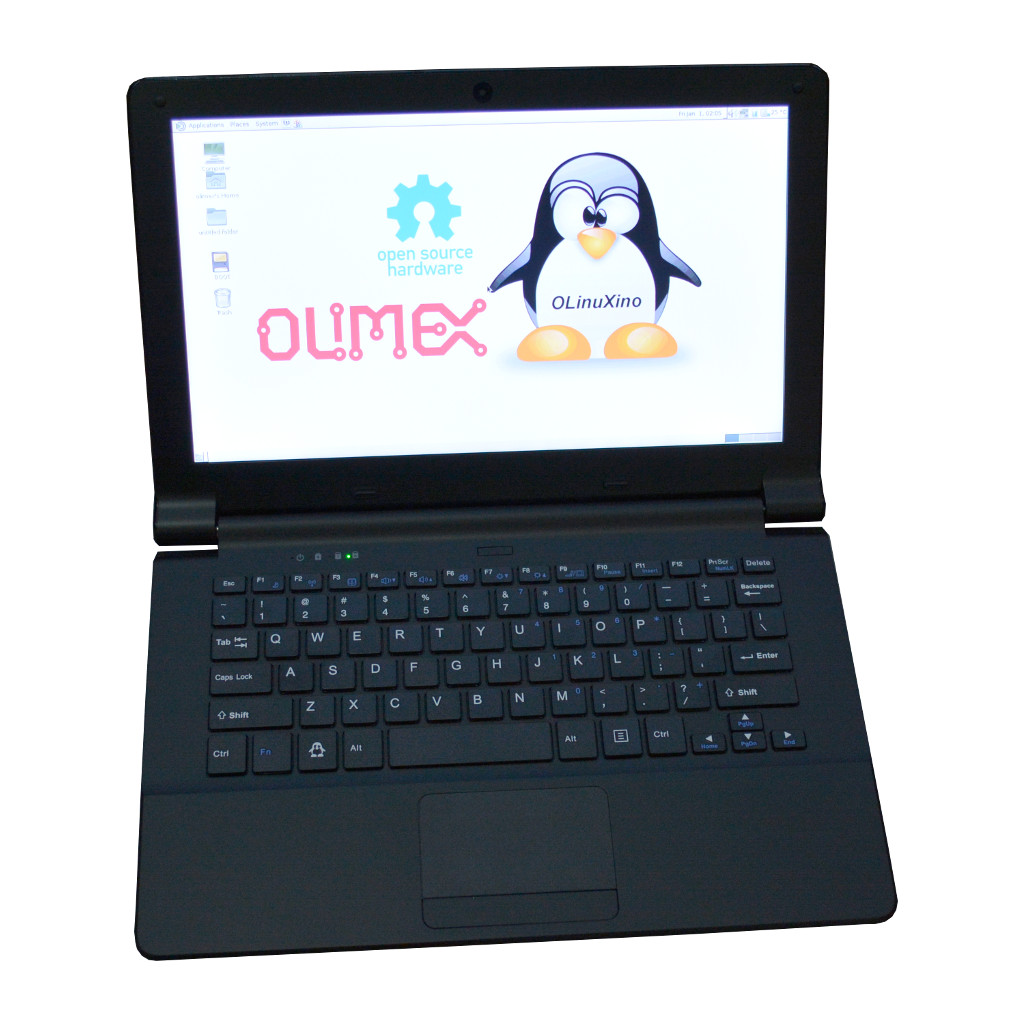
The older TERES-I is a builder-focused 11.6-inch Linux laptop designed around a replaceable processor mainboard and open KiCad hardware files. Olimex offers an Allwinner A64 replacement board. Its broader multi-architecture ambitions should not be confused with verified availability of modern x86 or RISC-V drop-in upgrades. The design emphasizes repair and experimentation, not competitive contemporary laptop performance.
What to verify before investing
A removable motherboard is not proof of a useful future CPU upgrade. Ask whether a newer compatible module actually ships, whether RAM and the cooling system need replacement, what Linux drivers are supported and whether the upgrade costs less than a refurbished computer. Closed firmware or scarce spare parts can erase the economic benefit of modularity.
Related coverage includes modular 6502 hardware, x86 software on ARM Linux, ARM processor infrastructure and open Linux AI drivers. Upgradeability is best understood as a documented supply chain, not simply a removable circuit board.
We volunteer daily to ensure the credibility of the information on this platform is Verifiably True. If you would like to support to help further secure the integrity of our research initiative, please scan the QR code below.



Leave a Reply