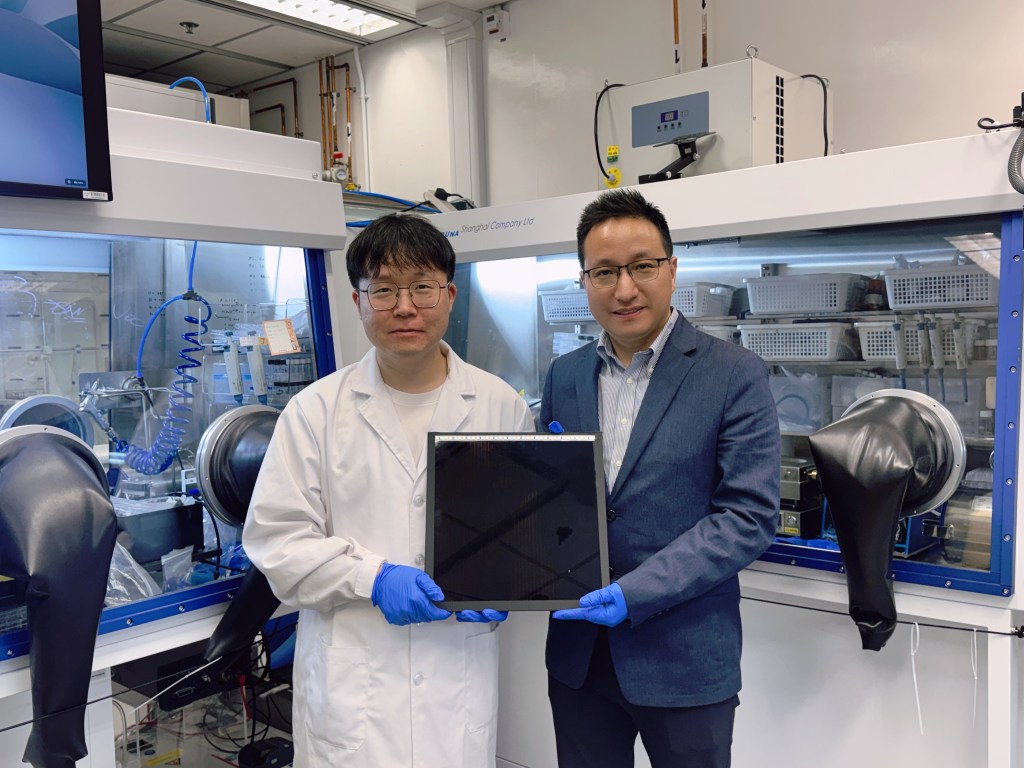
A solar cell must do more than convert sunlight efficiently on the day it leaves a laboratory. Its microscopic layers must remain electrically connected through heating, cooling and prolonged operation. On November 25, 2026, the Hong Kong University of Science and Technology (HKUST) announced a molecular bonding technique designed to address mechanical degradation in perovskite photovoltaics.
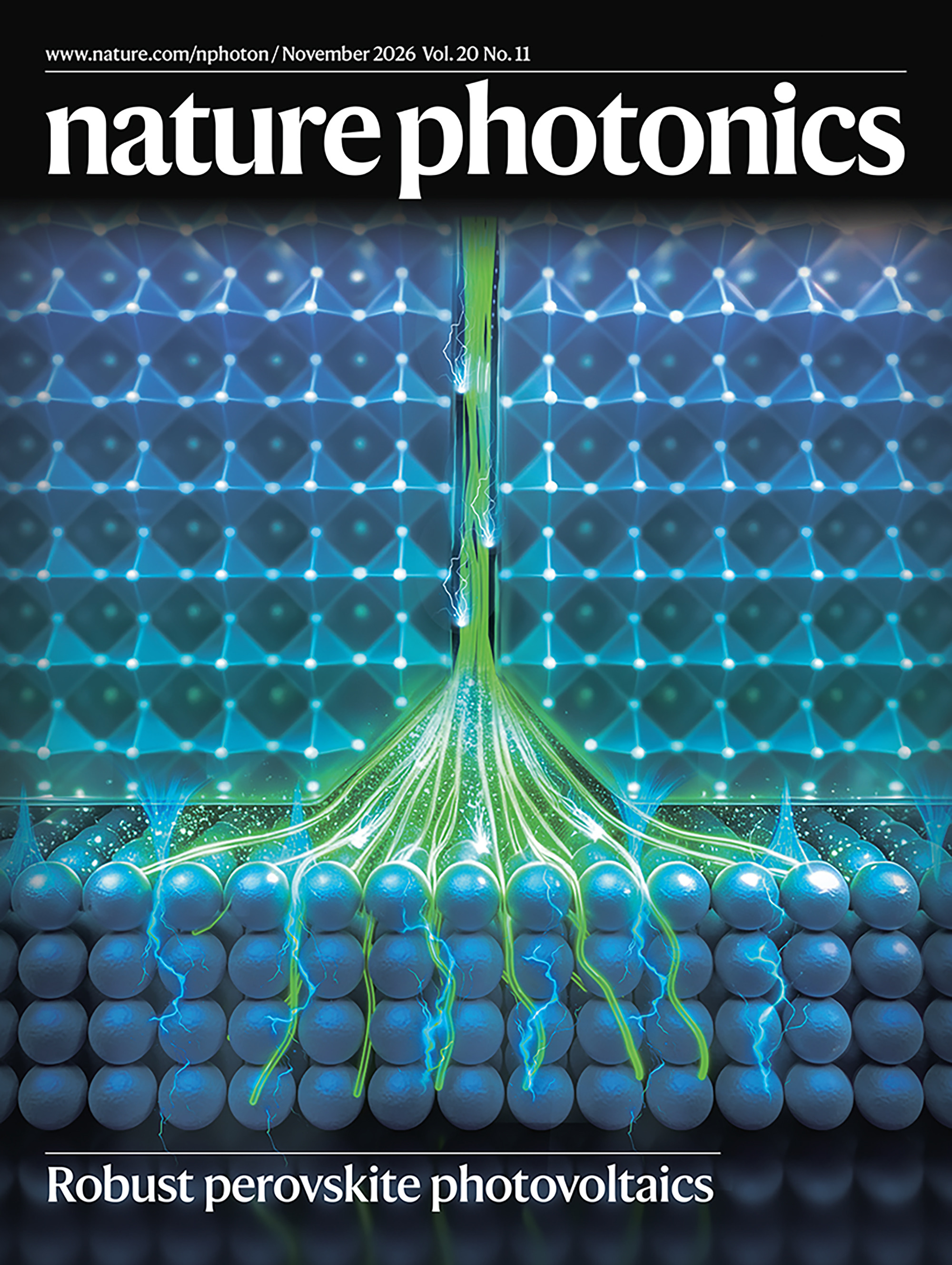
The research, published September 29 in Nature Photonics and featured on its November cover, yielded a certified power conversion efficiency of 26.67%. HKUST also reported nearly three times the interfacial toughness of conventional devices. The findings concern laboratory solar cells, not commercial rooftop panels. Featured photograph: HKUST’s official November 25 research announcement.
Background video: The Potential for Perovskite Solar Cells, an earlier National Renewable Energy Laboratory explainer rather than footage of the HKUST experiment.
Why solar cells need stronger interfaces
Perovskite photovoltaics use a light-absorbing semiconductor between layers that selectively extract electrons and holes. When photons excite electrons, the resulting charge carriers must reach the electrodes before recombining. Imperfect interfaces can impede collection, creating electrical losses even when the absorber captures sunlight effectively.
Mechanical reliability introduces another challenge. Neighboring materials can expand at different rates when temperature changes. Repeated expansion and contraction can concentrate stress where layers meet, producing cracks or separation. Conventional interlayers can improve electrical properties or adhesion, but optimizing both simultaneously is difficult.
HKUST’s technique, called trans-interface engineering, introduces polymerizable molecules into the absorber and electron-transport layers. Heat initiates copolymerization, generating covalent molecular connections across the boundary. The links reinforce the interface rather than merely coating it. Their function is comparable to reinforcing a joint while preserving a pathway for charge extraction.
Efficiency is only part of the result
The university reported a laboratory efficiency of 27.04%, with certification at 26.67% and an open-circuit voltage of 1.220 V. The certified value translates to 266.7 W of electrical power per square meter of active area under an illustrative standard irradiance of 1,000 W/m². A commercial module would have additional inactive area and electrical losses, so the calculation is not a module rating.
More than 50 devices underwent maximum-power-point stability testing. The university reported that 92% of the engineered devices remained stable beyond 1,400 hours, while untreated controls exhibited widely varying lifetimes. Improved consistency was also reported during accelerated exposure to 85°C and 85% relative humidity. A 1,400-hour laboratory test, equivalent to approximately 58 days, cannot establish a 25-year outdoor service life.
Reproducibility matters economically: fewer early failures can improve manufacturing yield and reduce uncertainty in projected lifetime energy production. Related research covered by BitcoinVersus.Tech includes perovskite thermal-cycling durability and 23.9% efficient mini-modules. Different test protocols and device areas prevent direct rankings.
From laboratory cells to reliable power
The remaining hurdles include scalable film deposition, encapsulation, moisture resistance, material containment and consistent module-level performance. Higher cell efficiency alone cannot resolve shading losses, discussed in our rooftop solar analysis, or the timing mismatch between generation and demand explored in research on flexible computing.
HKUST has filed a patent and reported commercial development support. Independent module testing, outdoor exposure and manufacturing economics will determine whether stronger microscopic interfaces translate into dependable electricity production at scale.
We volunteer daily to ensure the credibility of the information on this platform is Verifiably True. If you would like to support to help further secure the integrity of our research initiative, please scan the QR code below.



Leave a Reply