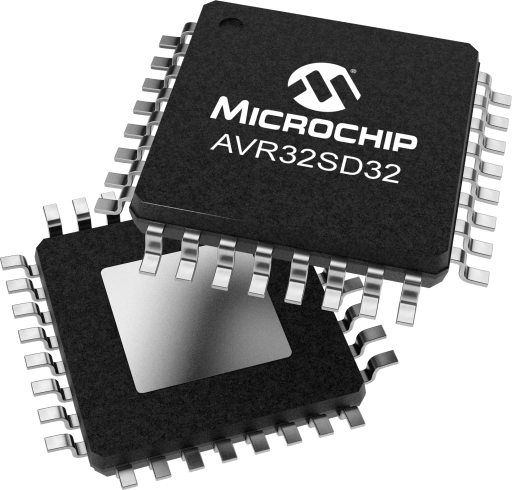
A microcontroller does not need billions of transistors to perform a consequential task. Sometimes its most important job is recognizing when something has gone wrong. On November 23, 2026, Microchip Technology announced that its AVR SD microcontroller family had received UL Component Recognition under UL/CSA/IEC 60730-2-5 Class C requirements for appliance controls.
The development concerns the safety evaluation of existing silicon rather than the launch of an entirely new processor. The recognition covers the evaluated components under specified conditions. It does not automatically certify appliances incorporating them. Potential applications include equipment where an electrical control malfunction can create a hazardous operating condition, such as a gas-fired furnace.
Two CPU cores, one computational task
Most multicore processors distribute work across different execution units to increase throughput. A lockstep processor uses a different strategy: two execution cores carry out corresponding instructions, and comparison circuitry monitors their behavior for disagreement. Redundant execution sacrifices some potential computing capacity in exchange for diagnostic coverage.
Microchip’s AVR SD technical overview identifies lockstep processing alongside two watchdog timers, independent reference sources for a pair of 10-bit analog-to-digital converters and hardware monitoring of clocks. A separate error controller coordinates responses to detected failures.
For a temperature-monitoring application, redundant conversion channels can help detect inconsistencies in sensor readings. A watchdog can identify a stalled program, while clock supervision can reveal timing problems. Whether any detected discrepancy actually indicates a dangerous condition depends on the system design and diagnostic thresholds.
Detecting errors before they become hazards
Memory protection offers another layer of defense. Single-error correction and double-error detection, or SECDED, uses additional check bits to identify corruption. Within a protected codeword, the technique can repair a single-bit error and detect a double-bit error. It cannot guarantee recovery from every possible corruption pattern.
Hardware diagnostics may respond without waiting for application code to finish its current operation. Microchip’s March 2025 launch announcement described a fault-detection interval target as low as one millisecond and an introductory volume price of $0.93 at 5,000 units. At that historical quoted price, a batch of 5,000 devices would cost $4,650 before other expenses. Neither the price nor the response target should be treated as a current guaranteed system-level specification.
Why component recognition matters
Functional safety engineering concerns how equipment behaves when failures occur. For a combustion appliance, for example, a safe response might involve removing an enable signal and bringing the equipment into a defined shutdown condition. The actual response must be engineered and validated for the complete appliance.
Redundant cores can still share vulnerabilities. A common software defect, a power-supply disturbance or a fault affecting shared circuitry may evade simple agreement checks. Engineers must evaluate common-cause failures, external actuators, diagnostic coverage and the time required to reach a safe state. Microchip also offers supporting software and safety documentation, but integration and verification remain responsibilities of the appliance developer.
The November recognition illustrates why specialized processors should be evaluated according to their assigned workloads. For safety-critical control, predictable failure detection and documented behavior may matter more than instruction throughput.
Related BitcoinVersus.Tech coverage: processor architectures, Infineon’s automotive RISC-V platform, brownout diagnostics and watchdog timers.
Featured image: Microchip Technology AVR32SD32 product image.
Editor’s Note: We volunteer daily to ensure the credibility of the information on this platform is Verifiably True. If you would like to support to help further secure the integrity of our research initiative, please scan the QR code below.



Leave a Reply