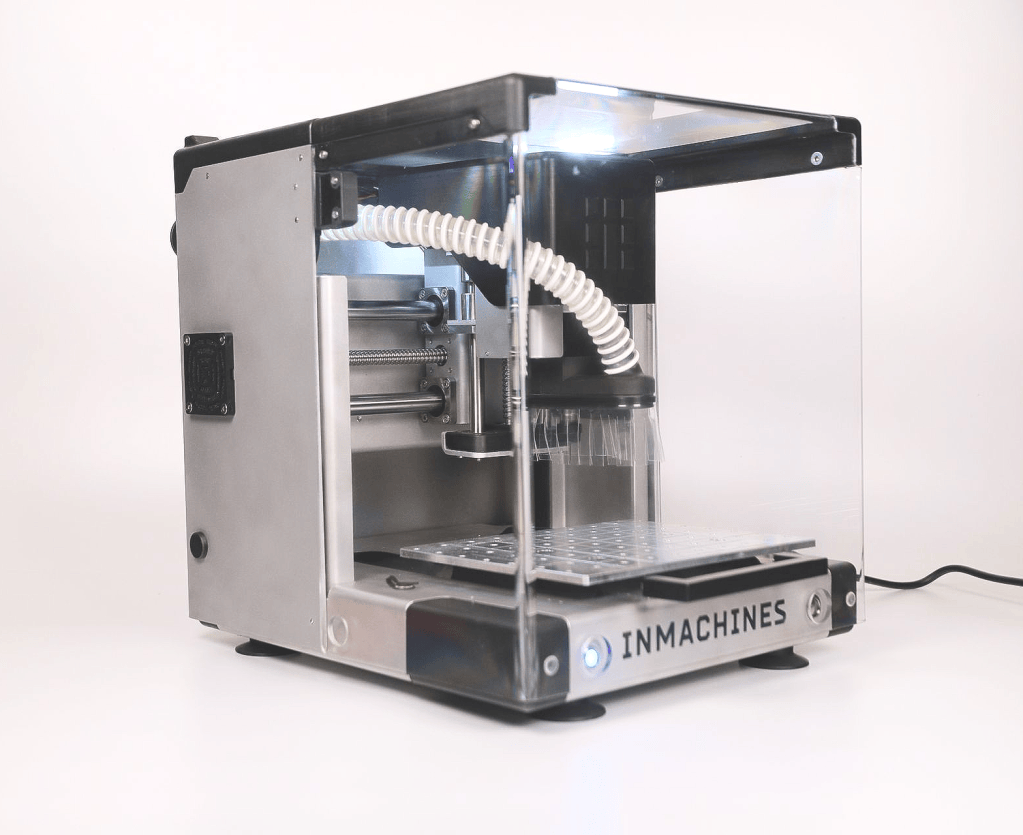
A circuit board designed in the morning could become a physical prototype by lunchtime, without waiting for a fabrication service. Germany-based InMachines launched crowdfunding for Piccola CNC on November 17, 2026, offering a compact milling system intended for circuit boards, plastics, wood and soft metals. The company plans to publish its complete design files when machines are delivered, an important distinction from hardware already released under open licenses.
Machining on a desktop
The manufacturer’s specifications describe a work envelope measuring 150 by 150 by 70 millimeters. A rigid aluminum-sheet chassis supports three ball-screw axes. The entry model uses a 100-watt spindle; the two higher configurations use 200-watt motors, with a brushless version reserved for Ultimate. The declared travel speed reaches 2,000 millimeters per minute, rather than a guaranteed cutting speed for every material.
Reported repeatability is under 10 micrometers for 5-millimeter rapid moves, according to the company. Repeatability measures how consistently the system returns to a commanded position; it does not establish absolute dimensional accuracy across every part. Tool deflection, spindle runout, stock clamping and thermal drift can all introduce machining errors.
Why a circuit board needs a height map
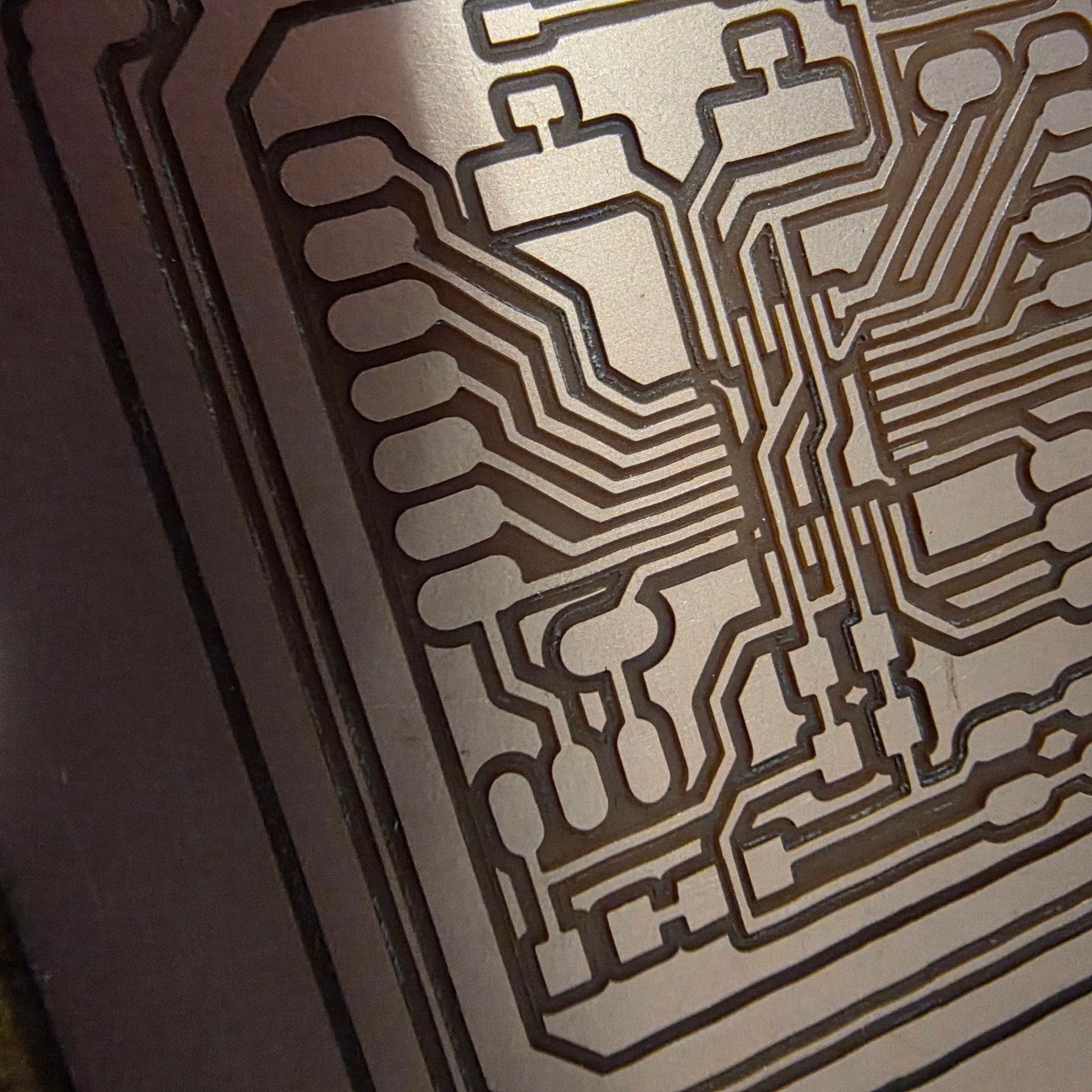
Isolation milling removes narrow channels of copper between electrical conductors. A board that bends slightly above or below the intended plane can cause a cutter to miss copper or remove too much substrate. Surface measurements allow the software to adjust vertical positioning across the workpiece. The entry and Pro configurations use contact probing; Ultimate adds optical distance measurement, according to CNX Software’s November 23 report.
As an illustration, a 50-micrometer surface deviation is larger than the roughly 35-micrometer thickness of conventional one-ounce copper foil. Even a machine with excellent positioning repeatability must account for stock flatness. Milling supports rapid experimental boards, but does not automatically reproduce plated through-holes, solder masks or complex multilayer fabrication. Related reading: PCB open and short diagnostics and microvia reliability.
Two microcontrollers, two responsibilities
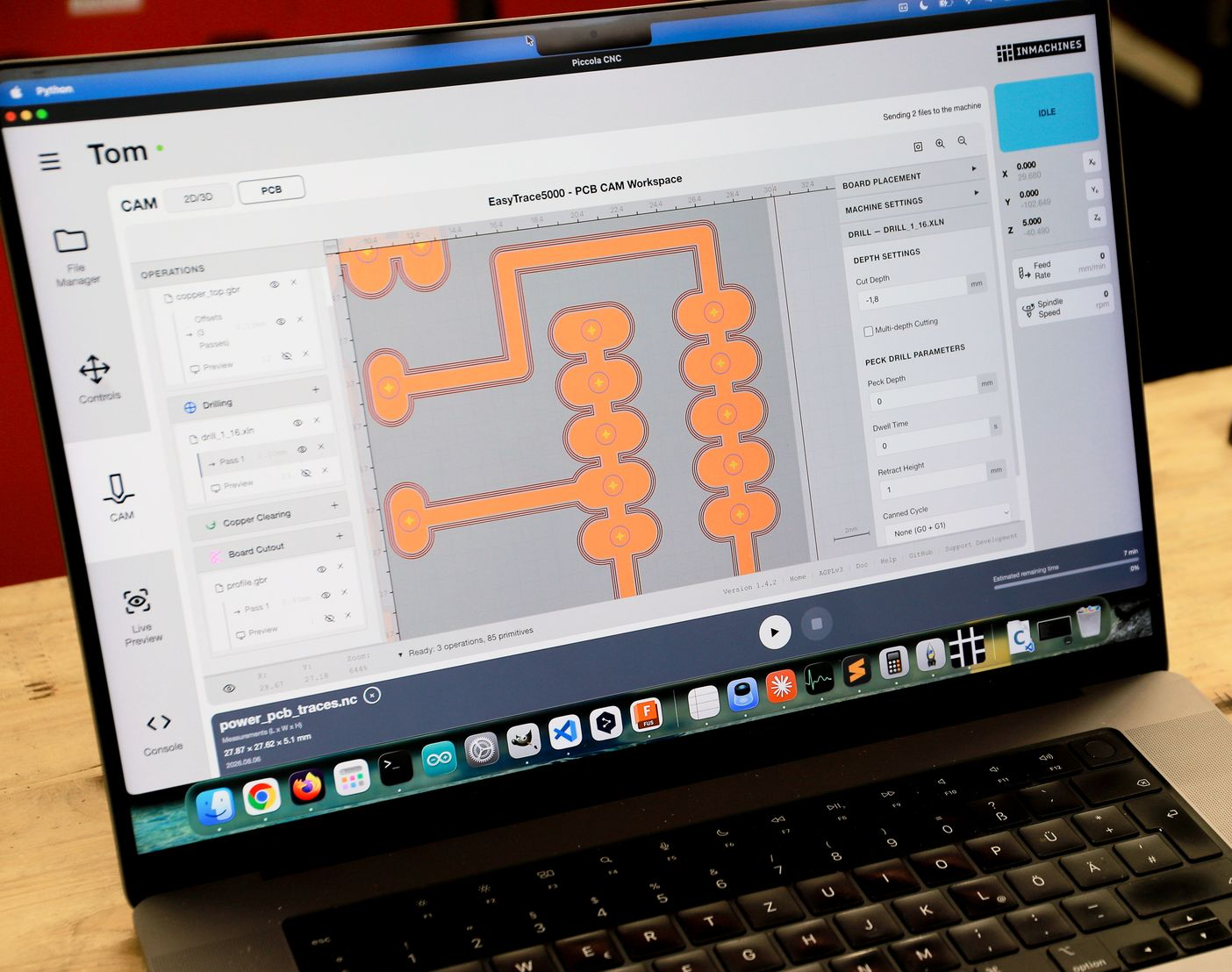
The system splits motion control from supervisory tasks using two RP2350 microcontrollers. One runs grblHAL to handle movement; the second manages additional functions such as monitoring and communication. The desktop interface integrates existing open-source CAM projects, including EasyTrace5000 and Kiri:Moto. Separating real-time movement from higher-level tasks can improve predictability, although implementation quality determines actual timing behavior. See our coverage of modular computer hardware and repairable processor modules.
The promise of repairable fabrication
The campaign FAQ explains the planned release of mechanical and electronic designs alongside software and firmware. Socketed motor drivers could simplify component replacement. For enclosed models, the manufacturer describes an independent emergency-stop circuit and monitored door interlocks. Conformity assessment remains in progress; prospective institutional buyers should verify final certification and operating procedures.
The product is still a crowdfunding project, not a shipping retail machine. Delivery is expected to begin in July 2027, according to CNX Software. Backers face manufacturing and schedule risks, and the promised files should be evaluated once released. The maker’s original LinkedIn development timeline documents prototype demonstrations preceding the campaign.
If the planned release succeeds, Piccola could make the machinery behind small-scale electronics production easier to understand, maintain and adapt. The significance is not simply making a circuit board on a desk, but giving engineers the opportunity to examine the machine that makes it.
We volunteer daily to ensure the credibility of the information on this platform is Verifiably True. If you would like to support to help further secure the integrity of our research initiative, please scan the QR code below.



Leave a Reply