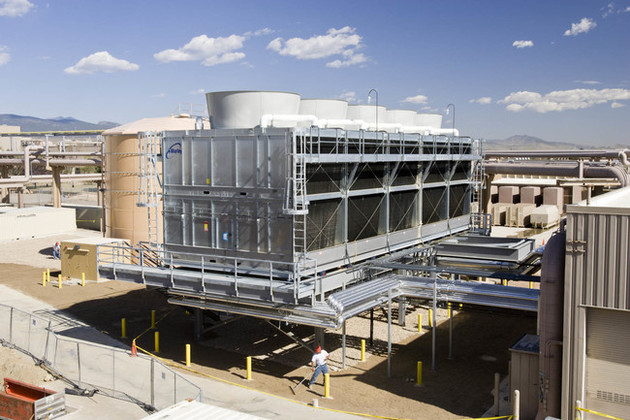
A data center originally developed for enterprise computing is gaining a new role in artificial intelligence inference. On November 17, 2026, Kyndryl and Argentum AI announced a 20-year collaboration valued at $630 million, initially covering 10 megawatts of capacity at Kyndryl’s existing Boulder, Colorado facility. Argentum is installing NVIDIA B300 systems, according to the companies. Deployment is underway, but the announcement does not establish that the entire contracted capacity is operational.
The agreement illustrates how an established enterprise facility can become part of a GPU cloud provider’s infrastructure without requiring a new campus. A separate Data Center Dynamics report identifies the location as a former IBM data center. The named partners have not disclosed the identity of the flagship inference customer.
Why inference needs more than GPUs
Inference infrastructure executes trained models to produce responses or other outputs. Long prompts, concurrent requests and large model weights place substantial demands on accelerator memory, memory bandwidth and network communication. Serving a model across multiple accelerators can require moving intermediate results between devices. Network latency, congestion and scheduling therefore affect how efficiently computing hardware serves requests.
NVIDIA’s DGX B300 product documentation describes a Blackwell Ultra platform designed for inference and other AI workloads. The Boulder announcement does not specify the exact server configuration, accelerator count, networking topology or measured token throughput. It would be premature to estimate the number of deployed GPUs from the announced capacity alone.
For hardware context, CoreWeave’s HGX B300 engineering video shows a separate installation, not the Argentum deployment.
Power delivery and concurrent maintainability
Kyndryl describes the environment as Tier III. Concurrent maintainability means infrastructure components and distribution paths can be taken out of service for planned maintenance without interrupting the critical environment when the design and operating procedures support it. It does not mean that every fault is harmless or that uninterrupted application availability is guaranteed.
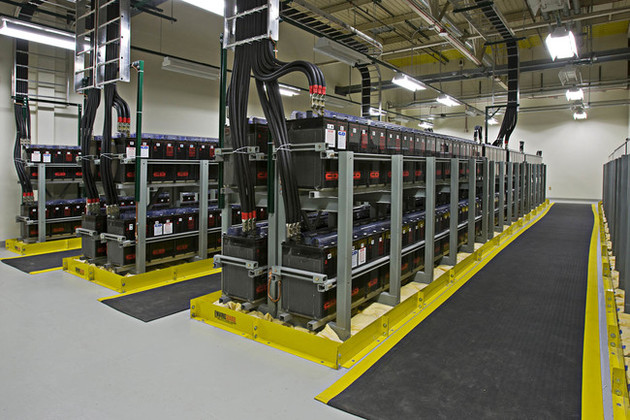
Adapting an existing facility to accelerator workloads requires engineers to evaluate rack-level power distribution, upstream electrical protection, cooling capacity, fiber connectivity and the behavior of redundant systems under load. Modern high-density racks may require changes to distribution and heat rejection even when a facility has sufficient aggregate electrical capacity. The parties have not published a detailed retrofit specification.
What the contract figures actually mean
Dividing the announced $630 million value by the 20-year term yields an arithmetic average of $31.5 million per year. That calculation is not an annual payment schedule, revenue forecast or GPU rental price. The agreement may contain payment structures and commercial obligations that were not publicly disclosed.
For scale, a continuous 10 MW electrical draw over a 365-day year would consume 87.6 GWh. Actual consumption depends on utilization and the measurement boundary. The announcement does not establish whether the capacity refers specifically to critical IT load or total facility input, so neither power usage effectiveness nor actual electricity use can be inferred.
The agreement belongs alongside recent coverage of Project Flyer’s proposed Ohio campus, Kepler’s workload energy monitoring, flexible computing loads in Southwest Power Pool and KubeVirt’s support for virtualized AI infrastructure. The next meaningful evidence from Boulder would be commissioned capacity, customer acceptance and measured inference performance.
Featured photograph: historical cooling equipment at the IBM Boulder data center, photographed in 2008 by Robert I. Larsen, commissioned by IBM, via Baxtel. It does not depict the 2026 GPU deployment.
We volunteer daily to ensure the credibility of the information on this platform is Verifiably True. If you would like to support to help further secure the integrity of our research initiative, please scan the QR code below.



Leave a Reply