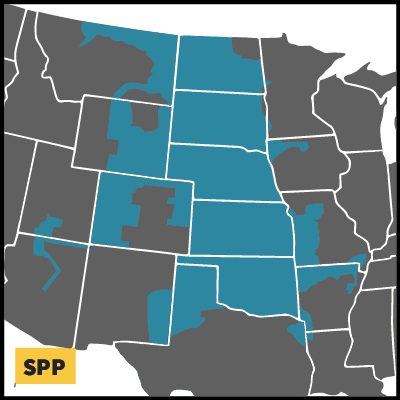
Bitcoin miners and other interruptible industrial consumers could gain a new way to purchase electricity in the Southwest Power Pool (SPP) region. On November 19, 2026, the grid operator filed proposed tariff revisions in Federal Energy Regulatory Commission (FERC) docket ER27-578-000. The proposed Price Adaptive Load Service, or PALS, would allow eligible consumers to obtain non-firm transmission service while limiting their demand in response to electricity prices and grid conditions.
The November 19 filing specifies a maximum wholesale energy bid of $25 per megawatt-hour. SPP subsequently discussed the proposal in its November 20 response to FERC’s large-load inquiry. Regulatory approval and software implementation remain outstanding; the service is not available today.
Electricity consumption becomes dispatchable
SPP would schedule participating loads through its wholesale market. If the local market price exceeds $25/MWh, the grid operator would instruct the participating load to reduce its withdrawal to zero. Below that threshold, permitted demand depends on the customer’s bid and other system constraints. Non-firm service would be curtailed before firm service, and customers would need controls capable of maintaining approved withdrawal limits.
The bid cap converts to 2.5 cents per kilowatt-hour, but it is not a guaranteed delivered electricity rate. Transmission fees, other market charges, customer-side electrical equipment and contractual arrangements can increase total costs. SPP’s market documentation explains how location-specific energy prices reflect grid conditions.
What SPP’s simulations found
The proposal draws on simulations using 42 selected days of historical 2025 data. SPP modeled ten participating loads of 200 MW each, totaling 2 GW. Increasing the bid cap from $20 to $25/MWh raised the modeled real-time load factor from 45% to 60%. Raising it further to $30/MWh increased average real-time market prices more sharply than the previous step.
For a hypothetical 10 MW facility operating at a 60% annual load factor, electricity consumption would be 52,560 MWh in a 365-day year. At a constant illustrative energy price of $25/MWh, the energy-only expense would be $1.314 million. Neither the utilization nor the cost is a forecast for an actual facility. At 100% load factor, the same facility would consume 87,600 MWh annually.
Why Bitcoin mining and AI respond differently
Bitcoin mining ASICs can generally suspend hashing without discarding a long-running training computation. Restart procedures, thermal cycles, auxiliary electrical demand and hardware depreciation still affect the economics. AI training may require checkpointing and coordinated restarts, while customer-facing inference often depends on uninterrupted service. Some batch inference workloads may be more flexible than latency-sensitive applications.
Relevant background: What is locational marginal pricing? The independent explainer describes wholesale pricing mechanics; it is not footage of the PALS proceedings.
A proposed service, not a new operating tariff
SPP seeks a FERC decision by February 17, 2027, and targets implementation in the second quarter of 2028. Its regulatory filing archive lists the related large-load proceedings. The voluntary service would not replace existing firm contracts automatically. Renewable terms would range from one to ten years.
Related reporting includes flexible computing powered by surplus renewables, Bitcoin mining energy costs in Texas, Abits’ industrial power infrastructure and CleanSpark’s prospective Georgia expansion. The important question is whether savings on variable electricity can compensate for lower equipment utilization while protecting grid reliability.
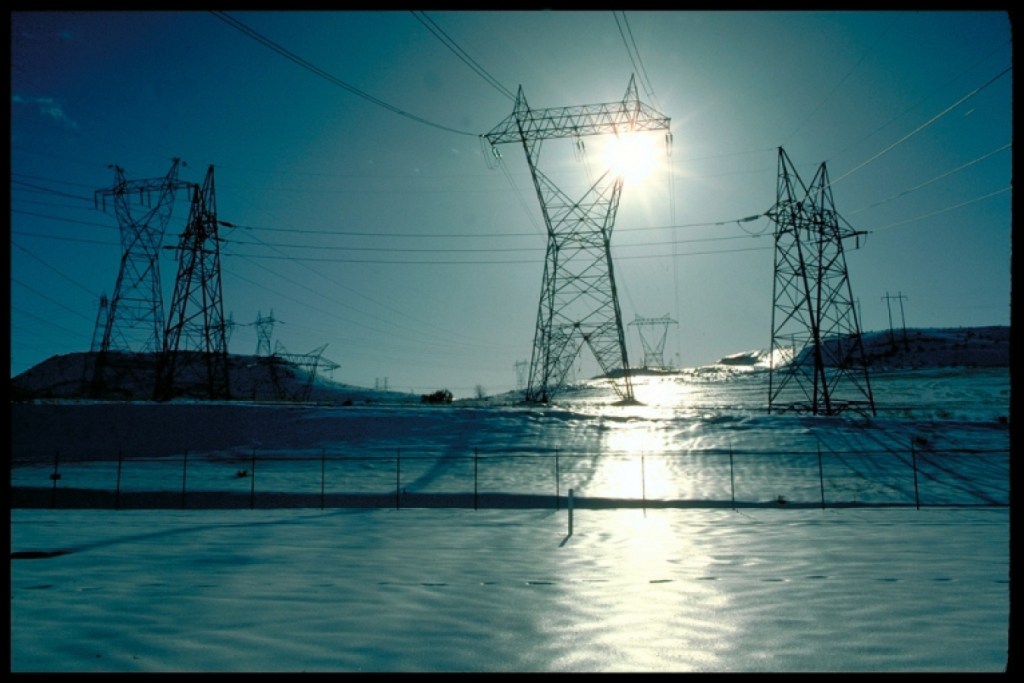
Cover photograph: U.S. Department of Energy, transmission infrastructure near The Dalles Dam, Oregon. The photograph illustrates electrical transmission, not an enrolled PALS facility.
We volunteer daily to ensure the credibility of the information on this platform is Verifiably True. If you would like to support to help further secure the integrity of our research initiative, please scan the QR code below.



Leave a Reply