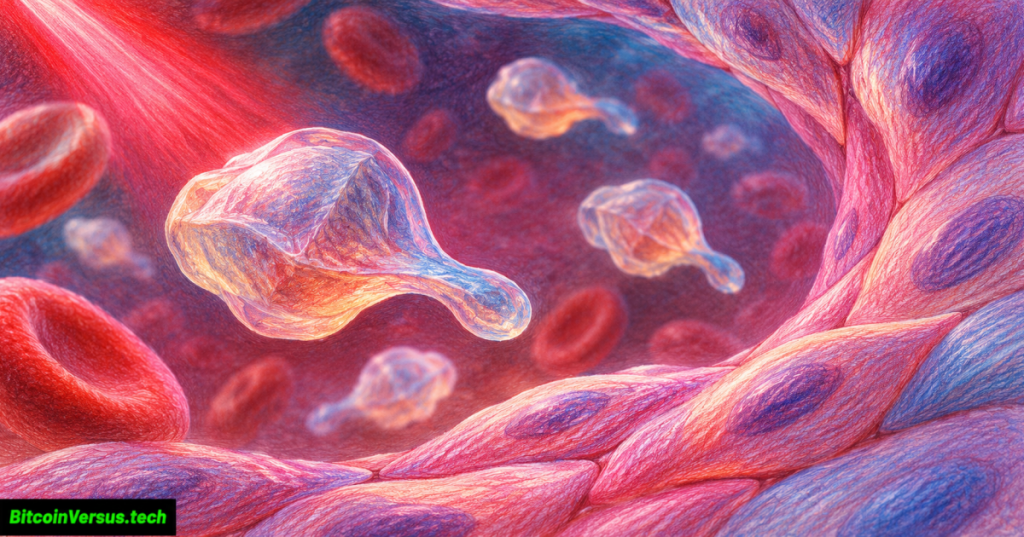
A research team led by Caltech medical engineer Wei Gao has developed approximately 250-nanometer robotic drug carriers designed to help medicines enter the brain. In experiments involving mice with glioblastoma, light-activated carriers delivered roughly five times as much medication to the brain as carriers without activation, according to the university’s November 25 announcement. The research appeared in Science Robotics. The findings concern preclinical experiments, not a treatment established for human patients.
Why nanoscale robotics is different
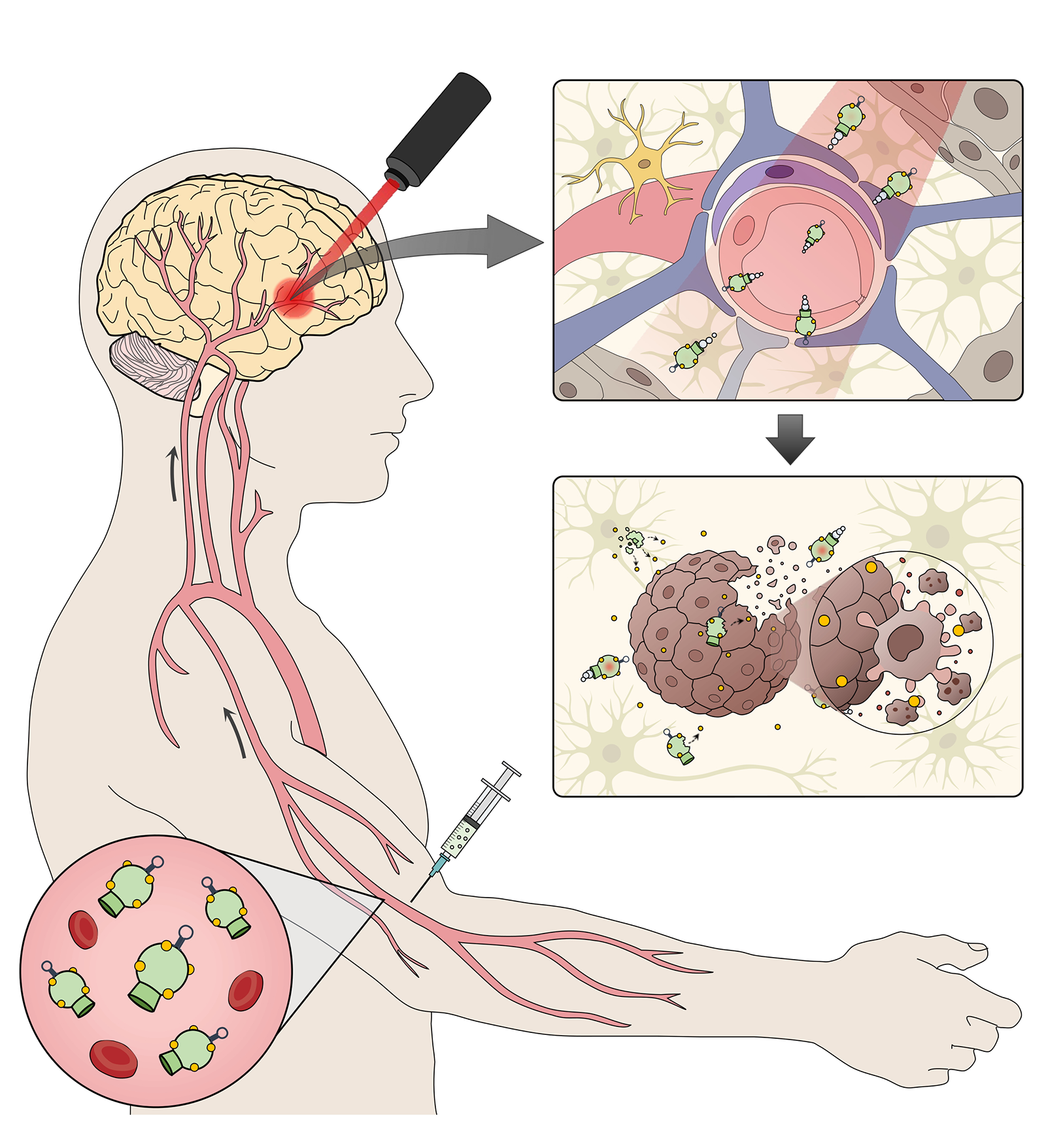
The blood-brain barrier regulates the movement of substances between circulating blood and brain tissue. Its protective function creates an engineering problem for drug delivery: a medicine can circulate throughout the body without reaching its intended destination in adequate quantities. Raising the administered amount may increase exposure elsewhere without solving the transport problem. A targeted carrier instead attempts to improve the proportion of medication that reaches the relevant tissue.
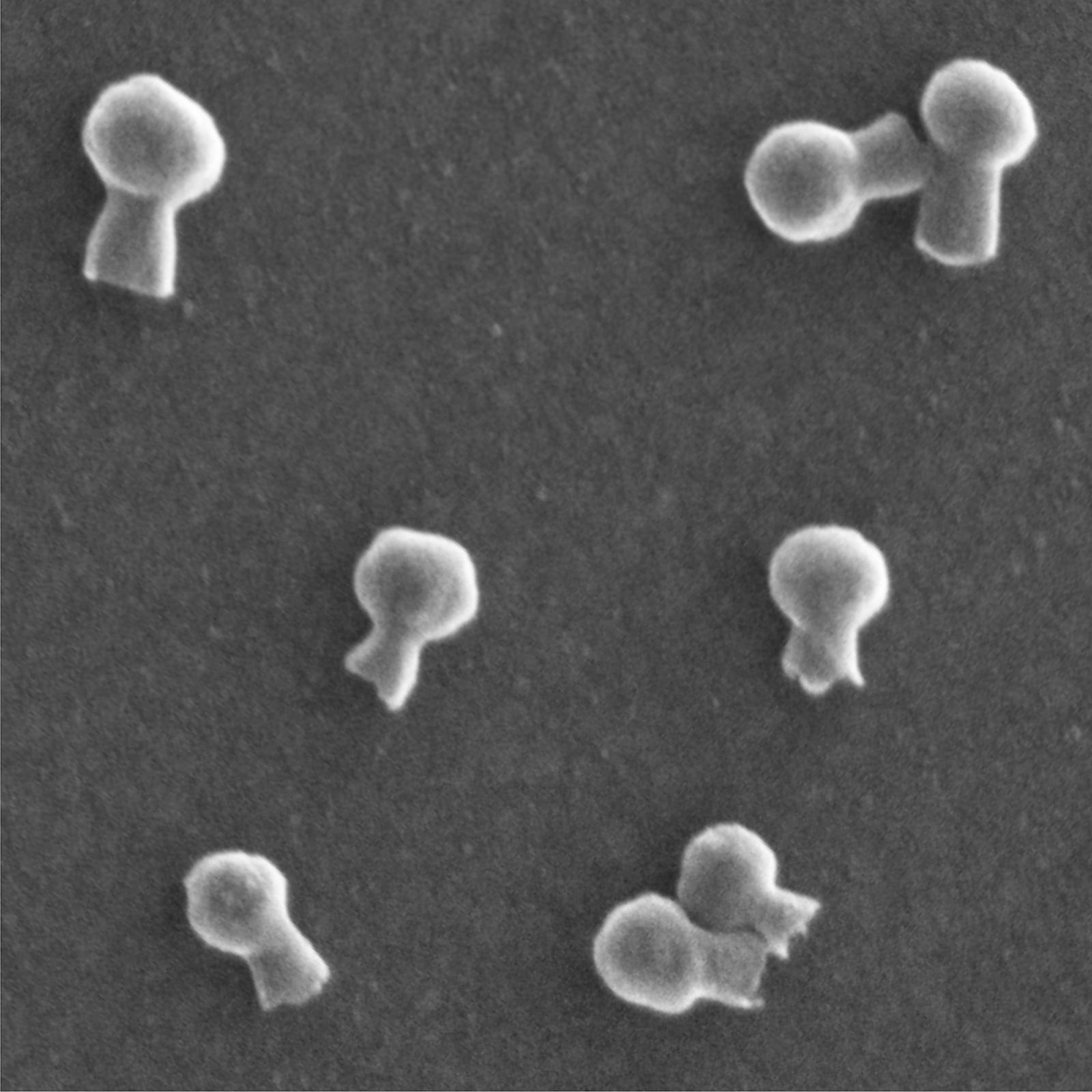
At a quarter of a micrometer across, the BrainBots differ fundamentally from conventional machines. Rather than incorporating processors, batteries and electric motors, their design combines material properties and externally triggered motion. Near-infrared illumination activates the carriers, while molecular recognition helps them associate with the cells forming the barrier. The authors describe the combination of physical propulsion and biological targeting in their indexed research abstract.
Robotic engineering at such a scale requires different assumptions from the design of industrial manipulators or mobile machines. Fluid resistance, random thermal motion and surface interactions become important as dimensions shrink. A nanoscale vehicle cannot simply be treated as a miniature submarine. Its useful performance depends on how consistently it encounters the appropriate cells, how those cells respond and whether its payload remains functional.
What the experiments actually demonstrated
In the mouse experiments, the drug carried by the particles was doxorubicin. The investigators reported reduced tumor growth, longer survival and lower systemic toxicity relative to conventional drug administration. The reported fivefold delivery comparison, however, refers specifically to activated versus nonactivated carriers; it is not a fivefold improvement in survival or a universal reduction in required dosage. Independent reporting by TechSpot also emphasizes that human testing remains a future prospect.
The work extends a broader effort to develop robots that interact directly with biological and physical environments. Related research covered by BitcoinVersus.Tech includes medical microbots, magnetically controlled origami machines and miniature flying robots. Each technology illustrates how actuation and control mechanisms must be matched to the size and environment of the device. Alternative brain-delivery strategies, including molecular carrier research, provide another direction for comparison.
The next engineering challenge
Before clinical translation, researchers must establish reproducible manufacturing, long-term safety, reliable clearance and the effectiveness of optical activation at human anatomical scales. Caltech identifies light delivery and degradation studies among its next priorities. Evaluating those limitations is essential because results from a controlled animal model cannot establish safety or effectiveness across different human diseases. The achievement is a demonstration of a new transport mechanism, rather than a clinical breakthrough already available to patients.
Featured cover: conceptual colored-pencil editorial illustration, not to scale.
We volunteer daily to ensure the credibility of the information on this platform is Verifiably True. If you would like to support to help further secure the integrity of our research initiative, please scan the QR code below.

BitcoinVersus.tech is not a financial advisor. This media platform reports on financial subjects purely for informational purposes.


Leave a Reply