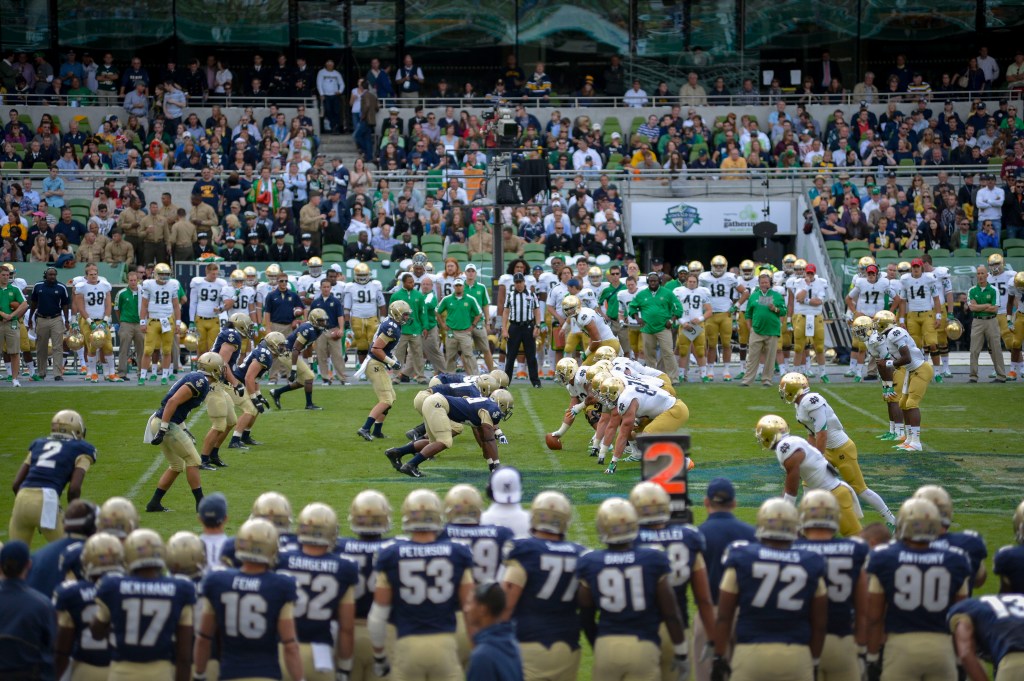
Football defense is a contest over space, leverage and time. Before the snap, the quarterback sees an alignment; after the snap, defenders may exchange responsibilities. The following guide separates each major coverage and provides a dedicated video or a chapter within a sourced instructional video. Coaching clinics are identified as such rather than represented as game highlights.
Fourth and Film: Every Defensive Coverage Explained in 15 Minutes. Open source video.
Cover 0 — zero blitz
No deep safety help. Five defenders typically match eligible receivers while six rush. Quick throws, crossers and missed tackles can punish the pressure.
Ryan Fowler: Chiefs vs. Bills goal-line Cover 0 game-film study. Open source video.
Cover 1 — man-free
One deep safety patrols the middle while defenders match receivers underneath. Outside leverage can funnel routes toward help; isolated outside matchups remain vulnerable.
Inside Texas Football: Cover 1 college film study. Open source video.
Cover 1 Robber
A free underneath defender cuts off in-breaking routes while a deep safety stays over the top. The robber can disrupt digs and crossers but leaves fewer pass rushers.
Philadelphia Eagles Game Plan: Cover 1 Robber game tape. Open source video.
Cover 2 Zone
Two safeties defend deep halves and five underneath players patrol short zones. The offense can test the deep middle and the sideline hole between the corner and safety.
Inside Texas Football: Cover 2 using Texas Longhorns game examples. Open source video.
Cover 2 Man (Cover 5 in some systems)
Two deep safeties protect over five man defenders. Trail technique becomes practical, although quarterback scrambles and traffic across the middle can strain the defense.
Inside Texas Football: Cover 2 Man chapter at 15:47. Open source video at the relevant chapter.
Cover 2 Buzz
The defense disguises its final two-deep responsibilities. In some coaching systems, 2-Buzz also describes an inversion of cornerback and safety assignments. Terminology is not universal.
Fourth and Film: Cover 2 Buzz chapter at 6:20. Open source video at the relevant chapter.
Inverted Cover 2 (Cover 8 in the terminology discussed here)
Both corners retreat into the deep halves while safeties rotate down to the flats or curl-flat areas. Inside defenders protect the remaining underneath zones. Chad Wilson explains the assignment exchange. Some playbooks call the concept 2 Invert or 2 Buzz; Cover 8 has a different meaning in Fangio-style systems.
All Eyes DB Camp: Chad Wilson’s whiteboard explanation of 2 Invert, sourced from his own coaching article. Open source video.
Tampa 2
The middle linebacker carries vertical routes into the deep middle, supplementing the two deep safeties. Intermediate outside routes and short throws underneath the dropping linebacker can create opportunities.
Fourth and Film: Tampa 2 chapter at 7:23. Open source video at the relevant chapter.
Cover 3 — three deep
Three defenders divide the deep field into thirds while four cover underneath. Traditional spot-drop versions can be stressed by four verticals, floods and seam routes.
Inside Texas Football: Cover 3 college film study. Open source video.
Cover 3 Sky
A safety rotates down to an outside underneath zone while the corners and remaining safety protect deep thirds. The rotation supports the edge against runs and quick passes.
Glazier Clinics: Susquehanna defensive coordinator Pat Ruley’s chalk talk on Sky, Cloud and Buzz rotations; the accompanying clinic page links to game application footage. Open source video.
Cover 3 Cloud
A corner controls the flat while a safety replaces that corner in the outside deep third. The quarterback must identify the asymmetric rotation after the snap.
Fourth and Film: Cover 3 Cloud chapter at 9:53. Open source video at the relevant chapter.
Cover 3 Buzz
A safety rotates into an inside hook or curl zone, with three defenders protecting deep thirds. The disguise can take away intermediate throws that appear open before the snap.
Fourth and Film: Cover 3 Buzz chapter at 11:04. Open source video at the relevant chapter.
Cover 4 — quarters
Four defensive backs cover deep quarters. Match rules allow safeties to react to receiver releases and support the run, unlike a passive four-deep prevent defense.
Inside Texas Football: Cover 4 and quarters college film study. Open source video.
Cover 6 — quarter-quarter-half
Quarters operates on one side and Cover 2 on the other. The coordinator can use different leverage and safety help based on formation, field position and receiver threats.
Fourth and Film: Cover 6 chapter at 13:47. Open source video at the relevant chapter.
Cover 7 — match and bracket coverage
In Nick Saban’s terminology, Cover 7 is a family of split-field match coverages. Defenders exchange assignments according to route depth and release direction, allowing targeted brackets.
Weekly Spiral: Nick Saban’s Cover 7 defense explained. Open source video.
Cover 8 — Fangio terminology
In Vic Fangio’s system, Cover 8 is the sister call to Cover 6: it places the half-field side toward passing strength and quarters away. It is distinct from the double-invert Cover 2 described earlier.
MatchQuarters: Fangio Cover 8 chalk talk beginning at 3:34. Open source video at the relevant chapter.
Cover 9 — weak rotation in Fangio terminology
Some staffs use Cover 9 for a weakside Cover 3 rotation; the number is not universal. Coach Vass identifies the call in his analysis of Denver’s defense against Dallas in 2021.
Coach Vass: Broncos vs. Cowboys game-film breakdown, Cover 9 discussion and clips beginning at 2:20:26. Open source video at the relevant chapter.
Palms — 2-read match
The corner reads the second receiver, driving on an early out while the safety handles the outside vertical threat. Against vertical releases, responsibilities change to match the routes.
MatchQuarters: Palms clinic with film examples beginning at 1:34. Open source video at the relevant chapter.
Cover 3 Match — Rip/Liz
Three-deep coverage becomes route-responsive, matching vertical threats rather than merely guarding grass. Rules vary by staff and formation.
Inside Texas Football: modern match Cover 3 chapter at 8:19. Open source video at the relevant chapter.
Fire zone blitz — five-man pressure
Five rushers attack protection while three deep and three underneath defenders cover the pass. A dropping lineman or rotating defensive back can disguise where pressure originates.
MatchQuarters: coaching clinic on five-man fire zones and three-under, three-deep coverage. Open source video.
Simulated pressure and bracket packages
A simulated pressure can rush four unexpected defenders while preserving seven in coverage. Brackets allocate two defenders to a priority receiver, making throws more difficult while sacrificing help elsewhere.
Coach Vass: TCU vs. Ole Miss, 2014 Peach Bowl game-film review of Gary Patterson’s coverage and pressure packages. Open source video.
How quarterbacks diagnose coverage
Count deep safeties, inspect corner leverage, use motion as a clue, then confirm rotations after the snap. Two high safeties before the snap do not guarantee Cover 2.
Related reading: NFL defensive backs, undersized linebackers, greatest receivers and football AI and player tracking.
Coaching references: Missouri game-film examples of man coverages; Glazier Clinics Cover 3 variations; Coach Vass film-study index and chapter lists; Cover 2 Buzz variations.
Featured photograph: U.S. Navy photo by Peter D. Lawlor, September 1, 2012, public domain via Wikimedia Commons.
We volunteer daily to ensure the credibility of the information on this platform is Verifiably True. If you would like to support to help further secure the integrity of our research initiative, please scan the QR code below.



Leave a Reply