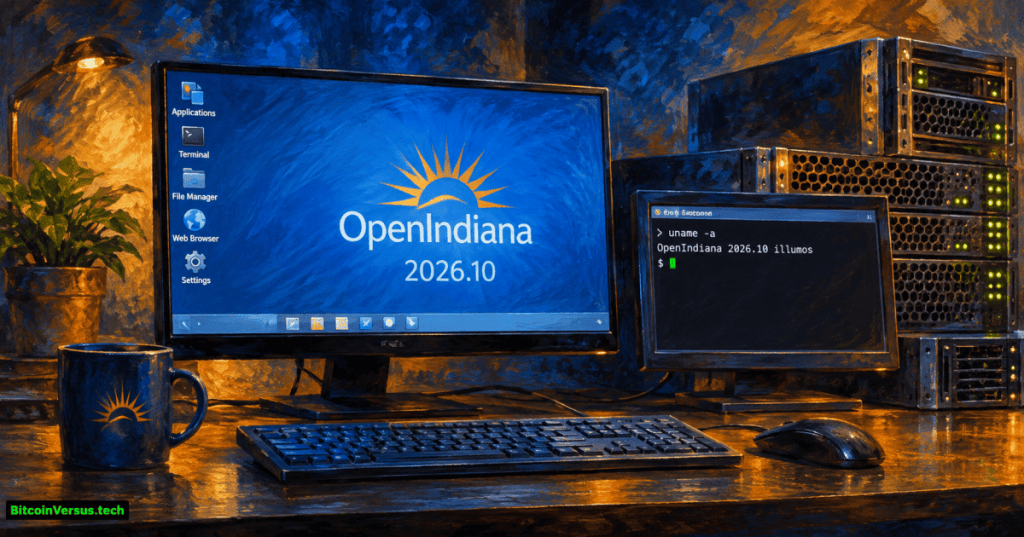
OpenIndiana, an open-source operating system descended from Sun Microsystems’ OpenSolaris, announced its Hipster 2026.10 snapshot on November 7. The official release notes identify improved graphical startup on UEFI systems, refreshed development software and updated virtualization packages. The installation images were prepared on October 30, while supplemental cloud images were built on November 7. For engineers accustomed to Linux, the release provides an opportunity to explore another independently maintained Unix architecture.
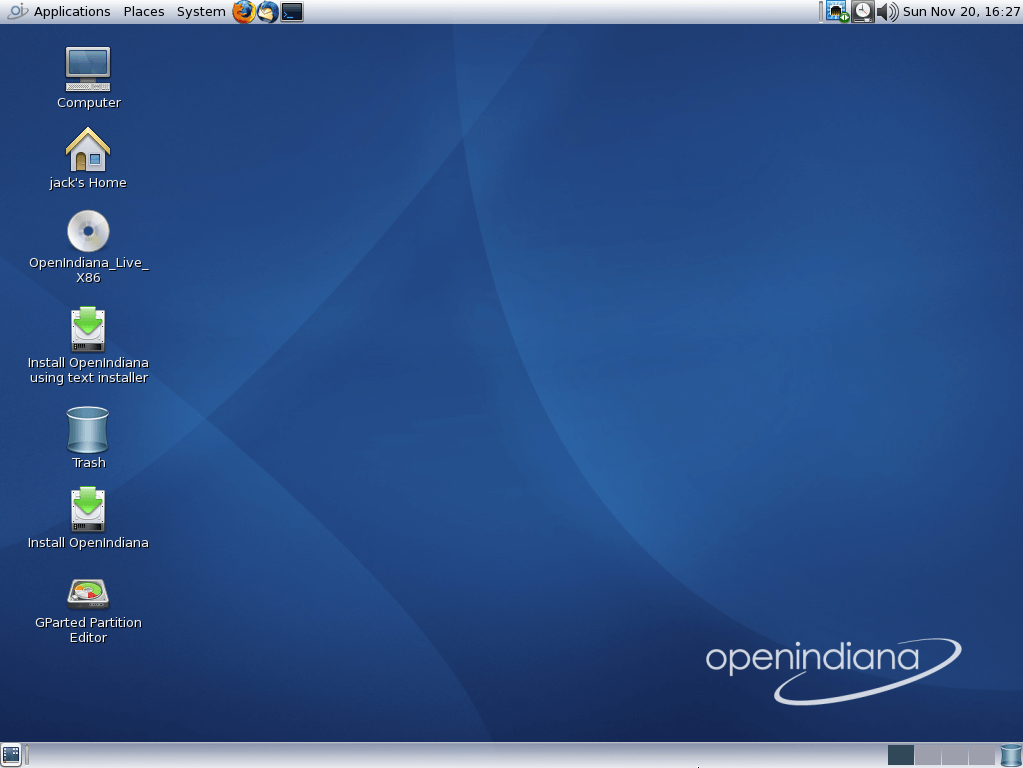
A more accessible graphical startup
One practical change concerns the framebuffer, a region of memory containing pixel information used to display graphics. The Unified Extensible Firmware Interface, or UEFI, can initialize a graphics display before an operating system loads. An operating system still needs appropriate software to use the display after taking control from the firmware.
OpenIndiana now includes the illumosfb Xorg driver in its live installation image. The driver configures itself when the operating system uses an illumos framebuffer console. For compatible systems, the arrangement provides a path to the graphical installer without requiring a separate accelerated graphics driver. Framebuffer access should not be confused with hardware-accelerated rendering, and the release does not establish universal compatibility with modern graphics cards.
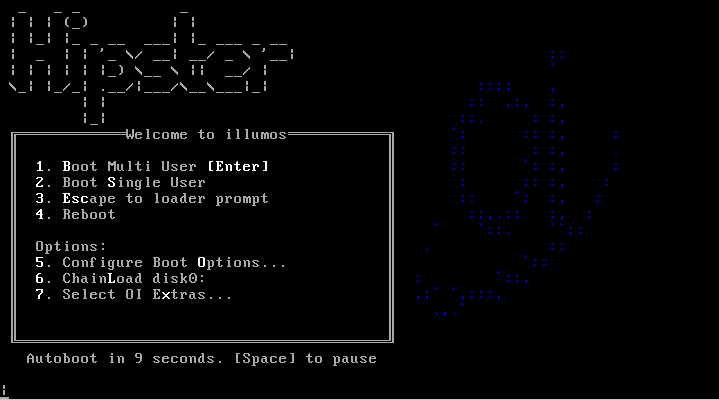
A Unix alternative to Linux
The distribution combines the illumos kernel and core system components with separately maintained applications and development tools. As explained in the project documentation, its architecture includes ZFS storage, DTrace instrumentation, operating-system-level isolation through zones and the Service Management Facility. Although Linux provides comparable capabilities through different subsystems, OpenIndiana does not run the Linux kernel. Application compatibility depends on the relevant interfaces, available packages and hardware drivers.
ZFS combines storage-pool administration with filesystem management. Its copy-on-write design enables snapshots that preserve earlier filesystem states without initially duplicating every data block. OpenIndiana can also maintain separate boot environments, allowing administrators to keep a previous system configuration available during software changes. Related approaches to operating-system and storage management appear in our coverage of Fedora’s Stratis installer and openSUSE’s immutable installation option.
A rolling operating system
The November announcement also lists newer Python, Perl, Rust and C/C++ development tools. QEMU and VirtualBox receive updates, and the QEMU guest agent becomes separately packaged. The expanded application collection demonstrates how widely used open-source software can operate on more than one kernel. Our reporting on Ladybird’s independent browser engine and Peppermint’s Void-based edition illustrates other approaches to architectural diversity.
Hipster follows a rolling release model rather than requiring a fresh installation every six months. Its snapshots provide updated starting points for new installations; existing users can obtain package updates through the Image Packaging System. The installation handbook recommends caution for mission-critical deployments. Testing the operating system inside a virtual machine is a practical way to investigate its storage and administration features before evaluating physical hardware compatibility. The next useful milestone will be broader documented testing of the framebuffer driver across modern UEFI machines.
We volunteer daily to ensure the credibility of the information on this platform is Verifiably True. If you would like to support to help further secure the integrity of our research initiative, please scan the QR code below.

BitcoinVersus.tech is not a financial advisor. This media platform reports on financial subjects purely for informational purposes.


Leave a Reply