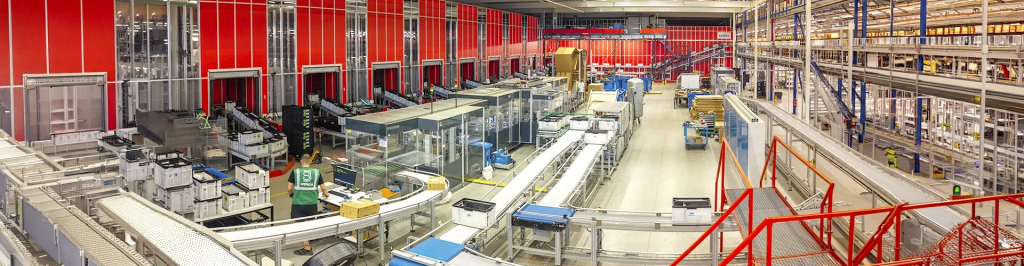
European fashion logistics provider Bleckmann is preparing to introduce two humanoid robots at selected distribution centers, according to a November 24, 2026 announcement. The machines are expected to arrive within weeks, with the first months devoted to training, task evaluation and collaboration with warehouse employees rather than immediate productivity gains. The company reports that its broader warehouse automation program has already received more than $600 million in investment; that figure is not the cost of the two humanoids.

Why warehouse infrastructure matters
A distribution center contains racks, packing stations, conveyors, picking locations and workspaces designed around human movement. A humanoid robot may be able to reach work surfaces or manipulate objects without replacing all of the existing equipment. Its potential advantage is flexibility, rather than guaranteed superiority over specialized machinery.
Bleckmann describes a system intended to interpret verbal instructions and navigate using cameras, LiDAR and three-dimensional simultaneous localization and mapping. SLAM estimates a robot’s position while constructing or updating a representation of its environment. The robot localization lesson explains how sensor observations and position estimates support navigation. A warehouse also requires dynamic obstacle avoidance and path replanning when workers, carts or inventory obstruct a route.
A spoken request is only the beginning of a task. A robot must identify the correct object, determine an appropriate grasp, execute a collision-aware motion, verify the outcome and report exceptions. Integrating those actions with inventory records is essential for preventing picking errors from propagating into order management.
Specialized robots offer a useful benchmark
A separate project at Bleckmann’s Bergen op Zoom facility in the Netherlands illustrates the difference between flexible and purpose-built automation. The company’s November 17 announcement describes a three-year CarouselAI pilot with AutoStore and Berkshire Grey. The robotic picking arm uses interchangeable suction tools and sensor-based selection to handle different products.
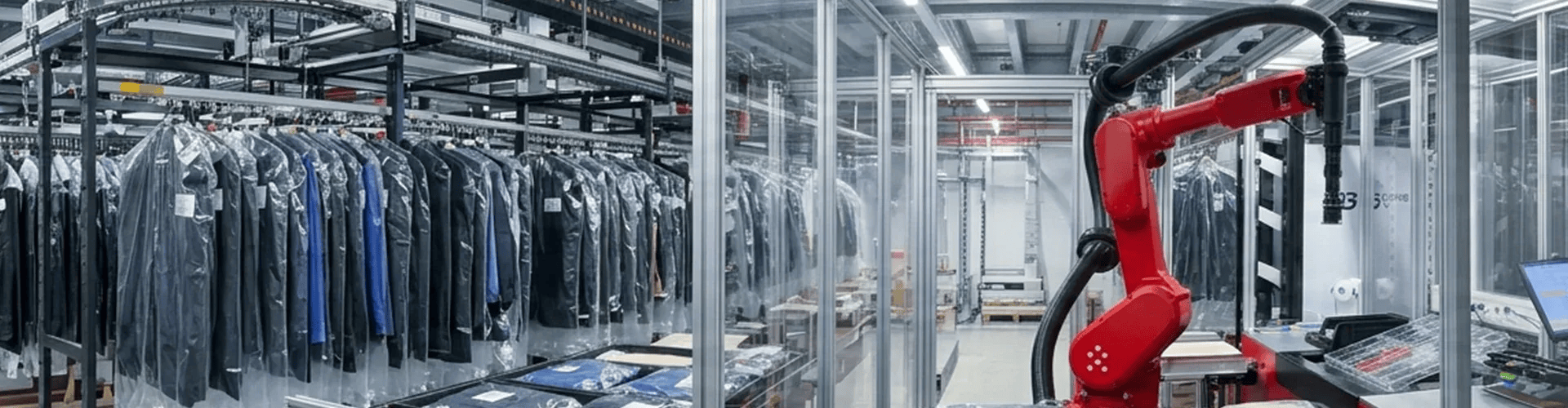
The company reported an initial peak of 350 units per hour for the arm, equivalent to roughly one unit every 10.3 seconds if sustained continuously. That rate is an arithmetic conversion of the reported peak, not an observed average cycle time or a demonstrated humanoid performance figure. The November 24 report by TheIndustry.fashion also distinguishes the two initiatives.
From demonstrations to repeatable operations
Logistics is already a major market for professional service robots, as examined in our analysis of International Federation of Robotics survey data. Autonomous mobile platforms, including the systems discussed in our AGILOX infrastructure coverage, solve transportation problems without necessarily reproducing human anatomy.
A successful humanoid pilot would need measurable evidence of completed tasks per hour, intervention frequency, equipment availability, charging requirements and safe behavior near employees. Engineers must evaluate emergency stops, speed limits, operating boundaries and recovery procedures under credible failure conditions. Navigation sensors alone do not demonstrate that a machine is safe for unrestricted human collaboration.
Bleckmann has not disclosed the humanoids’ model, purchase price, expected throughput or production-scale deployment schedule in its November announcement. The next meaningful milestone will be verified task performance after the training period. The project is an opportunity to evaluate physical AI within existing logistics infrastructure, not yet evidence that humanoid labor is more economical than conventional warehouse automation.
Featured photograph: Bleckmann, automated warehouse infrastructure. The image provides facility context and does not depict the new humanoid pilot.
BitcoinVersus.Tech Editor’s Note: Independent research and engineering analysis.
We volunteer daily to ensure the credibility of the information on this platform is Verifiably True. If you would like to support to help further secure the integrity of our research initiative, please scan the QR code below.

BitcoinVersus.tech is not a financial advisor. This media platform reports on financial subjects purely for informational purposes.


Leave a Reply