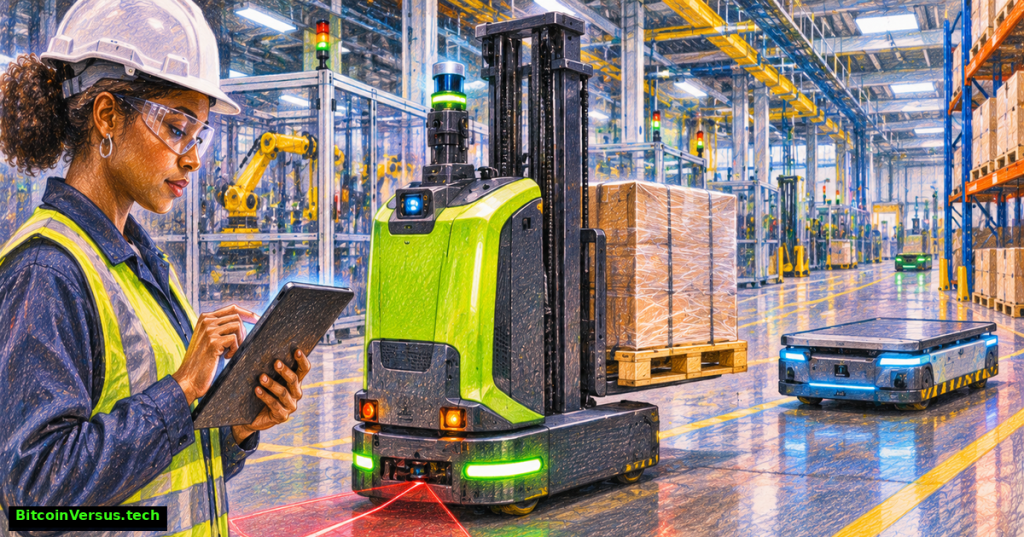
Rockwell Automation signed an agreement on November 18, 2026, to acquire Austrian mobile robot manufacturer AGILOX, expanding its industrial automation business into autonomous forklift and material-handling systems. AGILOX has deployed more than 2,500 autonomous mobile robots worldwide, according to Rockwell. The companies did not disclose the purchase price, and the transaction remains subject to regulatory approval and other conditions. Rockwell expects closing during its fiscal second quarter of 2027, according to its November 18 announcement.
What AGILOX adds to Rockwell’s robot portfolio
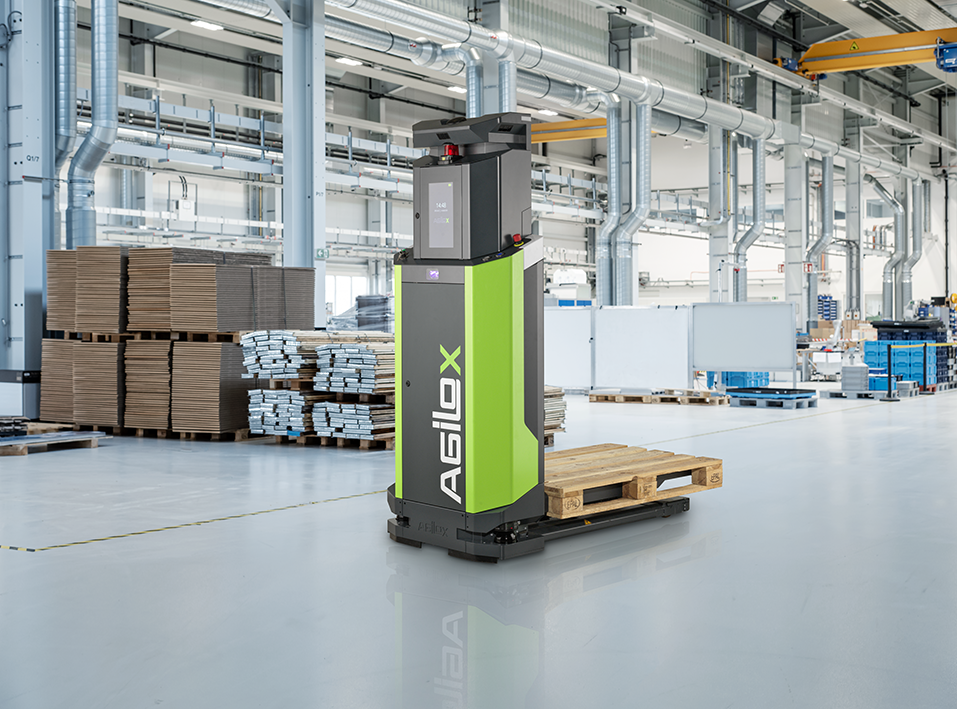
AGILOX manufactures autonomous forklifts and pallet movers for warehouses, factories and production logistics. Its robots use onboard navigation and a distributed coordination system called X-SWARM. Vehicles exchange information to divide work and navigate shared areas rather than relying exclusively on one central fleet controller. Rockwell already owns OTTO, which offers flatbed mobile robots for moving parts, pallets and equipment between factory stations. Combining the portfolios could offer customers broader options, but compatibility across their control systems is not yet established.
Official AGILOX video, April 21, 2026: an archival explanation of X-SWARM communication between autonomous robots. The video predates the acquisition agreement.
Rockwell says the purchase would more than double its autonomous mobile robot business. The claim describes the anticipated scale following a completed transaction, not an independently verified expansion in revenue or machines delivered on November 18. AGILOX is headquartered near Lambach, Austria, with subsidiaries in Europe, the United States and China and more than 250 employees. Its existing deployments span automotive, logistics, food and pharmaceutical applications.
The difference between forklift and flatbed automation
A forklift robot lifts pallets from the floor or a loading station. Flatbed robots typically carry loads on a platform, sometimes interacting with carts, conveyors or machinery. Both must plan routes, detect people, avoid obstacles, coordinate traffic and manage battery charging. An automated warehouse may require several vehicle types and software links to inventory or manufacturing execution systems. The engineering challenge is making movements reliable across existing production lines without introducing unsafe traffic patterns or new bottlenecks.
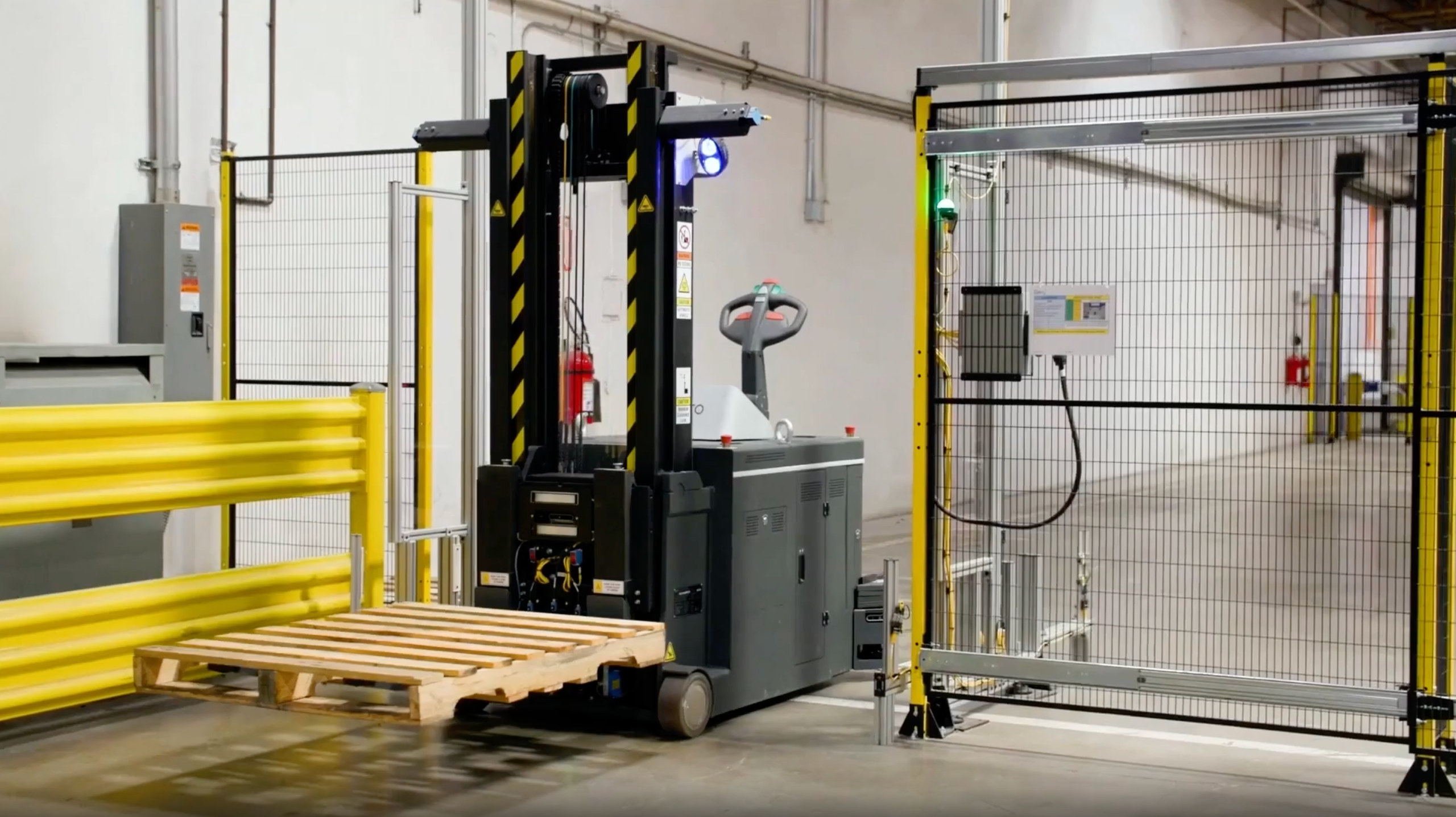
AGILOX’s own OCF technical sheet specifies a maximum lift of 1,500 kilograms and a maximum travel speed of 1.4 meters per second for a particular configuration. Those equipment ratings should not be confused with measured throughput in a customer’s factory. Actual pallets moved per hour depend on route length, traffic, loading time, charging and workflow integration.
OTTO by Rockwell Automation official archival robot fleet demonstration, published before the acquisition. It describes OTTO hardware and software rather than a combined AGILOX and OTTO deployment.
Who benefits, and what remains uncertain
Rockwell expects AGILOX to report through its Intelligent Devices segment after closing. Investment firm Carlyle, which became AGILOX’s majority investor in 2021, separately confirmed its planned sale. Carlyle said AGILOX revenue quadrupled during its ownership, but released no absolute sales or purchase-price figure. Carlyle’s statement places the expected close in the first half of 2027, consistent with Rockwell’s more specific fiscal-quarter guidance.
The business case includes fewer manual pallet movements, flexible production layouts and more consistent material delivery. Risks include collision prevention, system cybersecurity, worker training, capital cost, software integration and maintaining equipment during production. Safety certification and performance must be evaluated for each installation; a successful demonstration does not guarantee savings at every factory.
Recent BitcoinVersus.Tech coverage explored Boston Dynamics robots entering semiconductor fabs, General Motors’ factory automation plans, Genesis AI’s humanoid robotics investment and Rockwell’s industrial edge-control software. The AGILOX agreement is another example of industrial automation moving toward mobile, coordinated systems rather than fixed machines alone.
The next tests will involve regulatory clearance, cross-platform compatibility and operational results. For now, Rockwell has agreed to acquire a substantial European robot supplier; the combined robot business remains a future prospect.
Primary sources: Rockwell Automation, November 18, 2026; Carlyle announcement, November 18; AGILOX official catalog; OTTO press kit.


Leave a Reply