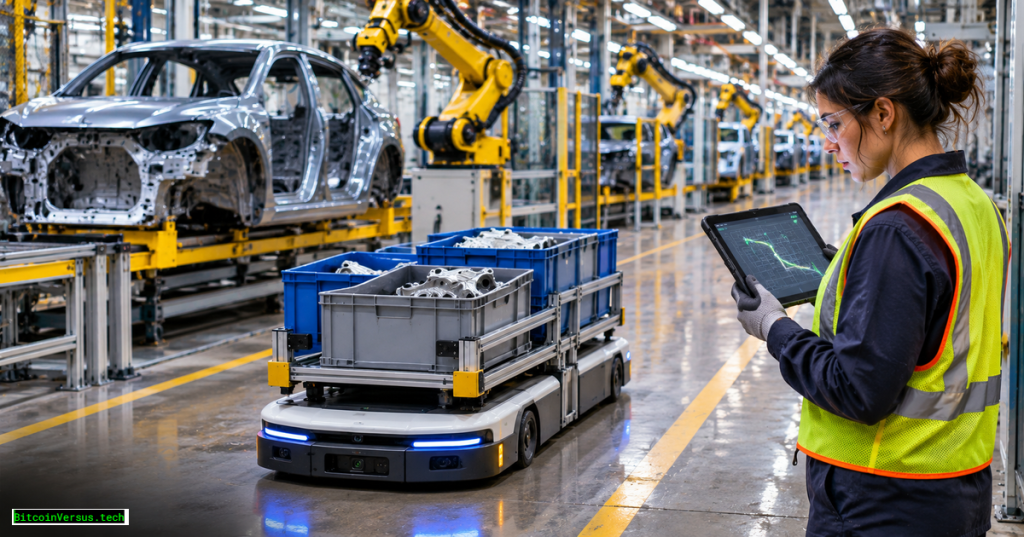
General Motors is aiming to expand its use of robots and other automation at North American factories by 20% by 2028, according to a November 17, 2026 Reuters investigation citing people familiar with the plans. The automaker is also reportedly designing robots internally and assembling them in Kokomo, Indiana. GM has not publicly confirmed the precise 20% target or a production schedule for the reported Indiana effort.
The initiative is reportedly focused partly on autonomous mobile robots that carry parts between workstations, not just industrial arms that weld or paint vehicles. Automating internal logistics can cut walking, waiting and material-handling bottlenecks, but the benefits depend on dependable navigation and integration with existing assembly operations.
Official General Motors video, “Building an EV,” showing vehicle manufacturing. Historical footage for production context; not confirmation of the November 2026 automation target.
What 20% more automation actually means
Reuters described the target as a 20% increase in the use of robots and other automation, not an increase of 20 percentage points in the share of tasks automated. GM has not disclosed a public baseline robot count or a formula for measuring the proposed increase. Consequently, the report cannot establish how many new robots, installations or labor hours would be involved.
Manufacturers have used fixed robot arms for stamping, welding and painting for decades. Mobile systems face different problems: they must map busy floors, detect people and obstacles, coordinate fleet traffic, maintain battery charging schedules and deliver the right component before the next assembly cycle. A missed delivery can interrupt a production line even when the robot itself functions as designed.
Why GM’s in-house robotics work matters
GM’s own November 2025 robotics-center article confirms its Autonomous Robotics Center was already developing mobile robots for plant use. Robotics strategy director Mikell Taylor emphasized human collaboration, task design and factory-level reliability. Separately, a February 2026 industry interview explored why downtime tolerance differs sharply between warehouses and automotive assembly.
Reuters reported that GM still purchases equipment from external suppliers while developing its own designs. The company is also reportedly asking parts suppliers to disclose automation plans and considering their responses when awarding contracts. Supplier scorecards and the reported Kokomo work come from Reuters’ sources, not from a newly published GM technical specification.
General Motors’ official “Factory ZERO” video introduces the company’s electric vehicle manufacturing facility. Earlier production footage, not evidence that a 2028 automation plan has been completed.
Workers, productivity and the next labor negotiations
The expansion also poses labor questions. Reuters reported strong objections from the United Auto Workers, whose representatives worry that automation will eliminate manufacturing jobs as the next bargaining round approaches in 2028. GM has argued in earlier statements that automation can improve worker safety, production quality and factory efficiency. Both perspectives matter because productivity gains do not automatically establish whether employment will rise or fall.
A related industry shift appears in Genesis AI’s general-purpose robot funding and Robust AI’s human-steered warehouse system. Yet car plants have tighter timing constraints than many distribution centers, meaning an attractive demo is not enough to establish industrial readiness.
The bigger question: can robots work without stopping the line?
Developers are attacking the same integration problem from different directions. NXP’s open robotics SDK aims to standardize sensing and control components, while GXO and Apptronik’s warehouse trials test a different robot form factor in logistics. NVIDIA’s factory robotics initiative provides another example of specialized automation.
The key unresolved measurements are how GM defines its 20% goal, what portion of future systems are built internally, how deployment affects throughput and safety, and how workers are reassigned. Until GM releases specifications or operating results, the 2028 target remains a reported plan rather than a verified achievement.
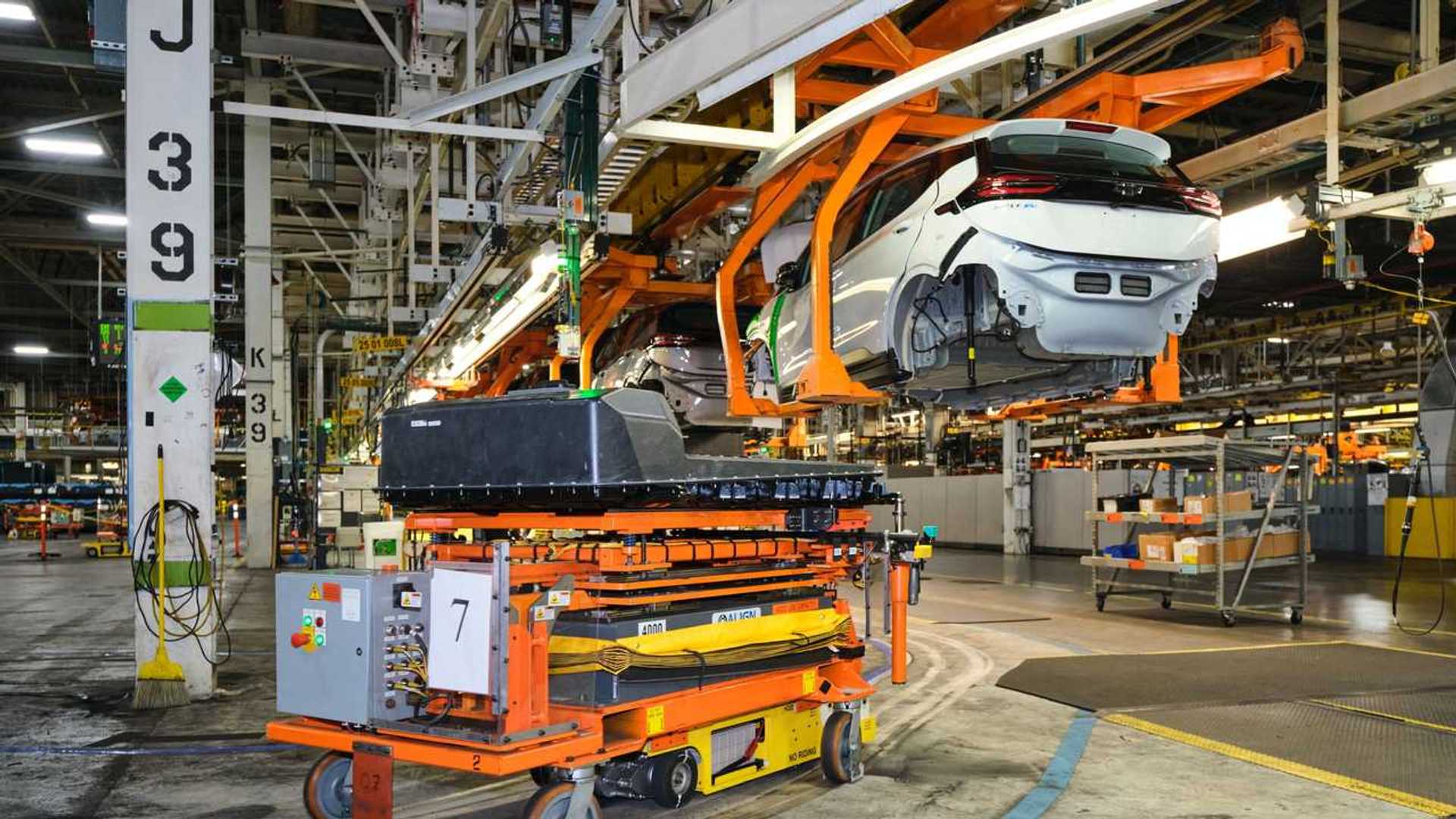
Sources: Reuters, November 17, 2026; GM News, November 25, 2025; Association for Advancing Automation interview with Mikell Taylor, February 18, 2026. GM’s official videos and the archival Orion photograph illustrate manufacturing context; they are not images or demonstrations of the newly reported Kokomo effort.


Leave a Reply