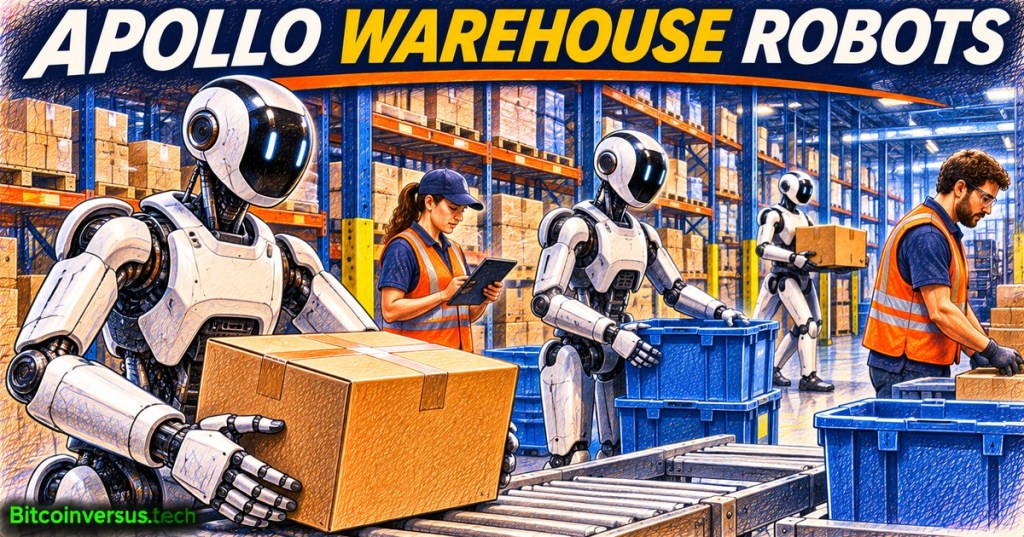
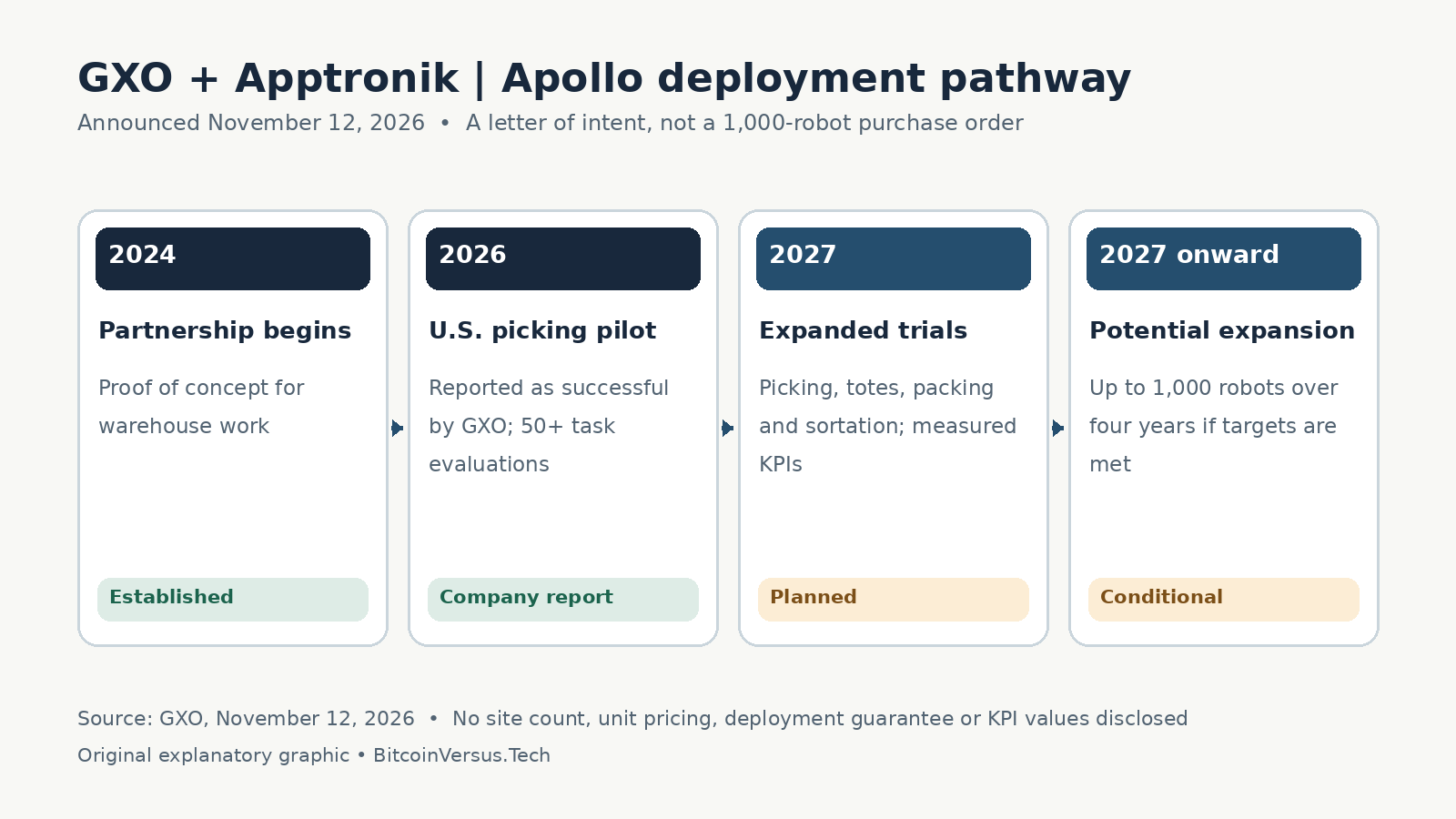
Logistics operator GXO has signed a letter of intent with Apptronik to expand trials of Apollo humanoid robots, potentially leading to a global rollout of up to 1,000 robots over four years. Announced November 12, 2026, the proposed expansion depends on future performance, safety and operating milestones. No purchase order for 1,000 machines or completed large-scale deployment was announced.
Official GXO video featuring its Apollo proof-of-concept partnership, published June 20, 2024. The recording predates the November 2026 letter of intent and does not document the planned 2027 rollout. Credit: GXO / YouTube.
What GXO and Apptronik actually agreed
The partners plan to expand live-warehouse trials during 2027, studying goods-to-person and person-to-goods picking, movement of cases and totes, packing, and sortation. Each workflow must meet jointly selected productivity, safety and operational indicators before broader deployment. Initial scaling in North America is envisioned for late 2027, followed by a possible four-year international program.
The intended commercial arrangement is Robotics-as-a-Service (RaaS), under which a warehouse operator pays for access to equipment and related services rather than necessarily purchasing every robot outright. GXO and Apptronik disclosed neither subscription pricing nor guaranteed robot orders, site counts, uptime targets or a contract value. The 1,000-unit figure is an upper bound, not an installed base.
The pilots are real, but the rollout is still a proposal
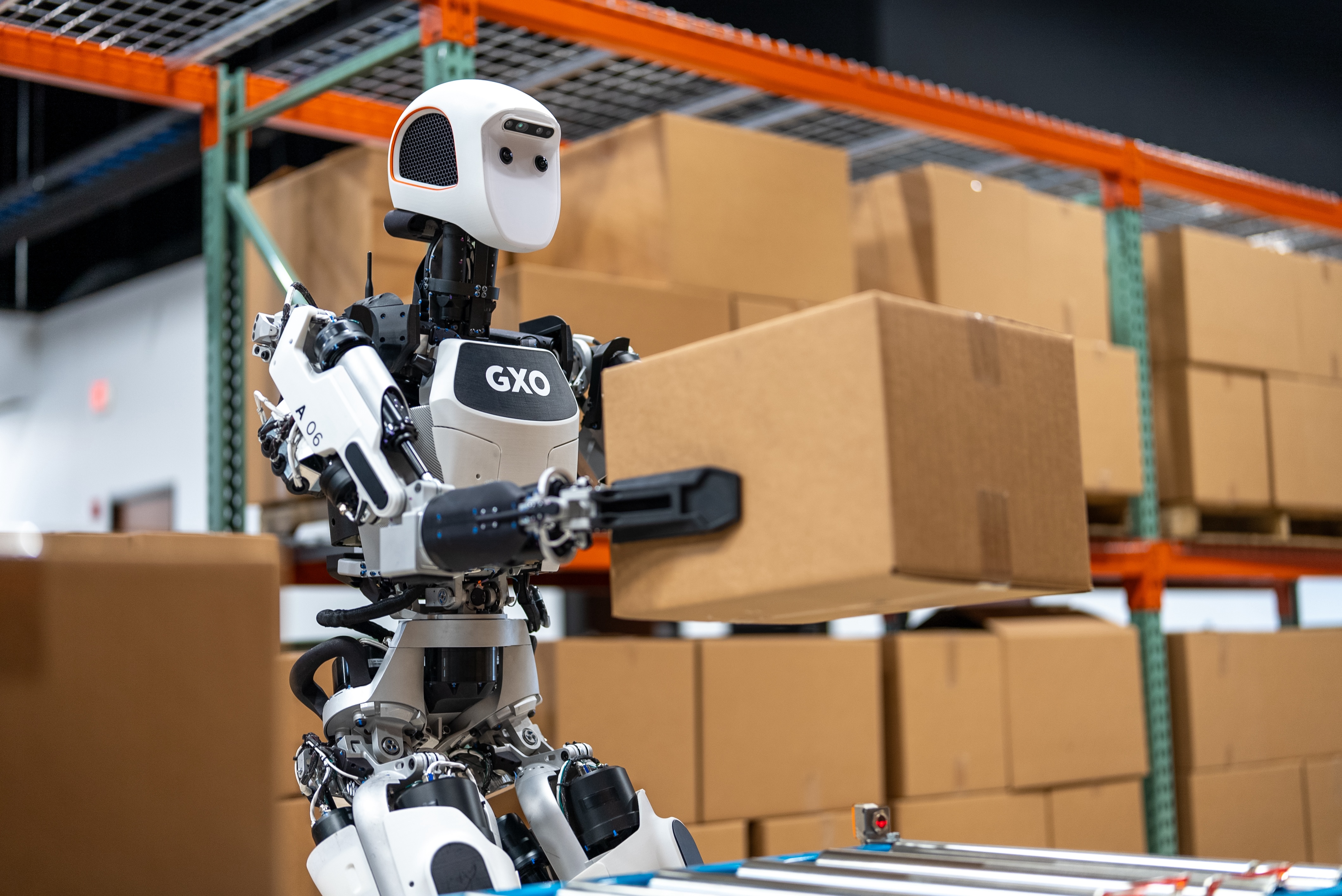
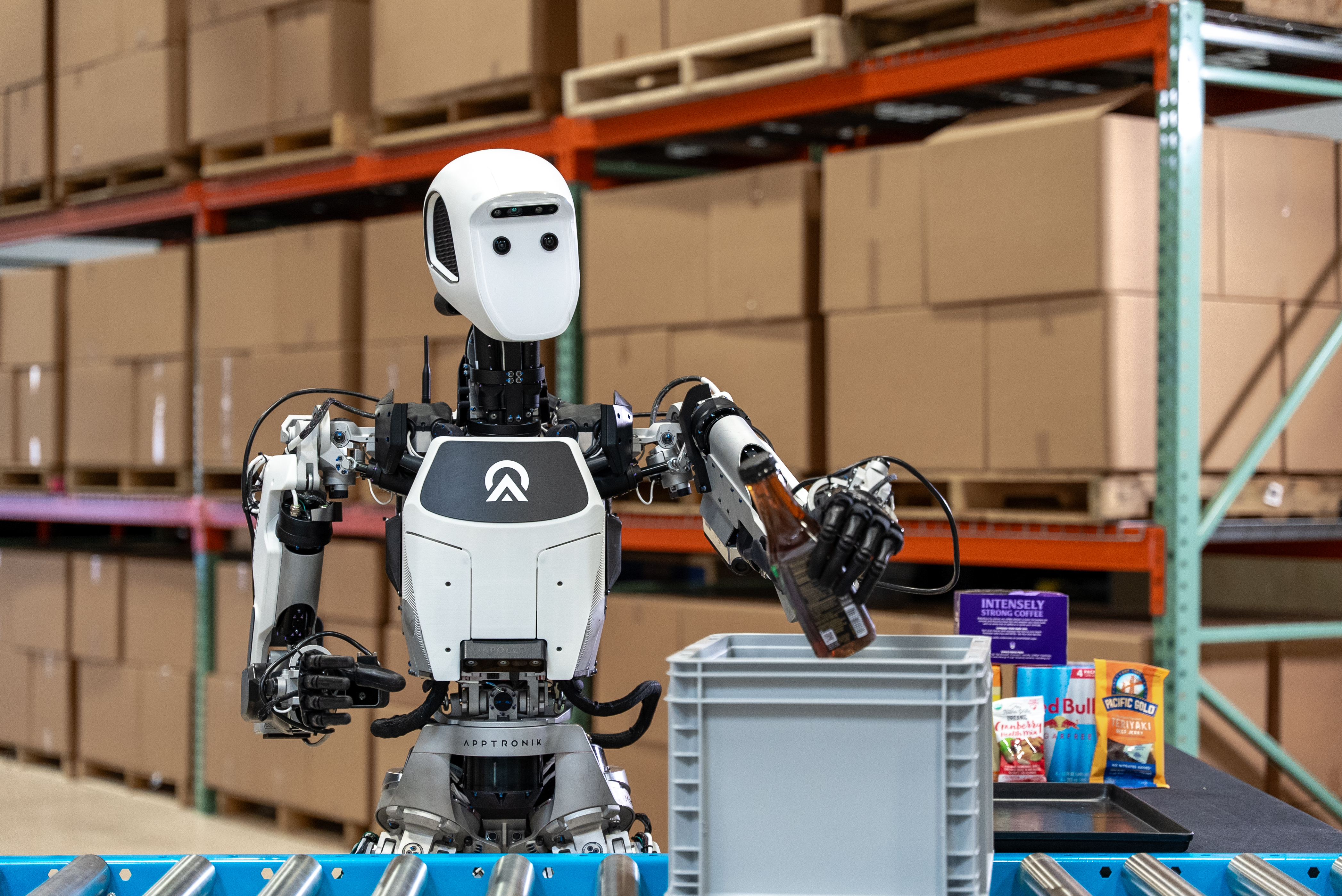
GXO and Apptronik began working together in 2024. GXO reports completing a U.S. pilot in 2026 focused on autonomous picking of small consumer goods. The companies also report data collection and autonomous evaluations of more than 50 logistics tasks at Apptronik’s Robot Park training facility. The term “successful” is the partners’ own assessment; a site-level task success rate and independently audited labor-productivity result were not disclosed.
Apptronik’s June announcement introduced Apollo 2 in both walking and wheeled configurations. Its training program combines teleoperation with autonomous execution, collecting examples for future robot models. Consequently, a staged demonstration or successful isolated pick should not be mistaken for an independently verified full-shift warehouse deployment.
Why warehouses need more than a humanoid demonstration
Humanoid hardware may reach existing shelves, totes and workstations without a complete building redesign, but the business case depends on picks per hour, failed-grasp recovery, safety stops, battery changes, maintenance time and integration with warehouse-management systems. A robot handling a carton on camera cannot establish sustained economic advantage over dedicated conveyors, autonomous mobile robots or human workers.
Our earlier analysis of Apptronik’s U.S. manufacturing supply chain addresses production constraints. BitcoinVersus.Tech also compared humanoids performing real jobs and covered Robust AI’s human-steered warehouse robot, an alternative to general-purpose bipedal designs.
The expanding market remains competitive. ASUS’s Gallop factory trial establishes a different task-specific performance target, while NVIDIA’s GR00T 2 robotics research explores learning across tasks. Targets and laboratory results cannot substitute for measured live-warehouse reliability.
Bottom line: GXO and Apptronik have a genuine pilot history and a newly expanded development plan. The next milestone is verified 2027 trial performance; robot shipments, contractual scale and labor economics cannot be inferred from the letter of intent.
Primary sources: GXO official November 12, 2026 partnership announcement; GXO investor relations release; Apptronik Robot Park and Apollo 2 release, June 30, 2026; Apptronik’s original GXO collaboration documentation; GXO official 2024 video; NASA Spinoff Apollo image and technology background. Reported pilots and robot-task counts are company disclosures, not independently replicated results.
Editor’s Note: The GXO–Apptronik announcement is a letter of intent, not a confirmed 1,000-robot purchase, delivery or contract value. Existing demonstrations, the company-reported 2026 pilot and planned 2027 trials are distinguished throughout. The 1200 × 630 featured cover is original colored-pencil conceptual artwork containing one editorial title and the publication watermark; it is not an actual GXO facility photograph. Both in-story equipment photos are authentic archival images and are dated as such. The timeline is an original explanatory graphic. The official GXO YouTube recording dates from 2024, not the new agreement. HTML embed checks and actual mobile playback are separately evaluated.

BitcoinVersus.Tech is volunteer-run and publishes independent educational technology reporting. An optional 5,000-satoshi donation supports ongoing research. Scan the original QR from a second screen with a compatible Bitcoin wallet; on mobile, use a wallet that supports scanning a saved image. Independently verify the recipient address 3C9o19EH5HSiwEPyCTmEKzxhNCbo2X6TTb and the payment amount before sending. Bitcoin transfers are generally irreversible.
We volunteer daily to ensure information on the BitcoinVersus.Tech platform is Verifiably True. Coverage is educational and informational and does not constitute financial or investment advice.


Leave a Reply