
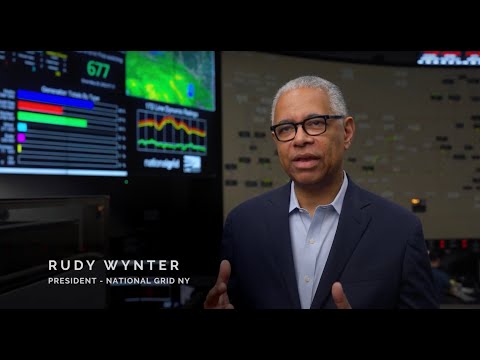
Two New England utilities are preparing to use weather-responsive transmission ratings across approximately 6,600 miles of their combined networks. National Grid’s November 5 half-year results reported $49 million in Department of Energy funding for its Dynamic Rating Enhancement Advancements and Modernization (DREAM) initiative. Eversource and Dartmouth Engineering announced a separate initiative under the same name on September 29, with potential federal funding of $47.7 million, subject to a final agreement.
Together, the disclosed figures represent approximately $96.7 million in federal funding reported or potentially available, rather than a confirmed combined construction budget. National Grid identifies approximately 2,600 miles of overhead transmission network; Eversource identifies approximately 4,000 miles of transmission network. Both initiatives concern system-wide operational capability, not proof that every mile already has a sensor. Work was expected to begin in 2027.
How weather changes electrical capacity
Current flowing through an overhead conductor produces resistive heating. At a given resistance, doubling current quadruples the heat generated per unit time. Solar radiation can add heat, while convection and thermal radiation remove it. Ambient temperature and wind speed therefore influence the current that a conductor can safely carry without exceeding its temperature or clearance limits.
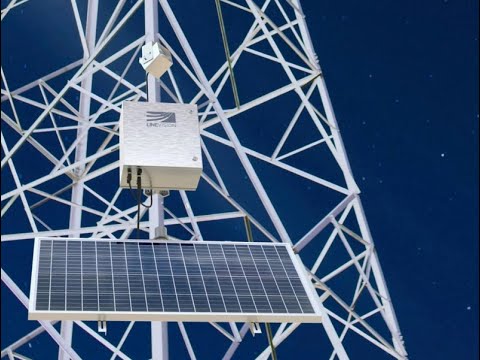
Conventional static ratings rely on predefined environmental assumptions. Dynamic line rating (DLR) instead estimates an allowable current using observed or forecast operating conditions. Cooler weather and favorable wind may permit additional current, while hot, still conditions may require a lower limit. Dartmouth describes a combination of field sensing, weather forecasts, digital models and control-room integration in the Eversource project.
From a thermal limit to usable megawatts
For an illustrative balanced three-phase circuit operating at 230 kV and unity power factor, a 1,000-ampere rating corresponds to approximately 398 MW of real power. Increasing the allowable current to 1,080 amperes would raise the calculated limit to about 430 MW, an increase of nearly 32 MW. The example uses the standard three-phase power equation, P = √3 × V × I × power factor. It is not a reported DREAM project result.
Actual deliverable power may be lower because of transformer ratings, voltage stability, protection settings, contingencies and other network constraints. Dynamic ratings cannot create electricity or guarantee continuously available capacity. Their value depends on the accuracy of weather forecasts, conductor models, telemetry and operating procedures. Missing or unreliable data must trigger a conservative fallback.
Why it matters for data centers
The Financial Times reported on November 27 that utilities are increasingly investigating technology capable of extracting more capacity from existing infrastructure. Large computing facilities can benefit from reduced transmission congestion, but a grid operator must distinguish temporary weather-dependent headroom from firm capacity available during unfavorable conditions.
BitcoinVersus.Tech has previously examined Google’s Ohio conductor upgrade, power-line monitoring drones, Digital Realty’s Illinois substation plans and Virginia’s data center power pipeline. The New England initiatives address the same infrastructure challenge through operational information rather than new generation.
The decisive evidence will be measured changes in usable transfer capacity, congestion costs, reliability and forecast accuracy after deployment. Until those data become available, the disclosed mileage describes the intended network scope and the funding figures describe financial commitments or selection, not completed engineering performance.
Sources: National Grid November 5 half-year filing; Eversource September 29 announcement; Dartmouth October 14 report and featured photograph, Linnea Spelman; IEA engineering explanation; Financial Times, November 27.
We volunteer daily to ensure the credibility of information on BitcoinVersus.Tech and strive to make our reporting Verifiably True. To support independent educational research, scan the QR code below. Donations are voluntary; verify the recipient and amount before sending.



Leave a Reply