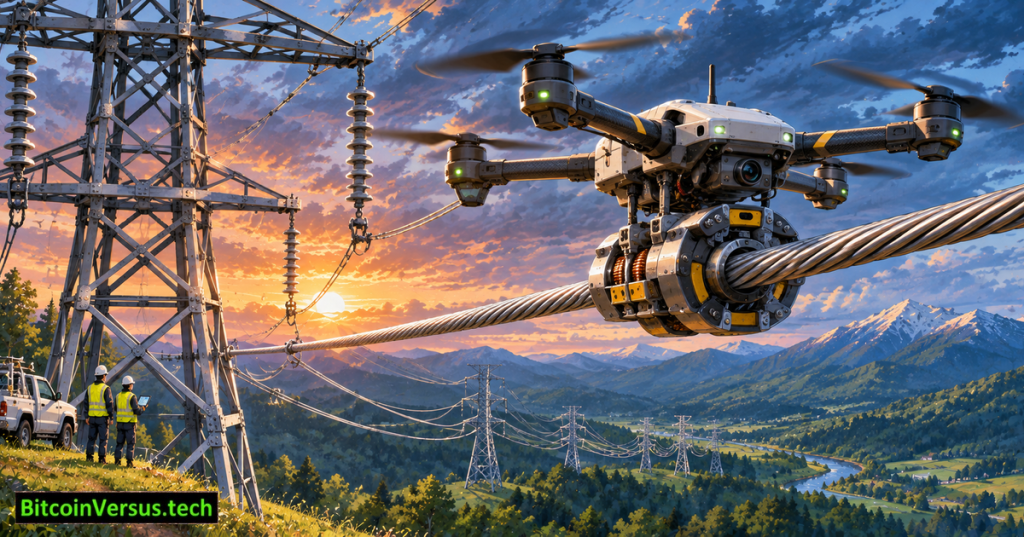
Imagine a small aircraft that lands on an energized transmission line and uses the wire as its charging station. Munich-based Nomadic announced $6 million in seed financing on November 17, 2026 to expand its NOMAD drones, which perch on live conductors and monitor electrical-grid conditions. The company reports more than 20,000 cumulative hours of live-line deployments in Germany, with deployments also in Norway and the United States. The hours are a manufacturer-reported fleet figure, not uninterrupted flight by one drone. Nomadic and lead investor Foundamental confirmed the financing.
Official NOMAD launch film, linked directly from the developer’s November announcement. Its presence in Gutenberg is verified separately from actual in-player playback.
How a wire provides charging power
The NOMAD platform weighs about 3.8 kilograms. A pilot moves it to a transmission span; a specialized mechanism secures the drone around an energized conductor, allowing the propellers to stop. The charging system harvests energy inductively from the alternating-current magnetic field surrounding the wire. Power is conditioned for onboard batteries and electronics. Charging is driven by conductor current and electromagnetic coupling, not by plugging directly into hundreds of thousands of volts. The company’s hardware specification and its published patent application document the concept.
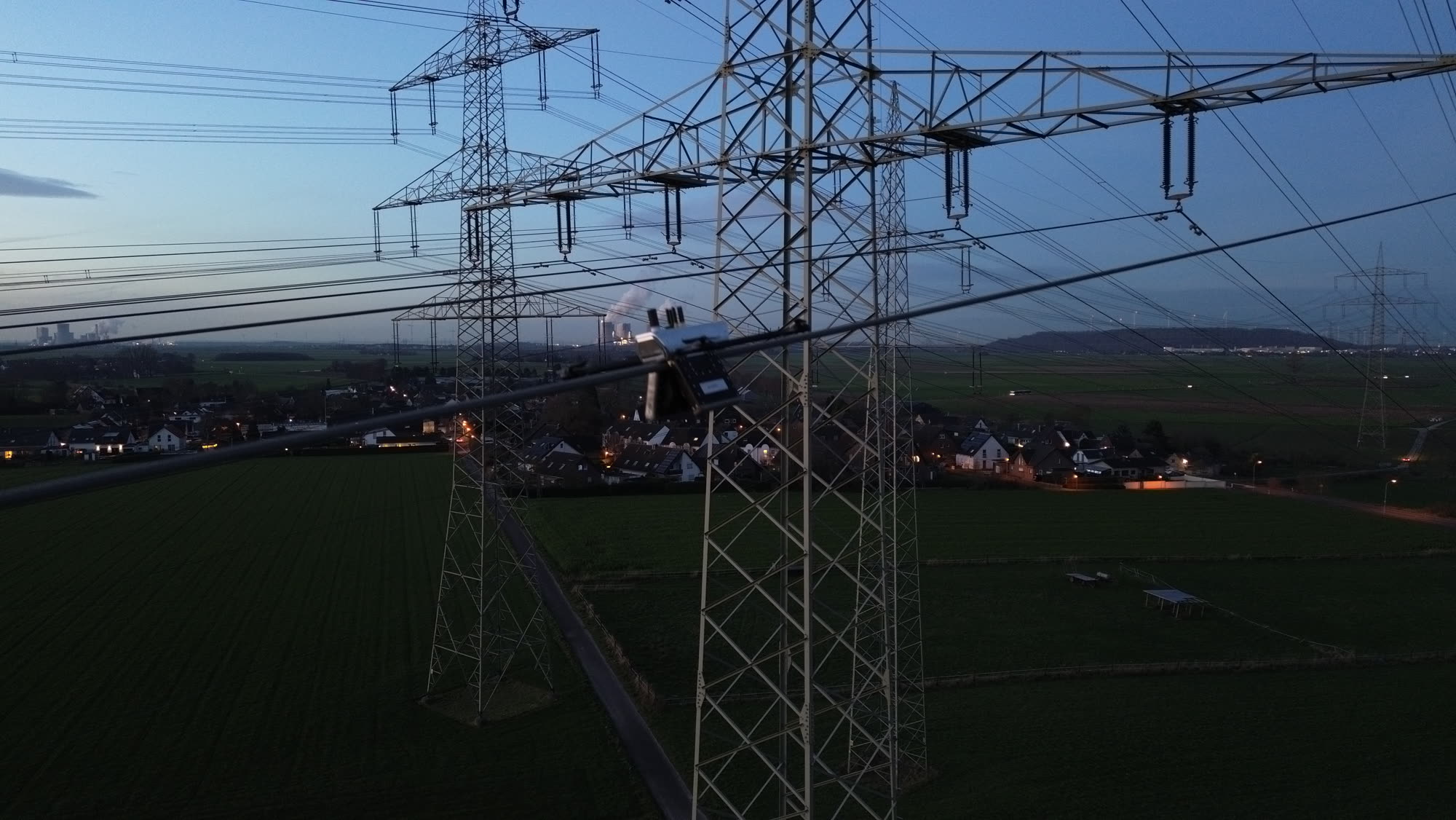
Nomadic says field equipment has operated on 380-kV networks and at temperatures down to −25°C. Its financing announcement additionally cites high-voltage testing up to 420 kV. Voltage ratings do not specify harvested charging watts, and operating suitability depends on current, insulation, weather, secure docking, drone airspace permissions and utility safety rules. The product is not intended for unsupervised contact with dangerous power lines.
From fixed sensors to movable instruments
A docked aircraft records conductor temperature, current, vibration and movement. Cameras help inspect fittings, vegetation and potential damage. Measurements travel over a cellular connection to Nomadic OS, which brings together grid and weather models. The aim is to improve dynamic line rating, allowing operators to estimate safe current limits under current conditions. Our earlier coverage of Puget Sound Energy’s sensor upgrade provides another approach to getting real measurements between substations.
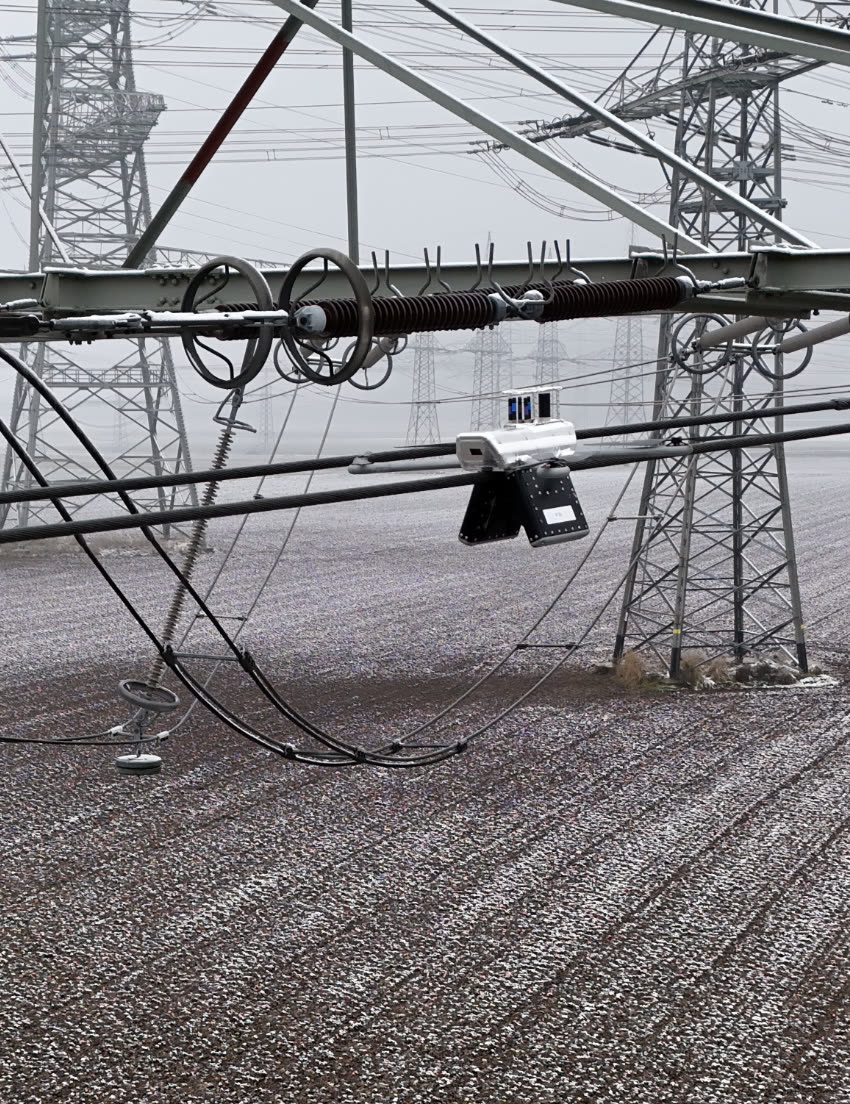
One relocatable drone could cover about 25 kilometers, according to the company, compared with fixed sensors often spaced one to five kilometers apart. Coverage does not mean every meter is monitored simultaneously. Weather, joint condition and local conductor sag can make one span the limiting point. Grid owners can also pursue higher-capacity replacement conductors; the approaches address different engineering needs.
May 2025 energy-industry interview with founder Andreas Moldskred, featuring an earlier prototype. Archival demonstration, not a November 2026 test of commercial fleet performance.
The 2027 goal remains a development program
Nomadic plans to bring remote relocation between separate line sections into customer production in 2027. Existing docked deployments do not prove full autonomous relocation is already standard. Utilities will need independent evidence on sensor calibration, maintenance, communication security, operational cost and clearance procedures. The funding supports further development rather than certifying a finished nationwide monitoring network.
Growing data-center and industrial demand is intensifying the pressure on electricity networks. Our recent grid-investment report describes the scale. Better measurements may safely unlock unused transmission headroom, although they cannot eliminate substation bottlenecks or create electrical generation. Other hardware proposals, including superconducting transmission cables, also require careful system-level assessment.
Original sources and disclosure
- Nomadic’s November 17 announcement and deployment claims
- Nomadic: specifications and measurement functions
- Foundamental: seed-round confirmation
- Tom’s Hardware: independent reporting, November 22
- Nomadic: published U.S. charging patent application
- UC Berkeley: company history
Editorial media disclosure: The 1200 × 630 cinematic-anime featured cover is a conceptual illustration with the exact saved BitcoinVersus.tech watermark at bottom-left. Both body photographs are official manufacturer images. Operating figures are attributed claims, and a YouTube iframe alone does not establish playback.
We volunteer daily to ensure the credibility of the information on this platform is Verifiably True. If you would like to support to help further secure the integrity of our research initiative, please scan the QR code below.



Leave a Reply