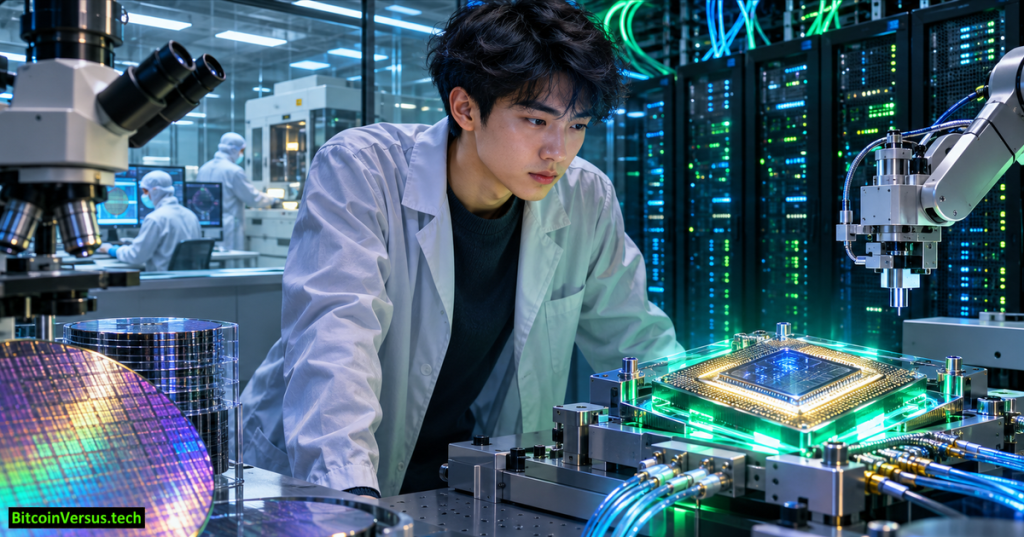
Britain is directing up to £32 million toward research and development intended to reduce the energy required by artificial intelligence hardware. Innovate UK opened two funding competitions on November 24, 2026, under the AI Hardware Challenge. The programme supports experimental computing technologies, optical networks, sensors, power systems and semiconductor integration, with a credible route to commercial adoption by 2030.
The first funding strand offers £100,000 to £500,000 for feasibility studies lasting six to nine months. Successful projects may subsequently qualify for prototype development funding of up to £3 million. The second strand offers £1 million to £3 million for projects ready to proceed directly to prototyping, lasting 24 to 33 months. Applications close January 20, 2027, at 11 a.m. UK time. The £32 million is the stated programme ceiling, not two separate £32 million commitments or money already awarded.
Reducing energy consumption beyond the processor
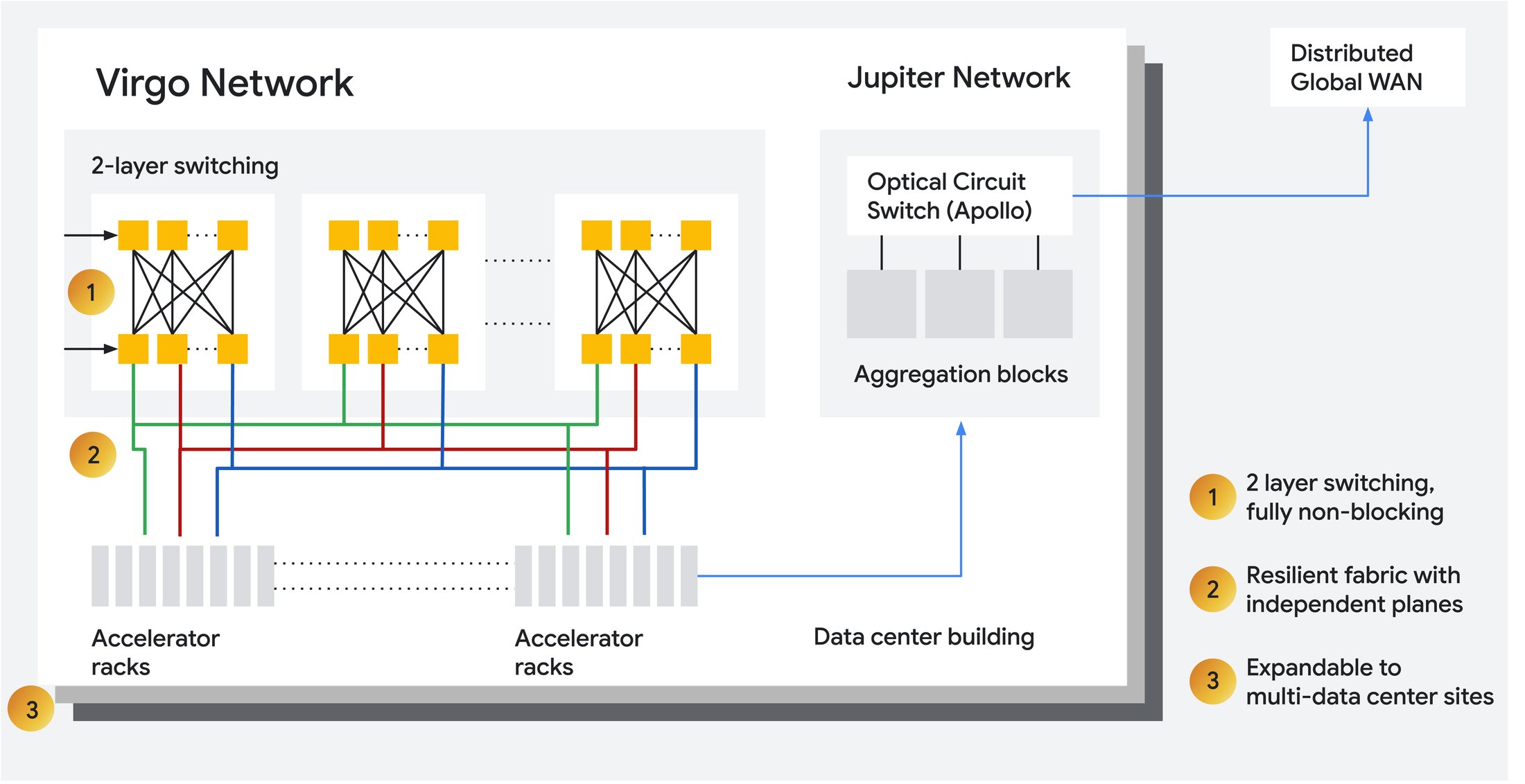
AI inference requires more than arithmetic. Model weights and intermediate data travel between processing units, memory and networking equipment. Data transfers can consume substantial energy, particularly when accelerator clusters distribute workloads across multiple devices. Improving computational throughput without controlling memory traffic may therefore produce limited gains in system efficiency.
The competition includes optical computing, neuromorphic architectures and computation within memory. Compute-in-memory approaches attempt to reduce the separation between data storage and arithmetic. Photonic interconnects seek to carry information through optical channels, potentially reducing some electrical signaling constraints. Each approach requires appropriate comparisons against existing systems, including conversion losses and supporting hardware.
Related developments include photonic chiplets designed for graph computation and Europe’s RISC-V automotive processor research. Both illustrate the importance of matching hardware architecture to the workload rather than relying on general processing speed alone.
Power delivery and thermal engineering
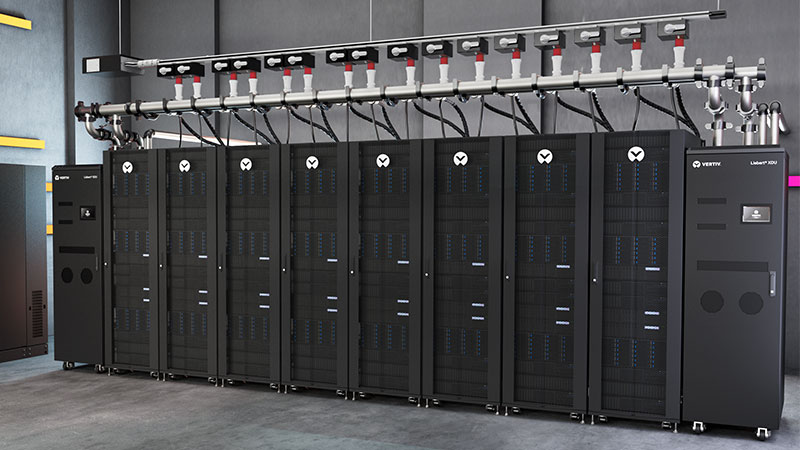
The power and energy research theme covers power electronics, wide-bandgap semiconductors, thermal management and energy delivery. Efficient power converters can reduce electrical losses before energy reaches computing hardware. Cooling improvements can reduce the energy consumed by pumps, fans and heat-rejection systems while maintaining safe operating temperatures.
For example, an illustrative 100 MW facility operating continuously would consume 876 GWh over a 365-day year. A 10% reduction in total facility power at identical useful output and availability would save 87.6 GWh annually. The calculation is hypothetical, not a prediction for any funded project. The practical engineering challenges are also examined in capacitive power conversion research and data center liquid-cooling architecture.
Measuring useful computation per joule
The strongest evidence of progress would be independently reproducible measurements of energy per completed inference at matched accuracy, latency and workload. A processor that consumes less power but takes longer to complete a task may offer little improvement in energy per result. System-level measurements should account for memory, networking, cooling and power conversion where relevant.
Innovate UK identifies potential testing opportunities through the CommonAI Scaling Inference Lab, including integration and independent benchmarking. Awards, prototypes and commercial deployments remain future milestones. The programme’s importance lies in encouraging researchers to demonstrate useful computational progress within a measurable energy budget.
We volunteer daily to ensure the credibility of the information on this platform is Verifiably True. If you would like to support to help further secure the integrity of our research initiative, please scan the QR code below.

For mobile scanning, open the article on another display and scan the QR code with a Bitcoin wallet. The voluntary donation amount is 5,000 sats. Verify the receiving address 3C9o19EH5HSiwEPyCTmEKzxhNCbo2X6TTb before sending.
BitcoinVersus.tech is not a financial advisor. This media platform reports on financial subjects purely for informational purposes.


Leave a Reply