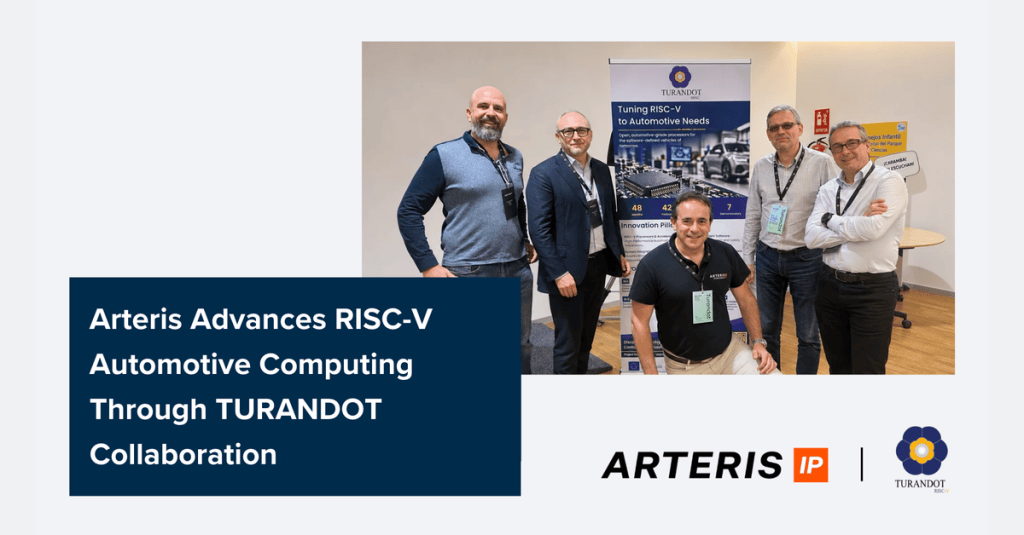
Europe is assembling a semiconductor development program around RISC-V, an open instruction-set architecture that could help automotive manufacturers diversify their processor supply chains. The TURANDOT project has a planned budget of €284.9 million and aims to produce seven silicon demonstrators by the conclusion of its four-year research program in July 2030.
The European Commission’s grant record identifies €79.04 million in European Union funding within the total budget. NXP Semiconductors Germany coordinates the initiative, which began in August 2026. In a November 17 update, Arteris outlined its engineering responsibilities following an early-November consortium meeting in Granada, Spain.

An open instruction set, not a finished processor
An instruction-set architecture defines the operations machine code can request from a processor. RISC-V provides publicly available specifications that semiconductor designers can implement in different microarchitectures. An open instruction set does not require every implementation, circuit design or manufacturing process to be open source.
The automotive program will pursue several processor classes rather than one universal chip. Real-time controllers must meet predictable execution deadlines, while application processors may run complex operating systems and AI accelerators can handle repetitive numerical workloads. The project targets performance reaching the peta-operations-per-second range for its high-performance designs, but the grant record does not establish measured throughput, numerical precision or power consumption.
Related developments include Infineon’s automotive RISC-V platform and Andes’ custom instruction design tools. Both illustrate how common instruction-set foundations can support hardware tailored to specific applications.
Moving data between computing engines
Modern systems-on-chip combine processing cores, memory controllers, peripherals and specialized accelerators. Their performance depends on the transport of information between components as much as on arithmetic execution. Arteris plans to help develop a low-latency on-chip network for automotive controllers and contribute integration tools and interconnect expertise.
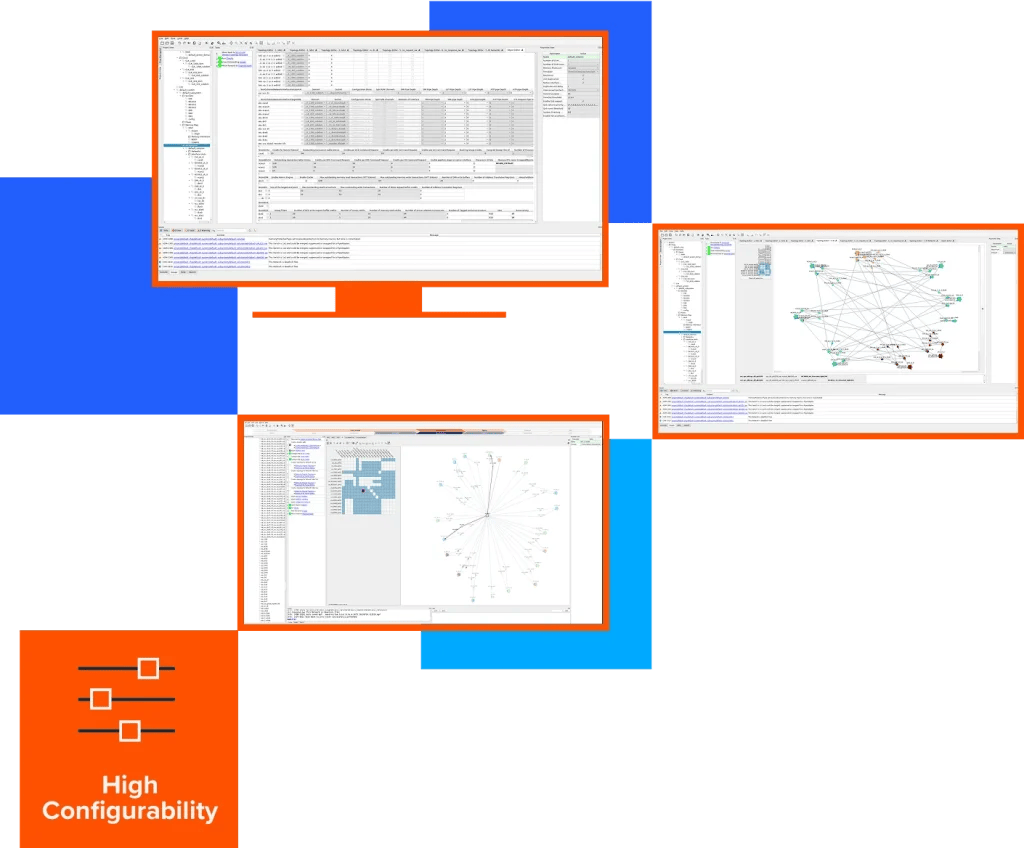
Cache coherence helps processors maintain consistent views of shared memory when several computing engines access or modify data. A noncoherent accelerator may instead depend on software-managed synchronization. Neither approach eliminates the need for carefully designed memory ordering and traffic prioritization, particularly when a safety-critical operation competes with high-bandwidth sensor processing.
Engineering for safety and industrial deployment
Axelera AI will contribute accelerator development for driver-assistance workloads, according to its project description. Combining neural-network hardware with real-time processors raises additional requirements for fault detection, isolation and predictable timing. Bosch identifies ISO 26262 functional safety and ISO 21434 cybersecurity as relevant standards. Compliance is a development objective, not an achieved certification for the planned chips.
The integration challenge also appears in our coverage of Qualcomm’s heterogeneous industrial processors and MIPS RISC-V motor controllers. Vehicle manufacturers must additionally demonstrate reliability over extended service lifetimes.
TURANDOT’s next meaningful evidence will be completed chip designs, fabrication milestones, independently evaluated performance and safety-validation results. The investment establishes a development program, not a commercially deployed automotive processor.
Sources: European Commission CORDIS, grant 101252667; Arteris, November 17, 2026; Axelera AI; Bosch Semiconductors. Featured photograph: Arteris, TURANDOT kickoff meeting.
We volunteer daily to ensure the credibility of the information on this platform is Verifiably True. If you would like to support to help further secure the integrity of our research initiative, please scan the QR code below.



Leave a Reply