An old aluminum smelter site in Australia could become a major computing campus supported by new wind generation, solar generation and battery storage. On November 12, AirTrunk and European Energy Australia announced an exclusivity agreement covering two proposed renewable energy developments in the Hunter region of New South Wales.
The package includes 260 MW of solar generation, up to 350 MW of wind generation and more than 800 MWh of battery energy storage. The developers are discussing a possible long-term power purchase agreement for AirTrunk’s regional electricity demand, including the proposed Kurri Kurri campus. An exclusivity agreement does not establish a finalized electricity purchase contract, grid connection or completed construction.
Turning former industrial land into compute infrastructure
AirTrunk’s project page identifies the former smelter property at Loxford as the proposed data center location. Reusing industrial land may offer access to existing transportation corridors and established electricity infrastructure. However, reuse does not eliminate the need for planning approval, new connection studies, environmental assessment or community consultation.
The developers anticipate solar and storage operations around 2030, followed by wind around 2032. Connection to an upgraded 132 kV network is contemplated, but remains dependent on technical and regulatory arrangements.

Why storage and generation ratings must stay separate
Solar and wind nameplate capacity totals a maximum of 610 MW. Battery capacity of 800 MWh describes stored energy rather than instantaneous electrical power. According to RenewEconomy reporting, the storage project is rated at 600 MW. At nominal capacity, 800 MWh divided by 600 MW yields approximately 1.33 hours of discharge, before accounting for operating limits and losses.
A continuous 500 MW computing load would use 12,000 MWh in a day. That illustrative load requires far more daily energy than the proposed battery stores. Wind and solar output also changes with weather, so matching renewable consumption over a year does not ensure hourly carbon-free supply. Grid balancing, contracted firm capacity and demand management remain central to reliable operations.
A precedent already connected to the grid
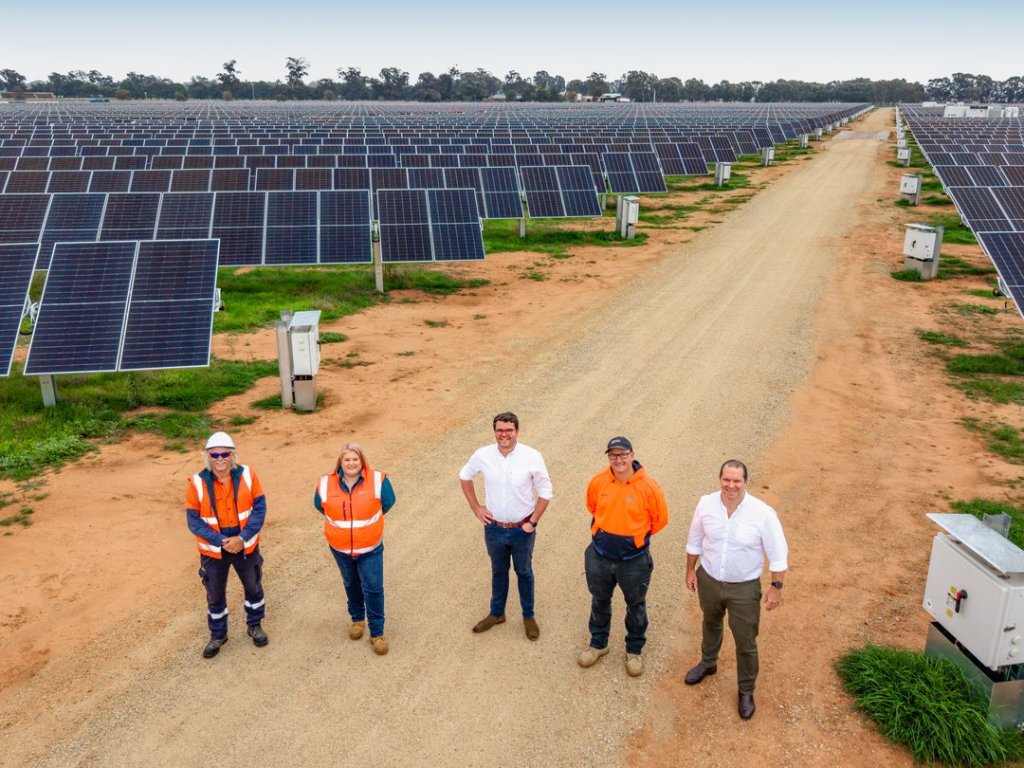
The November agreement follows the opening of the Mulwala solar farm, a separate collaboration between AirTrunk and European Energy Australia. The featured photograph depicts Mulwala rather than the proposed Hunter developments. It illustrates the partnership’s existing generation experience, not the construction status of the new projects.
The important milestones ahead are a finalized power purchase agreement, connection approvals, equipment procurement and measurable generation delivered to the grid. The engineering opportunity lies in coordinating additional renewable supply with computing demand instead of assuming that existing power capacity can absorb unlimited growth.
Related coverage: New Mexico solar and storage · Soluna solar and compute · Google’s virtual power plant · Solar production engineering


Leave a Reply