A proposed data center in northeast Texas could create a new buyer for electricity generated by a 114 MW solar farm. Soluna Holdings’ latest quarterly filing, covering the period ending September 30, 2026, identifies Project Annie as a 74 MW development intended for Bitcoin hosting or high-performance computing. Its power purchase agreement remains under preparation, making the project a development opportunity rather than an operating mine.
A customer located beside the power plant
Soluna originally announced Project Annie in May 2025, describing a 75 MW computing facility beside a solar installation. Its newer regulatory filing lists 74 MW in Lamar County, Texas. The distinction is small numerically but important for capacity planning: the latest filing provides the basis for the analysis below.
Locating computing infrastructure near renewable generation can reduce the need to export every available megawatt through constrained transmission infrastructure. A flexible mining load can adjust its consumption when electricity becomes scarce or more valuable elsewhere. However, the financial and environmental benefits depend on actual contractual dispatch rules, grid conditions and the electricity source during periods of low solar production.
How much Bitcoin computing could 74 MW support?
For an illustrative all-mining configuration, assume a power usage effectiveness (PUE) of 1.05 and an ASIC fleet efficiency of 10 joules per terahash. Dividing 74 MW by 1.05 leaves approximately 70.48 MW for the mining machines. Dividing the resulting electrical load by 10 J/TH yields approximately 7.05 EH/s of instantaneous computing capacity.
At an assumed 40% facility load factor, annual electricity consumption would be approximately 259,296 MWh, with average hashrate near 2.82 EH/s under the same efficiency assumptions. Neither figure is a company forecast. Soluna has not established that the entire facility will host ASICs, specified the eventual machine models or published a binding utilization target for Annie.
The proposed 114 MW solar farm has a greater nameplate capacity than the 74 MW data center. Nameplate capacity, however, does not establish round-the-clock power availability. Hourly sunlight, inverter limits, grid exports and any storage or backup electricity agreements would determine actual utilization.
The trade-off between solar mining and AI
Bitcoin mining offers a workload that can generally stop and restart without losing a long-running customer computation. AI infrastructure may require different availability commitments, networking equipment, cooling systems and electrical redundancy. A site capable of serving one workload does not necessarily meet the requirements of the other without additional investment.
The company’s June 2026 operational update identified Annie as a potential Bitcoin hosting site for a new customer. The quarterly filing preserves both Bitcoin and HPC as possible uses. Final tenant arrangements, financing, land rights and power contracts will shape the eventual infrastructure.
A project named for a computing pioneer
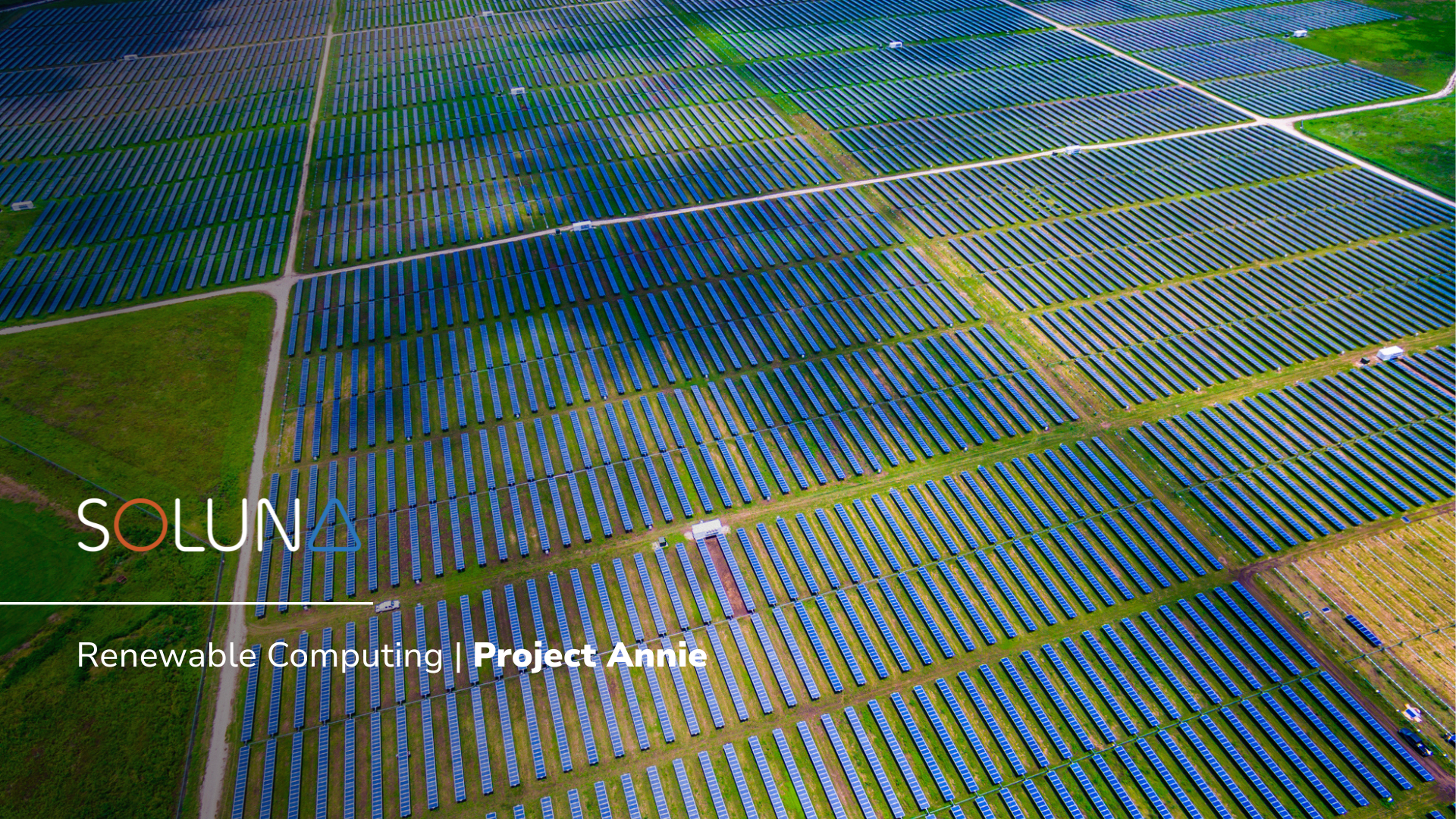
Soluna named the project after NASA computer scientist Annie Easley, whose work included energy technologies. The company’s original public announcement appears below. Its May 2025 capacity figure should be read alongside the newer 74 MW filing.
Related coverage: Soluna’s Dorothy wind-powered campus, Project Kati expansion, South Korean surplus-solar mining research and renewable mining and flexible dispatch.
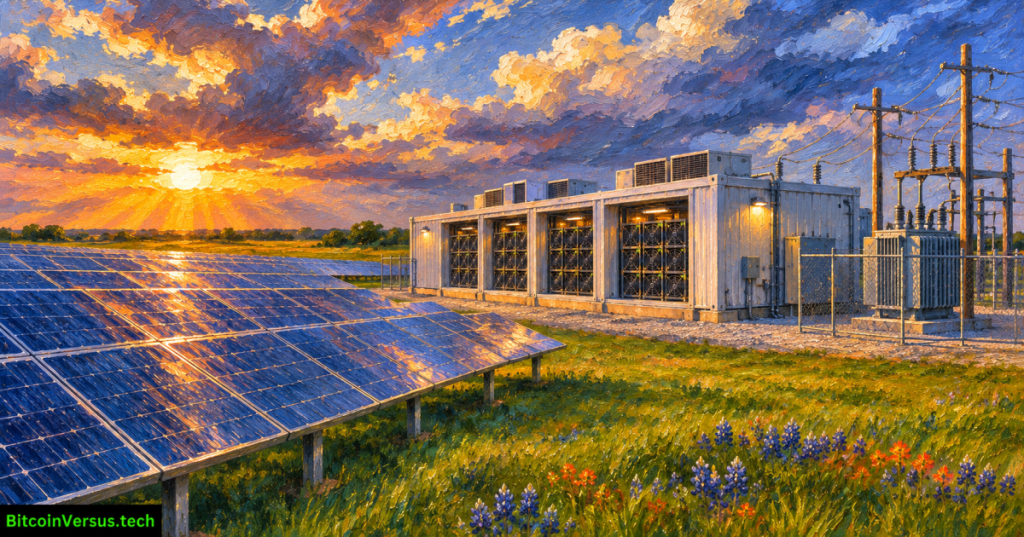
The featured artwork is a conceptual oil-painted illustration, not a photograph of Project Annie.
Editor’s Note: We volunteer daily to ensure the credibility of the information on this platform is Verifiably True. If you would like to support to help further secure the integrity of our research initiative, please scan the QR code below.



Leave a Reply