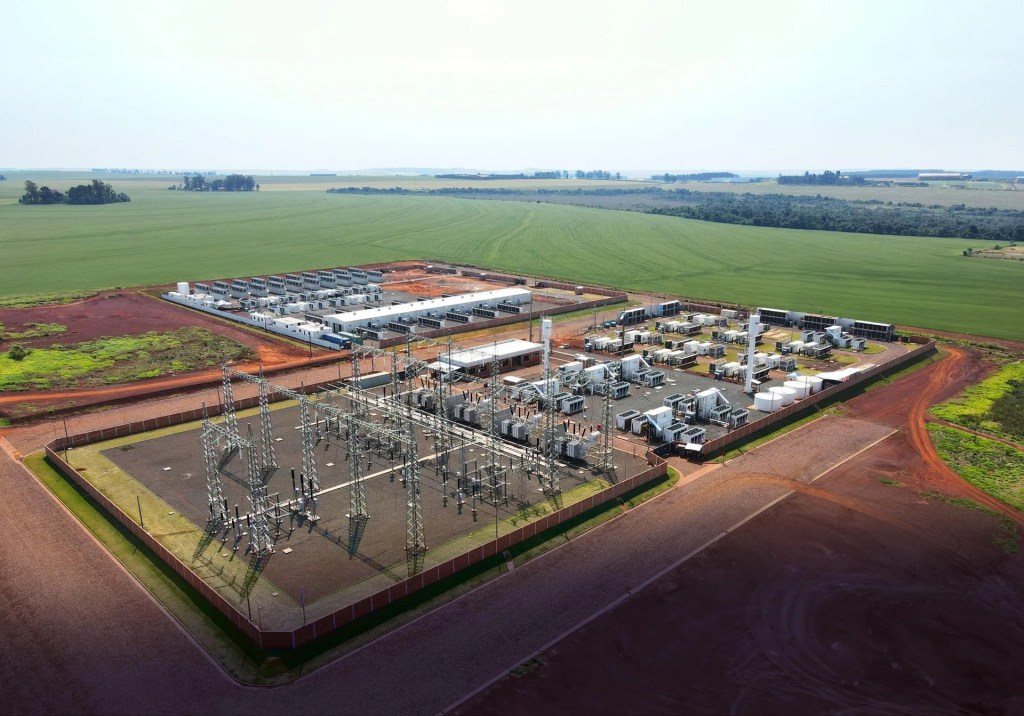
Paraguay’s hydroelectric infrastructure has attracted Bitcoin miners seeking low-cost industrial electricity. Now the same electrical assets are becoming a foundation for artificial intelligence. Penguin’s Hernandarias campus, near the Itaipú hydroelectric complex, illustrates how a mining-oriented industrial operation can evolve toward a different class of computing without starting over at the grid connection.
In November, reporting on Penguin’s transition described management’s plan to move mining capacity toward AI computing. The company’s infrastructure profile identifies a 160 MW privately developed substation, a 100 MW energization milestone in 2024 and cooling systems designed for modern high-density compute. The distinction matters: substation rating is not equivalent to commissioned GPU capacity.
The high-voltage foundation
Penguin began building its Hernandarias electrical infrastructure in 2022 and completed the substation in 2023, according to its corporate timeline. The facility transforms incoming 220 kV power to 23 kV for downstream distribution. The company says its site draws on renewable hydroelectric generation from Itaipú.
A substation represents more than a transformer. Protection relays, switchgear, busbars, grounding, metering and fault coordination determine whether electricity can safely reach multiple independent halls. Existing electrical infrastructure can shorten the development path for new computing workloads, but additional redundancy, power quality equipment and cooling may still be necessary.
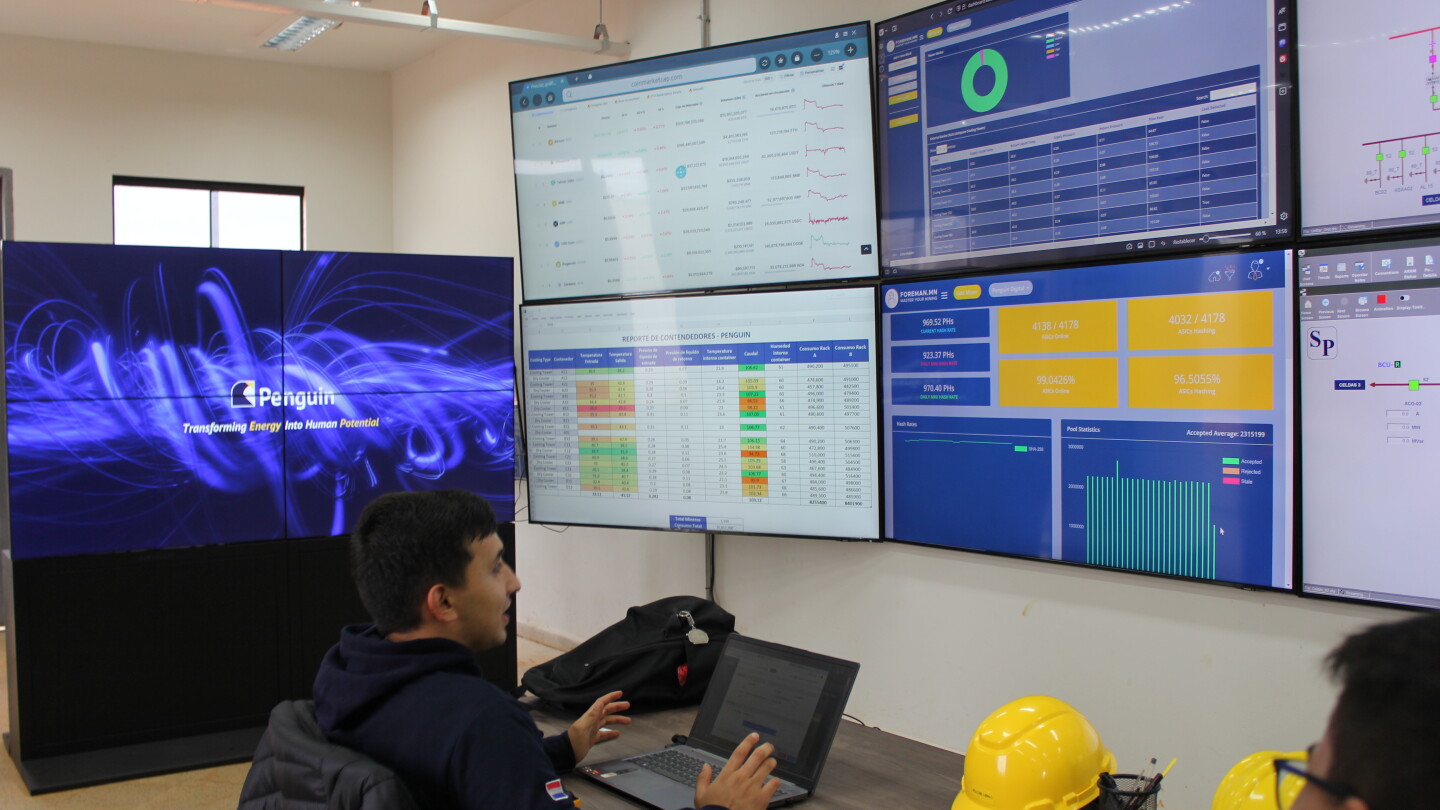
From ASICs to liquid-cooled GPU racks
Penguin advertises direct-to-chip cooling at up to 200 kW per rack and power usage effectiveness of 1.05 with immersion cooling. Those are company-reported capabilities, not independently measured results for a fully commissioned AI campus. Direct-to-chip cooling transfers heat into a liquid loop through cold plates, while immersion places compatible equipment in dielectric fluid.
At 200 kW per rack, 100 fully populated racks would consume 20 MW of IT power before electrical and mechanical overhead. AI clusters also require high-bandwidth switching, low-latency fabrics, reliable storage and workload orchestration. Bitcoin ASIC deployments generally have simpler networking requirements, making conversion more involved than replacing machines.
A changing market for Paraguay’s electricity
CoinDesk reported in November that special mining power contracts face a December 2027 expiration while AI developers seek longer-term electricity arrangements. Penguin’s strategy therefore illustrates a commercial as well as engineering transition. Existing hydroelectric access is valuable, but continued access depends on contracts, grid availability and the economics of the new workloads.
The next meaningful milestones are signed AI customer commitments, verified GPU deployments, measured cooling performance and a clear statement of the electrical capacity available under future supply agreements. None should be inferred from a transformer rating alone.
Related coverage: Paraguay’s mining power · Bitzero’s transformer expansion · Soluna’s solar-powered compute plans · Sherbrooke AI conversion


Leave a Reply