
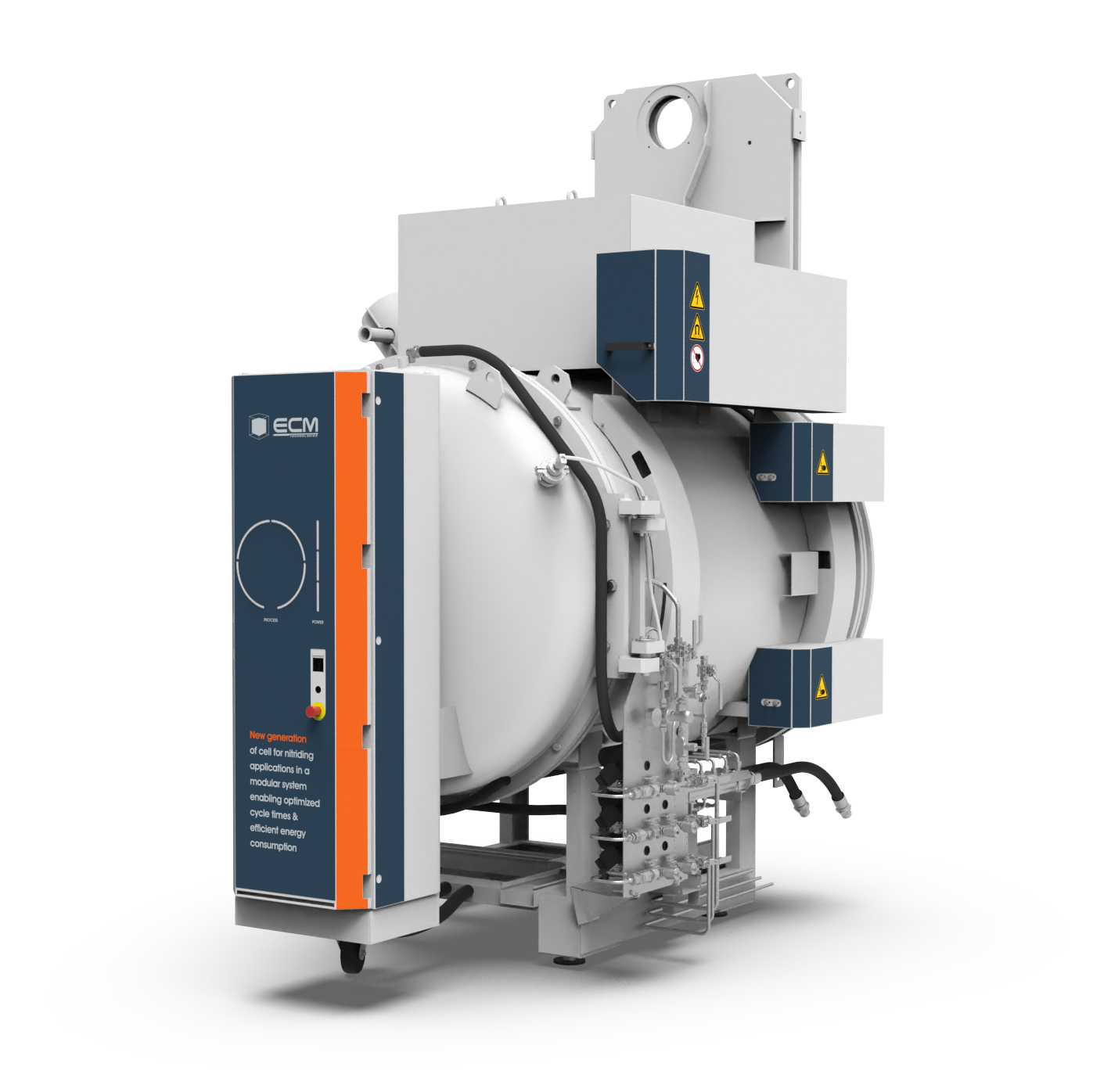
Industrial furnace manufacturer ECM Technologies has introduced a modular CCN heat-treatment cell that supports several methods of modifying metal surfaces. Thermal Processing reported the introduction on November 5. The company’s technical specification identifies a cold-wall chamber without graphite heating elements, a working temperature range from 400 to 1,000°C and compatibility with existing modular furnace platforms. The design addresses industrial requirements for repeatable material properties and flexible manufacturing rather than a new type of metal.
Hardening a metal surface
Nitriding introduces nitrogen into the surface region of suitable alloys, where it can form hard nitrides and improve resistance to wear. Nitrocarburizing incorporates nitrogen and carbon. Carbonitriding also enriches the surface with both elements, but conventional processes and subsequent hardening requirements differ from ferritic nitrocarburizing. Successful treatment depends on alloy chemistry, temperature, time, atmosphere and the desired case depth. These methods build on the broader principles of material transformation described in our metallurgy lesson on early smelting, although modern surface treatment is not an ore-reduction process.
The furnace’s specified usable load dimensions are 1,000 × 610 × 750 millimeters. Their rectangular envelope represents approximately 0.458 cubic meters; the volume does not establish allowable component mass or usable packing density. Fixture design and spacing influence temperature and gas distribution. ECM also lists 150 kW of convection heating, which is an equipment rating rather than measured average cycle demand. If the heaters operated at that rating for one hour, the theoretical energy would be 150 kWh before auxiliary consumption or control cycling.
Reducing thermal inertia
The company uses nickel-chromium resistance heating and fiber insulation rather than graphite elements. ECM attributes expected reductions in heat-up time, energy consumption and maintenance to the alternative chamber design. Independently measured cycle energy, comparative throughput and service intervals are not supplied in the product specification. The importance of separating an engineering method from a measured production improvement also appears in Fraunhofer’s metal additive manufacturing research.
The modular architecture allows manufacturers to add treatment cells to compatible furnace lines. A graphite-equipped cell can serve as a separate carburizing stage where required. Integration decisions involve handling systems, tooling, throughput balancing, safety interlocks and qualification of each recipe. Flexible industrial automation, such as Machina Labs’ robotic forming systems, similarly depends on the ability to repeat qualified processes across changing production requirements.
The next meaningful performance evidence would compare matched material loads using documented temperature uniformity, case depth, cycle time, electricity consumption and rejected-part rates. Energy savings require metered comparisons rather than nameplate ratings, a distinction relevant to other industrial thermal processes. ECM’s new furnace expands the available process options; customer operating records will determine the practical value of the equipment.
We volunteer daily to ensure the credibility of the information on this platform is Verifiably True. If you would like to support to help further secure the integrity of our research initiative, please scan the QR code below.

For mobile scanning, open the article on another display and scan with a Bitcoin wallet. The voluntary donation amount is 5,000 sats. Verify the receiving address 3C9o19EH5HSiwEPyCTmEKzxhNCbo2X6TTb before sending.
BitcoinVersus.tech is not a financial advisor. This media platform reports on financial subjects purely for informational purposes.


Leave a Reply