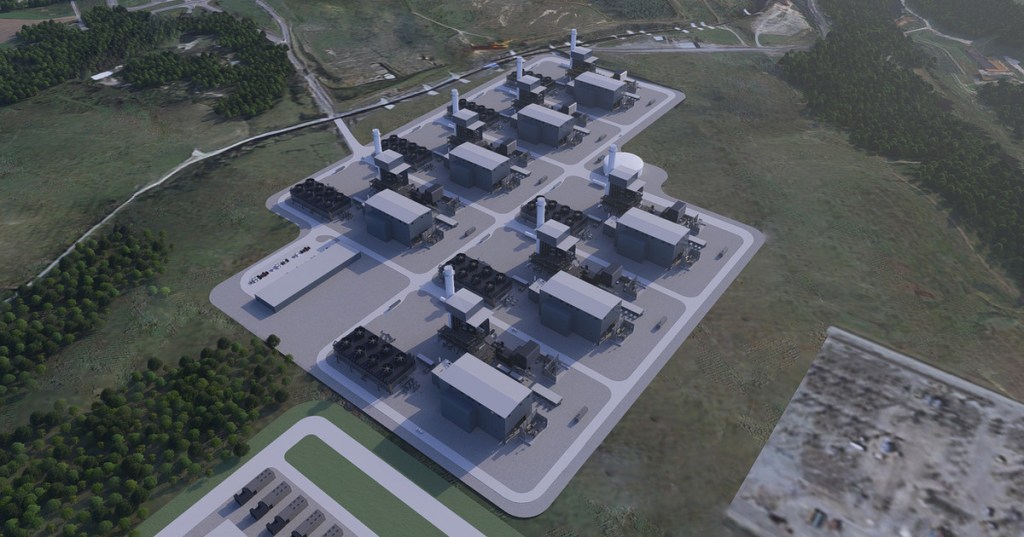
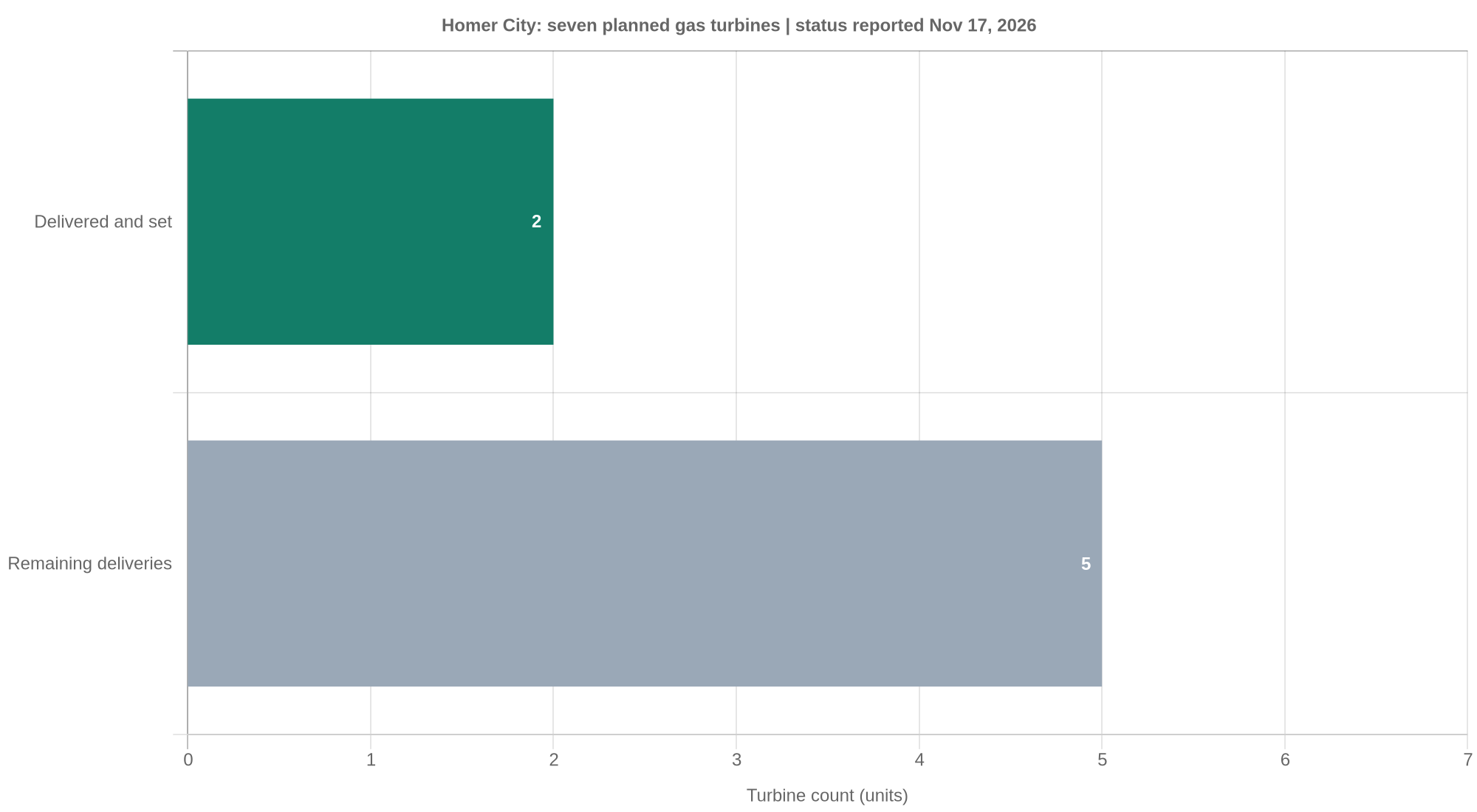
Pennsylvania’s Homer City Energy Campus has reached a major equipment installation milestone in its transition from coal-fired electricity production to gas-powered computing infrastructure. In a November 17, 2026 update, Homer City Generation confirmed that two of the seven planned GE Vernova 7HA.02 gas turbines had arrived and been positioned in late September. The developer targets initial electricity generation in early 2028 and eventual generating capacity of up to 4.4 GW. The announcement advances the project beyond the planning stage covered in our earlier Pennsylvania data center infrastructure survey.
Equipment delivery is not energized capacity
The first two machines represent approximately 28.6% of the planned gas turbine count. Five remain scheduled for delivery during the subsequent construction phases. The developer also reported that half of the heat recovery steam generators had been installed. Power Engineering reported on November 18 that additional turbine and heat recovery equipment deliveries are expected through 2027. Equipment placement must not be mistaken for commissioning or a proportional share of available electrical output.
Recovering heat for additional generation
Combined-cycle plants generate electricity in two thermodynamic stages. A gas turbine burns fuel and expands hot combustion gases through turbine stages connected to an electrical generator. Exhaust heat subsequently passes into a heat recovery steam generator. Steam produced by the recovered heat drives an additional turbine, extracting useful energy that would otherwise leave through the exhaust. The complete power system includes fuel delivery, cooling, electrical protection and auxiliary equipment. The 4.4 GW figure describes eventual plant capacity rather than the nameplate power of the individual gas turbines.
Natural gas supply is a separate infrastructure dependency, as illustrated by Cipher Digital’s planned gas lateral pipelines for computing sites. Continuous operation depends on pipeline capacity, contractual fuel arrangements, maintenance and reliable grid connections.
Water infrastructure for continuous operation
A separate November announcement identifies Aquatech as the campus water technology partner. Its scope includes treatment of incoming water, purification for boiler operation and wastewater recycling. High-purity boiler feedwater reduces mineral deposition and corrosion. The system is also designed to recover stormwater and reduce freshwater withdrawal requirements. Actual consumption and discharge will depend on the final operating configuration and permitted conditions. The Pennsylvania Department of Environmental Protection maintains a public register of the redevelopment’s environmental approvals and reviews.
From power production to high-performance computing
The former coal station closed in 2023. Its redevelopment illustrates how existing transmission corridors and industrial sites can support new digital infrastructure. A similar conversion strategy appears at New York’s gas-fired Bitcoin power plant, although Homer City is oriented toward hyperscale AI and HPC rather than an announced Bitcoin mining installation.
The proposed generating capacity could support substantial computing infrastructure, but server load cannot be inferred directly from plant capacity. Electrical losses, cooling, backup reserves and other loads reduce the power available for processors. As with Alberta’s Beacon AI campus, the decisive evidence will be commissioned generation, completed data center electrical systems and measured service reliability. Homer City’s latest equipment milestone represents construction progress, not operational computing capacity.
We volunteer daily to ensure the credibility of the information on this platform is Verifiably True. If you would like to support to help further secure the integrity of our research initiative, please scan the QR code below.

For mobile scanning, open the article on another display and scan the QR code with a Bitcoin wallet. The voluntary donation amount is 5,000 sats. Verify the receiving address 3C9o19EH5HSiwEPyCTmEKzxhNCbo2X6TTb before sending.
BitcoinVersus.tech is not a financial advisor. This media platform reports on financial subjects purely for informational purposes.


Leave a Reply