Alberta has granted conditional regulatory approval for a 1,494-megawatt natural-gas power plant intended to support Beacon AI Centers’ proposed Indus data-center campus near Calgary. The Alberta Utilities Commission (AUC) announced Decision 30524-D01-2026 on November 17. Approval of the generating plant is a real regulatory milestone, but it does not establish completed construction or energized AI computing capacity.
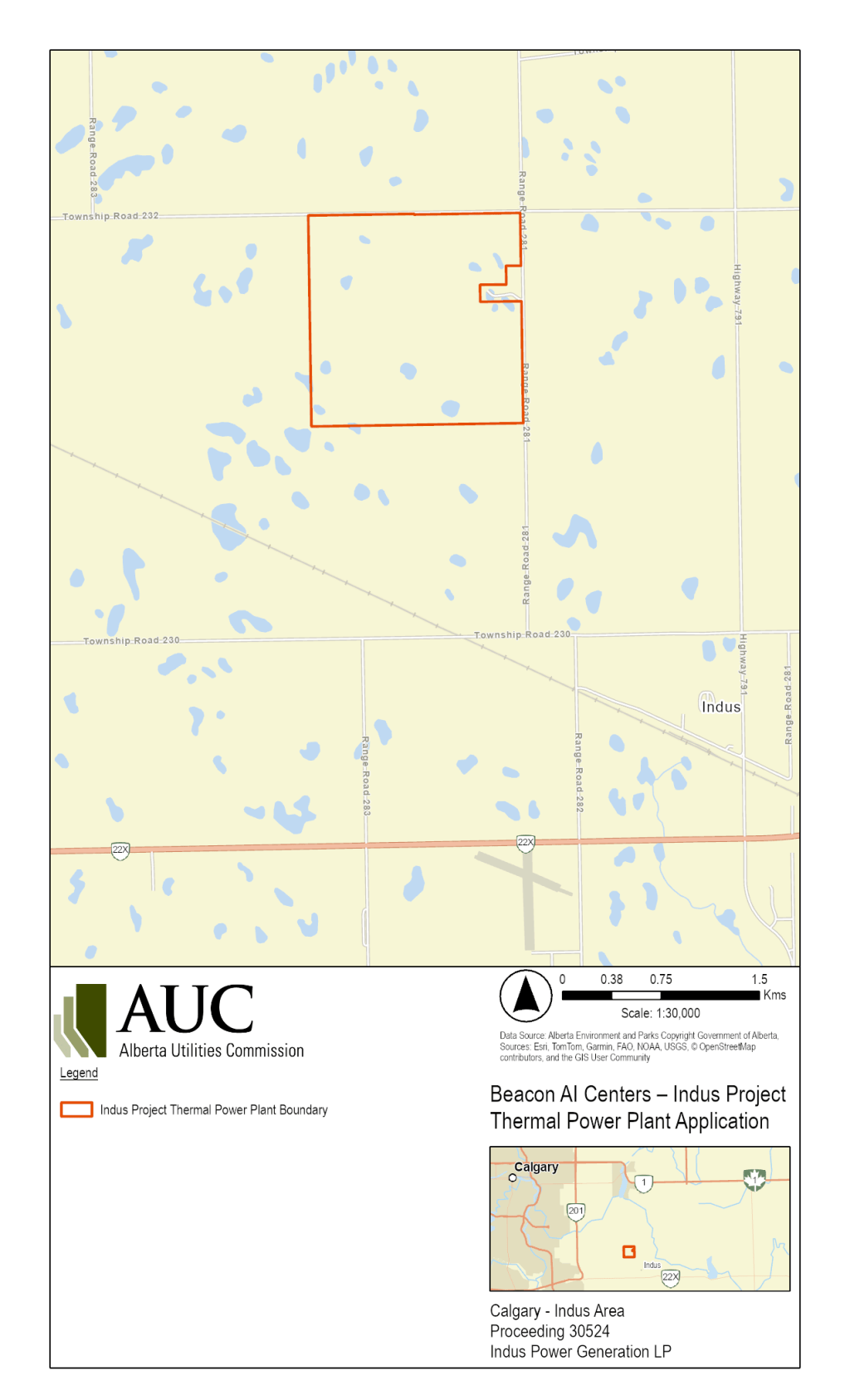
The project lies in Rocky View County, roughly three kilometres east of Calgary and two kilometres northwest of Indus. Provincial project records describe approximately 1,200 MW of supply to on-site data halls under normal operating scenarios. That amount is planned power delivery, not a measured IT load or confirmed customer deployment.
January 2026 JSA TV interview with Beacon AI Centers explaining its Alberta site and power strategy; archival developer interview, not footage of a finished power plant Watch directly on YouTube.
What the 1.494 GW approval actually covers
The four-page AUC approval identifies two generating systems: 100 INNIO Jenbacher J624 gas engines rated at 4.6 MW apiece, and 12 Siemens SGT-800 turbines rated at 61.2 MW each. Waste heat from the gas turbines would feed heat-recovery steam generators serving four 75 MW Siemens SST-500 steam turbines in four combined-cycle units.
Nominal arithmetic gives 460 MW of reciprocating engines, 734.4 MW of gas turbines and 300 MW of steam turbines, totaling about 1,494.4 MW before the regulator’s rounded 1,494 MW project designation. The steam contribution depends on the combined-cycle design; equipment ratings do not indicate net output at every temperature, fuel condition or operating point.
Why the regulator imposed conditions
The approval requires a final equipment-and-design update at least 90 days before construction, along with a cumulative noise assessment covering both the power plant and adjacent data halls. The developer must also prepare an emergency response plan, notify nearby residents about major noisy work where practicable, and arrange reclamation security for eventual decommissioning.
Rocky View County separately confirms a municipal development permit is still needed. The county can address traffic, fencing, stormwater, wastewater, landscaping and other local impacts. The AUC permit says construction must be completed by August 31, 2029 unless the commission authorizes a change.
Siemens Knowledge Hub’s official SGT-800 turbine overview from 2017. Manufacturer explanation of turbine hardware, not a tour or construction record of Beacon Indus Watch directly on YouTube.
A giant energy resource does not equal an AI server farm
The difference between 1,494 MW of nominal generating capability and roughly 1,200 MW planned for data halls is approximately 294 MW. It would be incorrect to divide those figures and publish an AI power usage effectiveness (PUE): they represent distinct design boundaries and do not disclose actual facility auxiliary loads, dispatched generation, transmission losses or IT metering.
Gas-fired power offers dispatchable electricity and possible faster deployment than a conventional grid-only connection. However, fuel availability, combustion emissions, noise, cooling-water management, plant efficiency and gas-price exposure all remain material engineering and community questions. Alberta’s renewable-versus-fossil energy trade-offs deserve explicit attention alongside the speed advantages.
Why Bitcoin miners will recognize the strategy
The power-first development logic resembles the infrastructure model used by large Bitcoin operations, although Beacon Indus is planned for AI and high-performance computing, not cryptocurrency mining. Related BitcoinVersus.Tech reporting covers Nocera’s proposed Alberta modular power site, Bitdeer’s Alberta mining-plant delay, Cipher’s gas pipeline strategy, NTT DATA’s fuel-cell power agreement, and FuelCell Energy’s power testbed. None of those projects should be combined as delivered power without matching capacity definitions.
Next milestones are the final detailed design, municipal approval, fuel and financing arrangements, installation progress, electrical commissioning and signed data-center tenants. Alberta’s project registry targets commercial operation in the fourth quarter of 2027; it remains a forecast, not verified operation.
Primary sources and image disclosure
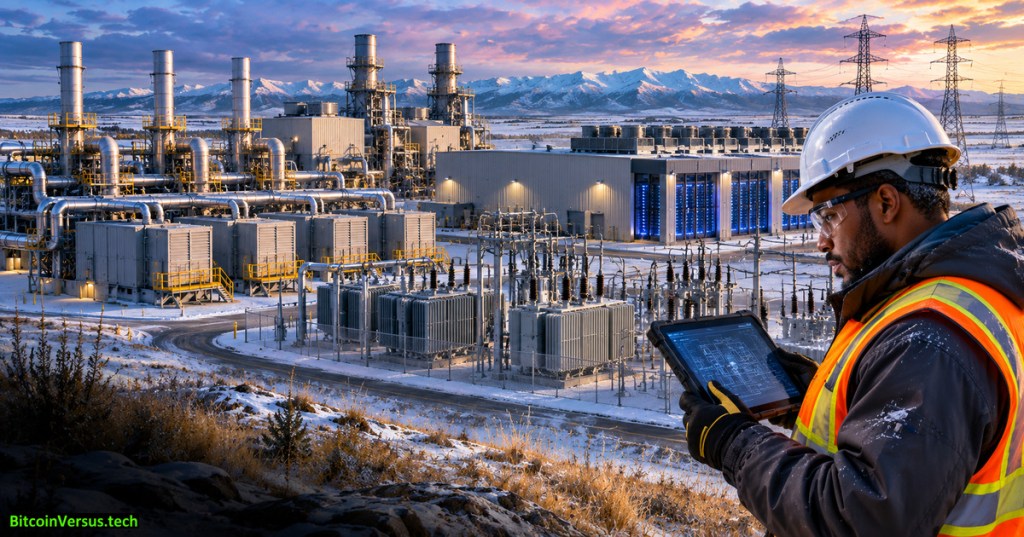
AUC decision summary, November 17, 2026; Power Plant Approval 30524-D02-2026; Rocky View County permit guidance; and Alberta Major Projects registry. The featured cover is an original photorealistic editorial illustration, not an actual image of the unbuilt project.
We volunteer daily to ensure the credibility of the information on this platform is Verifiably True. If you would like to support to help further secure the integrity of our research initiative, please scan the QR code below.

For educational purposes only; not investment advice.


Leave a Reply