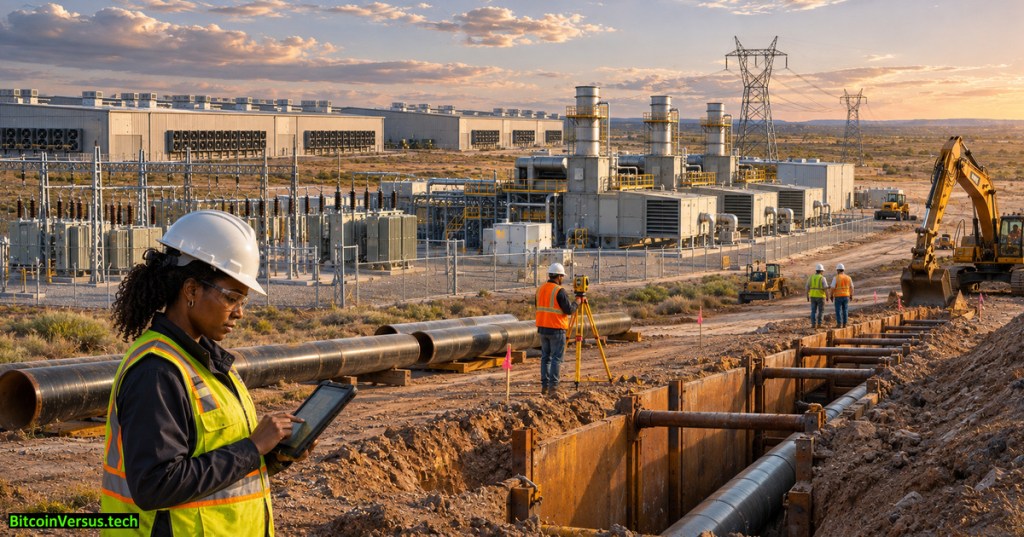
November 23, 2026. Former Bitcoin miner Cipher Digital is advancing natural-gas pipeline connections across several proposed data-center sites, targeting fuel supply sufficient for up to 2.5 gigawatts (GW) of potential on-site electricity generation. The company announced development of the lateral pipelines on September 3 and reaffirmed progress in its November 2 quarterly update. The plan is an infrastructure-development milestone, not 2.5 GW of operating generation.
Cipher expects power providers to build and operate associated generating equipment. Its original timetable aimed to make initial new power available before the end of 2027, but neither completion dates for individual sites nor the amount of installed generation have been verified. A gas connection does not automatically provide an energized data hall.
Video: CNBC Television interviewed Cipher CEO Tyler Page about the company’s data-center power strategy on June 3, 2026. The interview predates the September gas-pipeline announcement.
Why a Natural-Gas Lateral Matters
A lateral pipeline branches from an existing gas system toward a customer’s property. For a large computing campus, developers must establish gas-flow capacity, operating pressure, pipeline rights-of-way, safety controls and compatible generating equipment. The electrical design then must connect turbines or reciprocating engines to transformers, switchgear, protection systems and facility distribution. Every element must work before a megawatt becomes useful computing power.
Gas-fired generation can offer dispatchable output, unlike a data center waiting solely for a new utility interconnection. Yet the project also faces air-permitting, fuel-contract, equipment-delivery, noise and emissions questions. Cipher has not publicly identified a complete generator fleet, project-wide construction cost or verified carbon-intensity estimate for the full 2.5 GW concept.
How the 2.5 GW Figure Should Be Read
Cipher’s November 2 operating update described approximately 5.9 GW of development opportunities, including 2.5 GW of prospective on-site generation. The number is a portfolio target spread across multiple sites, not a single completed facility. Grid classifications announced through ERCOT likewise require further study and approvals; earlier BitcoinVersus.Tech reporting examined the company’s separate interconnection queue.
For scale, continuously delivering 2.5 GW for one entire year would represent 21.9 terawatt-hours of electrical output (2,500 MW × 8,760 hours). The calculation is a theoretical upper bound, not a generation forecast. Actual output would depend on completed capacity, availability, dispatch and operating restrictions. Facility-level IT power would be lower after cooling, conversion and other overhead.
Video: Blockspace discussed the September 3 pipeline announcement, including the gap between planned fuel access and operating AI generation. Commentary is independent analysis, not company construction footage.
From ASIC Mining to High-Density AI
Cipher’s operating history explains its interest in energy infrastructure. Bitcoin ASICs require reliable electrical service and cooling, but can often be curtailed rapidly when economics or grid conditions change. AI clusters demand additional network, cooling, service-level and redundancy provisions. Our mining-versus-cloud infrastructure comparison explains why a mining hall cannot simply swap ASICs for GPU racks without further engineering.
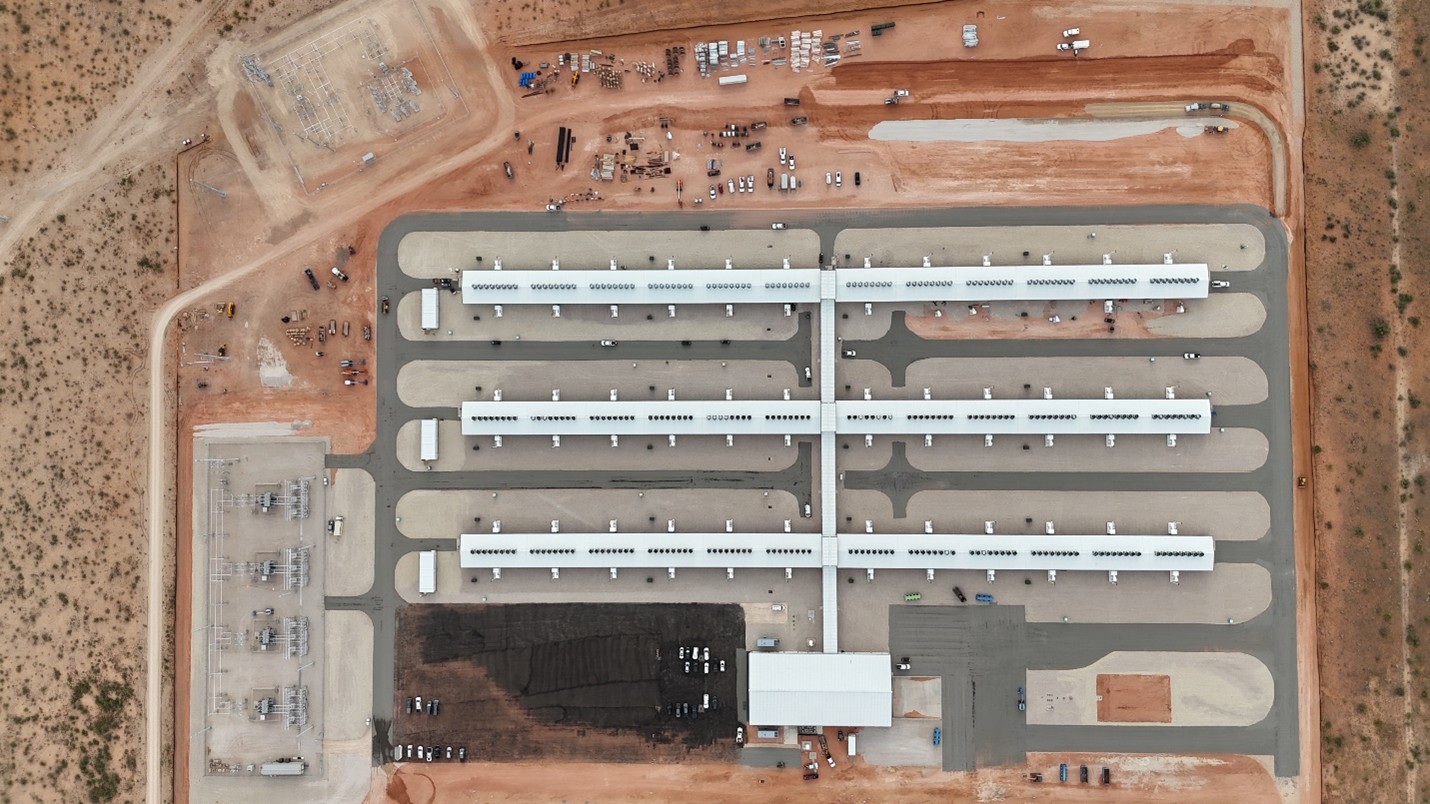
The company already reported its first $5.85 million in quarterly HPC lease revenue after phased delivery at Black Pearl. Its Barber Lake lease extension illustrates the long-duration customer commitments motivating investment. Yet contracts alone should not be confused with operational IT megawatts, a distinction highlighted in our industrywide contracted-capacity analysis.
Milestones Worth Verifying
Project execution will become measurable when Cipher identifies completed pipeline laterals, installed generating units, tested interconnections, air permits, actual net megawatts and tenants consuming power. A successful pipeline route would expand the company’s infrastructure options; it would not, by itself, establish profitable AI capacity or lower electricity costs.
Primary Sources
- Cipher Digital: September 3, 2026, natural-gas lateral development announcement
- Cipher Digital: November 2, 2026, Q3 operating update
- SEC: Cipher Digital, Q3 2026 Form 10-Q
- Cipher Mining: July 2, 2025, Black Pearl aerial photograph
We volunteer daily to ensure the credibility of the information on this platform is Verifiably True. If you would like to support to help further secure the integrity of our research initiative, please scan the QR code below.

Editorial disclosure: The featured cover is an original conceptual illustration, not documentary photography. BitcoinVersus.Tech reporting is informational and does not constitute investment advice.


Leave a Reply