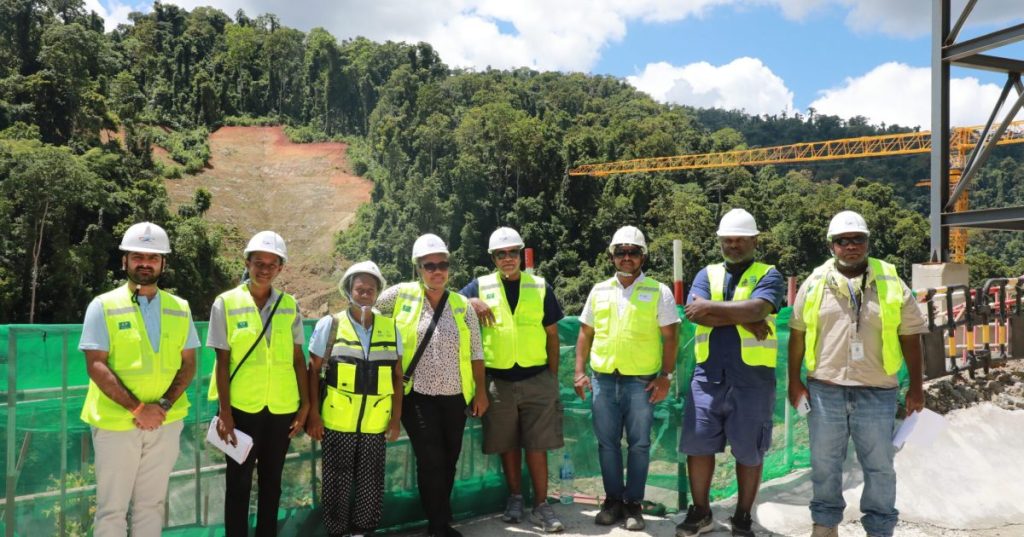
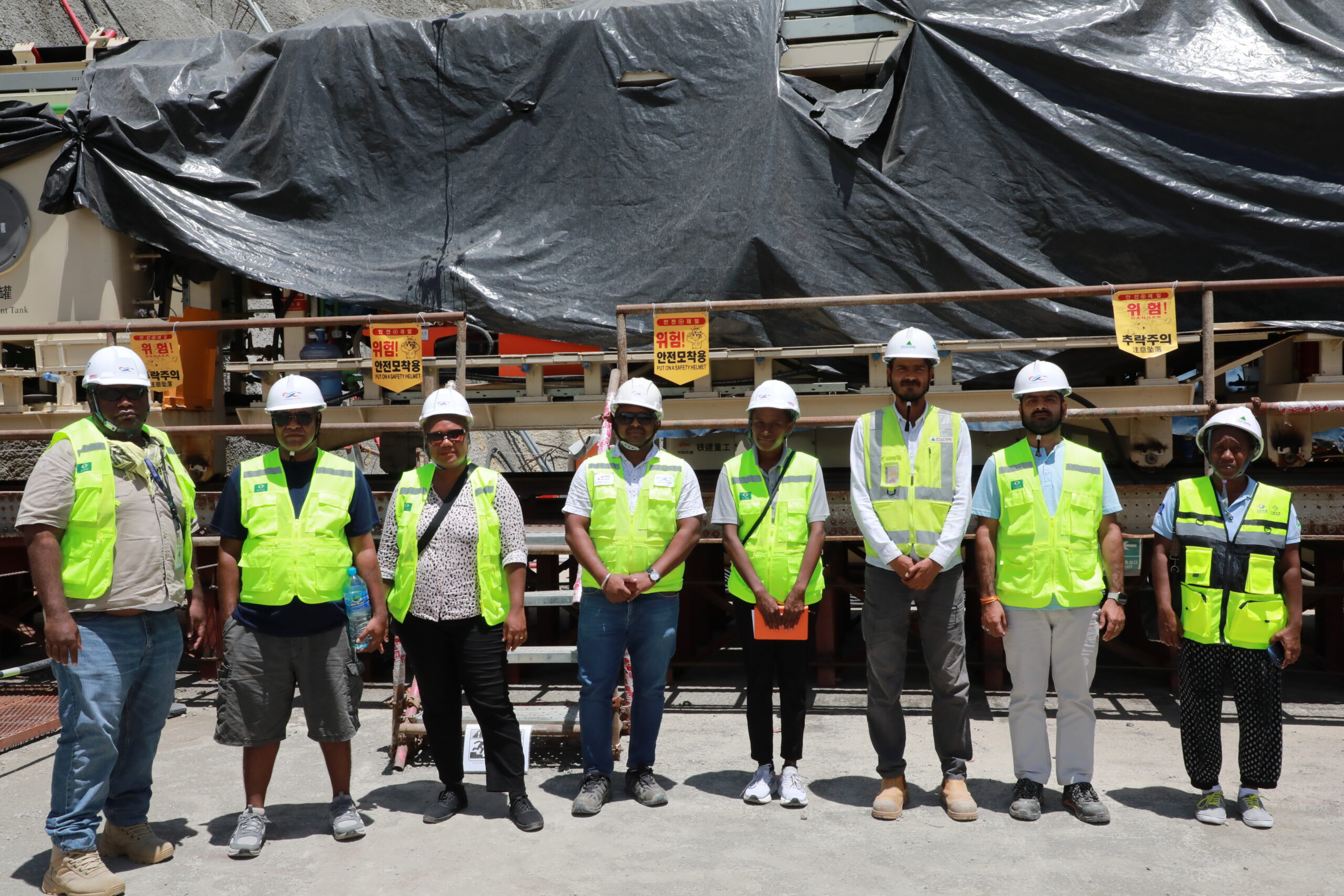
Construction of the 15 MW Tina River Hydropower Development Project in the Solomon Islands is progressing on several fronts. A government monitoring delegation inspected the dam, powerhouse, tunneling equipment and access roads on November 25, 2026, according to a November 27 update from the project office. The facility is intended to supply Honiara’s electricity network and reduce dependence on diesel-fired generation. Like Bhutan’s Jomori hydropower development, it remains under construction rather than an operating power plant.
Building the dam and waterway
The project office reported on October 28 that placement of roller-compacted concrete began October 26. The construction schedule calls for 67 lifts, each 0.3 meters thick, to reach an elevation of approximately 135 meters from a foundation elevation of 115 meters by the end of February 2027. Multiplying the specified layer count by thickness yields 20.1 meters of nominal vertical construction, consistent with the approximate 20-meter elevation change. The intermediate target is not the finished height of the dam.
Roller-compacted concrete is placed in relatively dry layers and compacted mechanically. Engineers must manage material quality, lift interfaces, drainage and foundation stability. The project office identified excavation and stability work at the right abutment as a dependency for further construction. Its October update also targeted December 9 for the start of mechanized tunnel excavation. The November inspection confirmed ongoing machine assembly, not completion of tunneling.
Three generating units and a new grid connection
The project’s engineering overview specifies a dam approximately 71.5 meters high, a headrace tunnel around 3.3 kilometers long and 3.3 meters in diameter, and three 5 MW turbine-generator sets. Water flowing through the hydraulic circuit delivers mechanical energy to the turbines. The generators convert shaft rotation into electrical energy. Dam height alone does not establish the net hydraulic head available at the turbines.
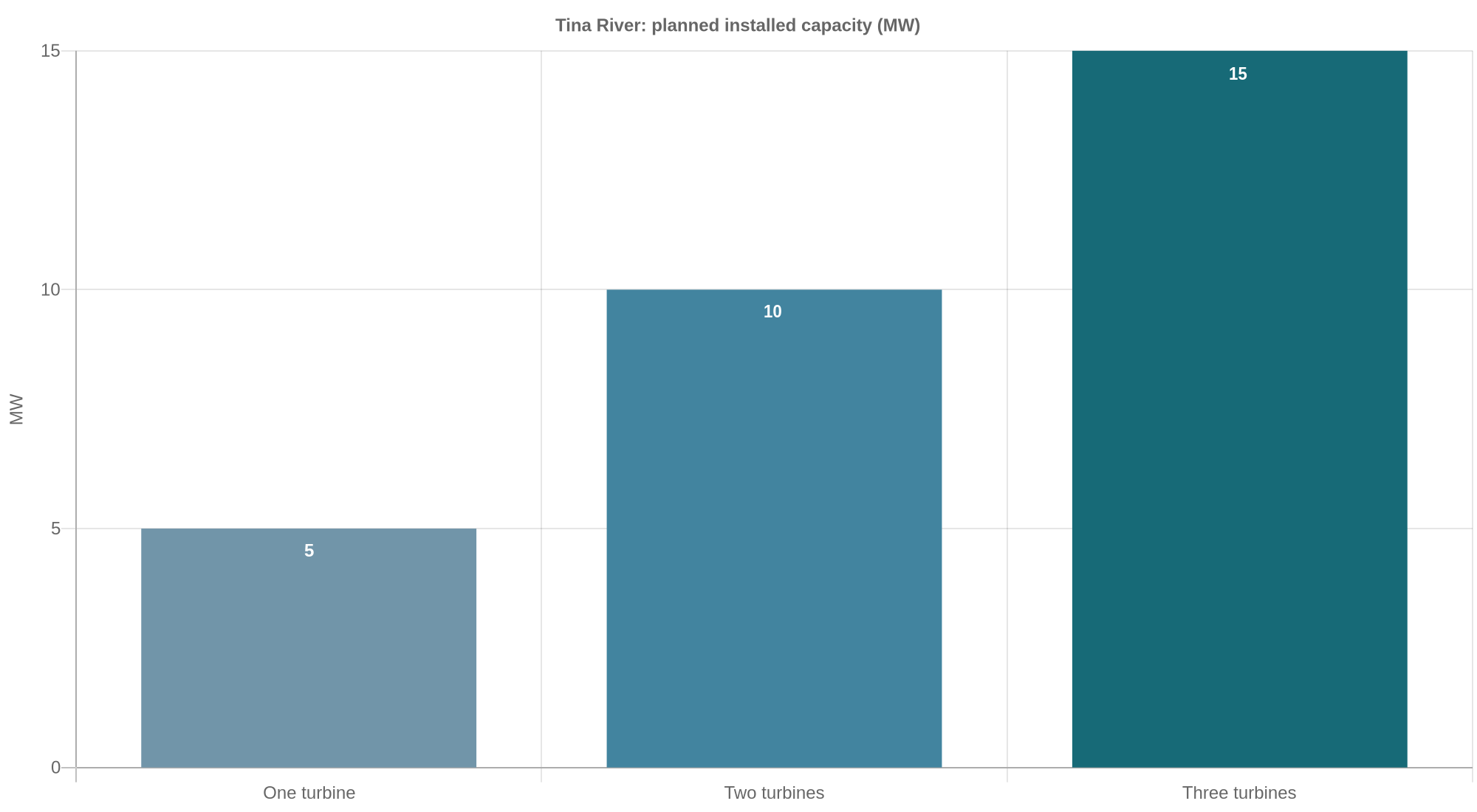
At uninterrupted full nameplate power, the completed facility could theoretically generate 131.4 GWh in a 365-day year. The project’s transmission overview anticipates 70–80 GWh annually, equivalent to approximately 53–61% of theoretical maximum output. The two planned 66 kV circuits will connect the facility with the existing Lungga power station. Seasonal river flows, maintenance and dispatch determine realized energy production.
Why dependable power matters
Hydroelectric generation can displace imported fuel while supporting a more diverse electrical system. The economic value depends on delivered energy, maintenance, financing and network reliability. Comparable issues arise in Sweden’s proposed hydropower-oriented AI infrastructure, although Tina River has no announced computing customer in the reviewed project documents.
A large computing installation requires firm electrical service, appropriate substations and cooling infrastructure. As illustrated by Québec’s potential mining-to-HPC conversion, contracted power and energized computing capacity are distinct milestones. In Honiara, existing electricity consumers are the stated beneficiaries. The comparison with Uruguay’s proposed solar-backed data center development illustrates how generation and load must be planned together, rather than implying a similar computing project in the Solomon Islands.
Tina River’s stated completion goal remains 2028. Evidence of tunnel excavation, dam elevation progress, equipment installation and eventual grid synchronization will establish whether construction is tracking its milestones. The November inspection documents progress, not commercial electricity production.
We volunteer daily to ensure the credibility of the information on this platform is Verifiably True. If you would like to support to help further secure the integrity of our research initiative, please scan the QR code below.

For mobile scanning, open the article on another display and scan the QR code with a Bitcoin wallet. The voluntary donation amount is 5,000 sats. Verify the receiving address 3C9o19EH5HSiwEPyCTmEKzxhNCbo2X6TTb before sending.
BitcoinVersus.tech is not a financial advisor. This media platform reports on financial subjects purely for informational purposes.


Leave a Reply