Apple announced an accessibility option for its television app on November 10, 2026, with a launch dated November 13. Selected films can be accompanied by a sign language interpreter visible alongside the picture. The feature arrives as Apple expands its presence beyond mobile hardware into living-room computing, including the HomeView smart display.
Interpretation rather than transcription
Written captions and signed interpretation serve related but distinct accessibility needs. Captions represent dialogue and relevant sound information as written language. A signed interpretation conveys meaning through a visual language with its own grammar, spatial structure and expressive conventions. For viewers whose primary language is American Sign Language or British Sign Language, an interpretation may offer a more natural way to follow a film. Neither accessibility method universally replaces the other.
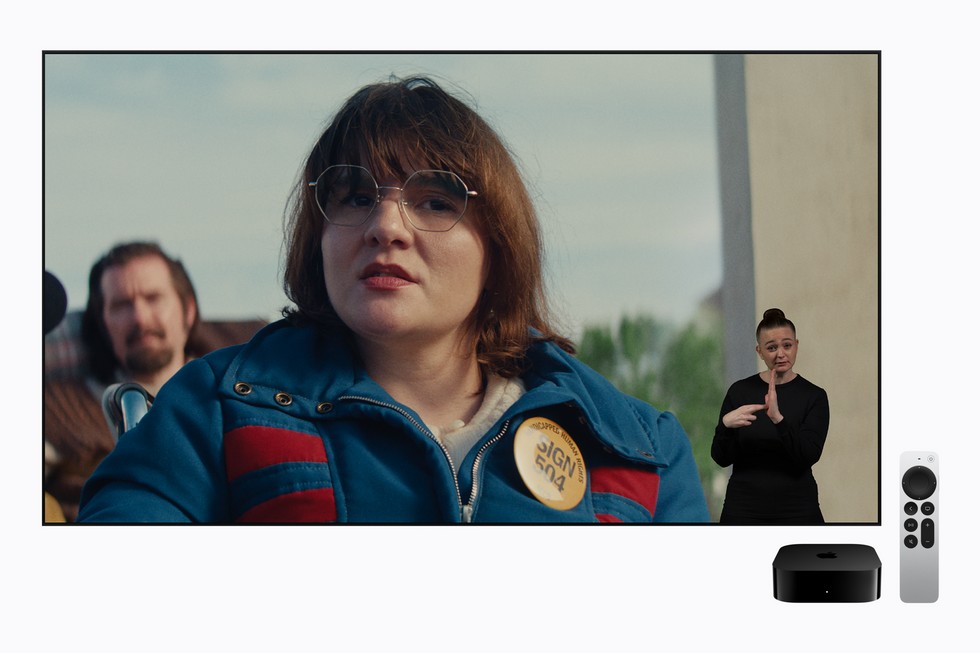
Apple identifies Being Heumann and F1 as initial supported films. The company describes a production process involving native signers and Deaf participants. Way of the Warrior Kid and Greyhound are named as planned additions later in 2026. The announcement does not establish that every Apple Original will receive interpretation or that all third-party streaming services support it.
Playback controls and compatibility
Apple says users can enable the option in app settings and select a signing language during playback on supported titles. The announced software requirements include version 27.2 or later of iOS, iPadOS, macOS, tvOS and visionOS; compatible third-party hardware requires current app software. The availability of a feature depends on the operating system, application implementation and content rights, not merely the presence of a display. Our coverage of Google Wallet on iPhone illustrates a separate example of platform-dependent feature availability.
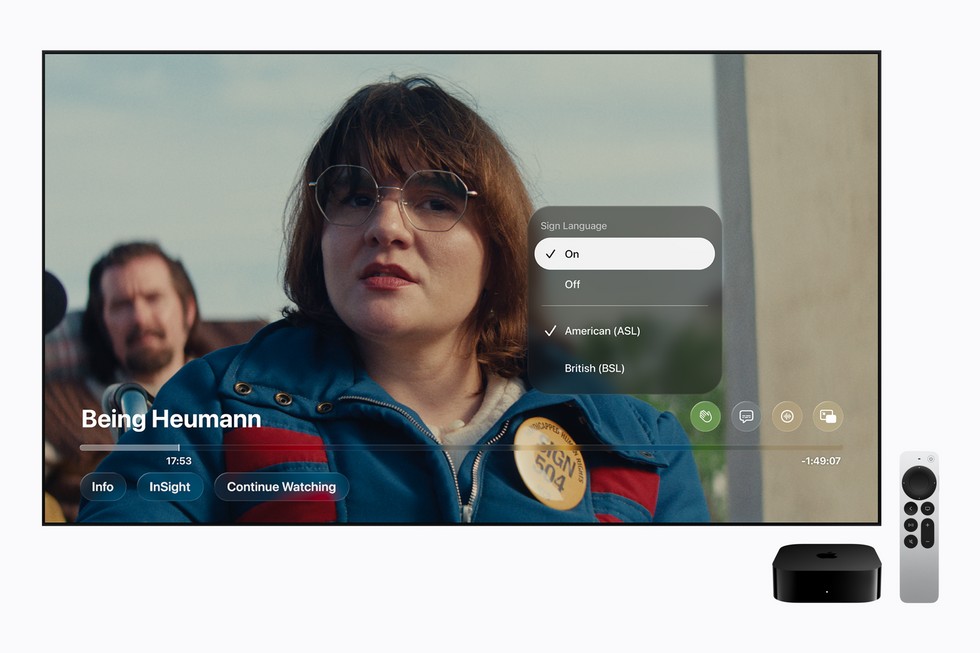
From a media-engineering perspective, an optional interpretation needs reliable synchronization with the main program during pauses, seeks and changes in playback position. A player must also handle screen scaling and avoid placing interface elements over the interpreter. Those are general design requirements, not a verified description of Apple’s internal encoding or delivery architecture. Apple has not disclosed whether its implementation uses separate synchronized video tracks, alternate program assets or another method.
Discovery is part of accessibility
Apple plans title-level labels and search support for signed content, together with an American Sign Language collection. Discoverability matters because an accessibility option cannot help viewers who cannot determine whether a title supports it before playback. The same general principle applies to interfaces on smaller screens, including the OLED iPad mini. The visual arrangement needs to remain legible across different display sizes.
MacRumors and 9to5Mac independently reported the announcement. Their coverage corroborates the stated rollout, not measured performance or independently tested language quality. Unlike the iPhone Duo face-unlock beta, the interpretation announcement focuses on media accessibility rather than identity authentication. Future evaluation should consider the number of supported titles, regional availability, interpreter visibility, synchronization and feedback from signing audiences.
Sources: Apple Newsroom; MacRumors; 9to5Mac.


Leave a Reply