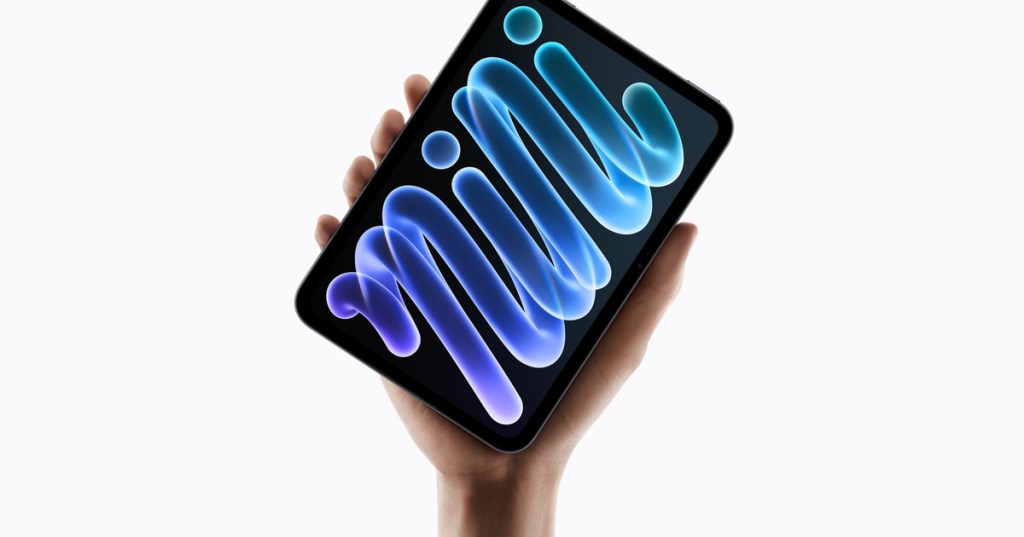
A hands-on review of Apple’s new OLED iPad mini has passed 10 million YouTube views, drawing fresh attention to the price of its screen upgrades. Marques Brownlee’s November 3 video, titled “OLED iPad Mini is The Most Apple Product They’ve Ever Appled,” had about 10.27 million views on November 7, according to Trari’s channel tracker. Popularity measures audience reach, not the accuracy of every review judgment.
BitcoinVersus.Tech covered the tablet’s October 26 launch before U.S. retail availability began November 6. Brownlee’s later hands-on report supplies a different basis for coverage: a sustained performance test, observations about ergonomics and sound, and a closer examination of how storage purchases change the hardware buyers receive.
A $699 OLED tablet still refreshes at 60 Hz
The eighth-generation iPad mini uses an 8.5-inch OLED display capable of 600 nits full-screen brightness and up to 1,200 nits of peak brightness for HDR content. OLED enables individually controlled pixels and deeper blacks, but the panel retains a 60 Hz refresh rate. Brownlee identifies the absence of 120 Hz motion as a major limitation at the new price. His conclusion reflects personal use, not an independently established requirement for every buyer.
Apple’s official specifications confirm a 5.4-millimeter chassis, IP67 resistance and an Acoustic Display speaker design. The review praises one-handed reading and finds the sound directed toward the user, while noting physical vibration at higher volume. Water resistance is tested under defined laboratory conditions and can decrease with wear.
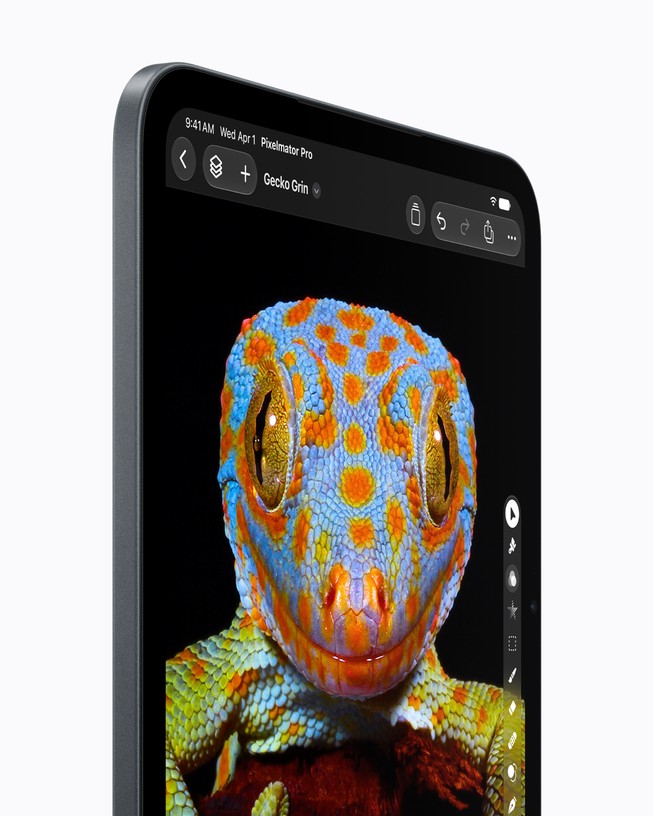
The $899 minimum for nano-texture
Apple sells the Wi-Fi iPad mini for $699 with 128GB, $799 with 256GB and $999 with 512GB. A $100 nano-texture option is offered only with 256GB or 512GB. As a result, the least expensive glare-reducing nano-texture model costs $899, $200 more than the base tablet. The price is a confirmed retail configuration, not a discount or a reviewer estimate.
Storage also changes processing resources. Apple lists a five-core CPU and one 16-core Neural Engine for the 128GB and 256GB models, but a six-core CPU and two 16-core Neural Engines for 512GB. All versions retain a seven-core GPU. More CPU cores can help parallel work, yet greater core counts alone do not establish proportional real-world speed; core counts and clock speeds need workload-specific interpretation.
The 20-loop test adds actual evidence
Brownlee reports running a 20-loop 3DMark workload on the iPad mini and iPhone 18 Pro. The iPad reportedly held performance more consistently and throttled less, despite its thinner body. Greater surface area can spread heat, but a single reviewer test cannot establish fleet-wide results, battery endurance or long-term thermal reliability. No exact performance-score advantage should be inferred without the underlying benchmark measurements.

The broader issue is product segmentation. Apple’s move into touchscreen Mac computers and its folding iPhone Duo expand the number of compact screens competing for consumer attention. Brownlee’s review exposes a practical purchasing question: whether OLED contrast, portability and sustained performance justify a premium when smoother scrolling remains reserved for another iPad tier.
A viral video cannot settle value for every user. Readers who prioritize handwriting, one-handed reading and compact dimensions may favor the mini; buyers sensitive to motion smoothness or cost may not. The verifiable news is the review’s audience reach and fresh hands-on findings, with the chip and pricing differences cross-checked against Apple’s published specifications.
Editor’s Note: YouTube popularity was screened across publicly available science-and-technology video trackers for uploads dated November 1–7, 2026; the selected Marques Brownlee video was published November 3. The November 7 view snapshot (about 10.27 million) comes from Trari and does not establish the most viewed technology video on all of YouTube. Hands-on observations and the 20-loop comparison were checked against Brownlee’s accompanying review. Display specifications, chip tiers and pricing were verified through Apple’s specifications and store listings. Brownlee states that Apple supplied the review unit. The two photographs and the featured 1200 × 630 crop use official Apple Newsroom images. Video playback, live player rendering and mobile-browser behavior require separate verification.

To donate 5,000 sats, open the article on a separate display and scan the original QR code with a compatible Bitcoin wallet. On mobile, use another screen or your wallet’s supported image-scanning feature. Verify the destination 3C9o19EH5HSiwEPyCTmEKzxhNCbo2X6TTb before sending.
We volunteer daily to ensure the information on this platform is Verifiably True. If you would like to support the research, please scan QR code.
BitcoinVersus.tech is not a financial advisor. Technology coverage is provided for informational purposes.


Leave a Reply