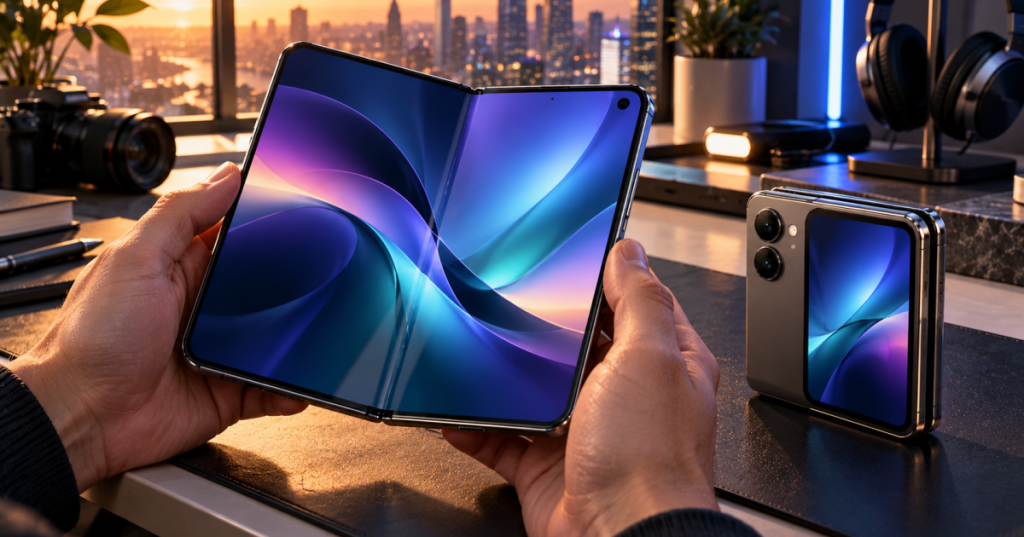
October 23, 2026 — Apple’s first folding iPhone arrives in stores today. A detailed new review by technology creator Marques Brownlee (MKBHD) asks what daily life with the iPhone Duo is actually like. After testing the phone, Brownlee finds a thoughtfully engineered hinge, excellent internal display, and genuinely useful multitasking—alongside the trade-offs that come with a first-generation design. His review was published October 21, before today’s retail launch.
Key Takeaways
- Screen: 5.4-inch outside; 7.6-inch folding OLED inside with an anti-glare nano-texture finish.
- Daily use: Side-by-side apps and flexible viewing angles are meaningful benefits, but many third-party apps have not fully adapted.
- Compromises: $1,999 starting price, 254-gram weight, Touch ID rather than Face ID, and no dedicated telephoto camera.
MKBHD Puts the Folding iPhone to the Test
Brownlee’s 29-minute iPhone Duo review emphasizes the tactile experience. The hinge holds useful partially open positions, Apple’s opening animations feel responsive, and the matte inner display reduces distracting reflections and makes the crease less noticeable. But the folded phone is thick and heavy, and its shiny rounded sides can make opening it less convenient. Brownlee also finds that the side-button fingerprint sensor, while functional, is a step back from familiar Face ID.
The Apps Still Need Work
Apple redesigned iOS 27 for Split View, letting two apps run beside one another on the larger screen. That can help when viewing notes during a call, reading documents, or comparing information. Brownlee reports that some third-party apps still display unused space, awkward controls, or phone-sized layouts. Those are launch-period software limitations, not specifications that Apple guarantees will disappear. WIRED’s real-work test likewise found lightweight productivity practical while more demanding workflows still favored a computer.
The Hardware Behind the Experience
According to Apple’s specifications, iPhone Duo uses the A20 Pro, a titanium folding body, a 120Hz OLED display on each side, and a 48MP main camera. It weighs 254 grams and measures 11.3 mm thick when closed. The rear cameras omit a dedicated telephoto, making it less flexible than a Pro iPhone for distant subjects. The large inner screen, rather than premium zoom photography, is the defining purchase consideration. Our earlier coverage explores A20 Pro architecture, OLED display technology, and the evolution of smartphone features.
Who Is the $1,999 Foldable For?
The Duo is most appealing to someone who wants a tablet-like display that still fits in a pocket and expects to use two apps together. Buyers prioritizing the lightest phone, advanced camera zoom, or flawless support across every existing app may prefer a conventional model. Apple lists October 23 as the device’s availability date in its September 9 announcement. Reviews and early-owner impressions will test whether software improvements follow launch.
BitcoinVersus.Tech Editor’s Note: We volunteer daily to ensure the credibility of the information on this platform is Verifiably True. If you would like to support to help further secure the integrity of our research initiatives, please donate using the QR code provided

For best QR-code scanning results, please scan this donation code from a desktop or larger screen. Mobile screens may prevent camera recognition.


Leave a Reply