
Djibouti requires commercial cryptocurrency service providers to maintain at least 100 million Djiboutian francs in their own funds, equivalent to approximately US$563,000 at the country’s fixed exchange rate. The requirement appears in Article 11 of the Central Bank of Djibouti’s Circular 2026-01, signed April 8, 2026, which amends and supplements the earlier provider framework. November coverage by Finlazo offers a timely reason to examine the country’s regulatory infrastructure. The circular is not a November enactment and does not make Bitcoin legal tender.
The cost of operating a regulated Bitcoin business
The capital requirement is determined by selecting the greatest of three amounts: DJF 100 million, 2% of the preceding year’s investments received, or one quarter of the preceding year’s fixed overhead. New operators use projected figures for the variable calculations. Article 12 requires provider funds to be held with the central bank and customer investment payments to be held separately at a bank in Djibouti pending settlement.
Suppose a hypothetical exchange receives DJF 8 billion in investments during a year and incurs DJF 200 million in annual fixed overhead. The investment measure would equal DJF 160 million and the expense measure DJF 50 million. The applicable amount would therefore be DJF 160 million, rather than the statutory floor. At the central bank’s published parity of 177.721 francs per US dollar, the hypothetical requirement is approximately $900,000. Neither figure describes an existing exchange’s finances.

Why mobile money and Bitcoin are different
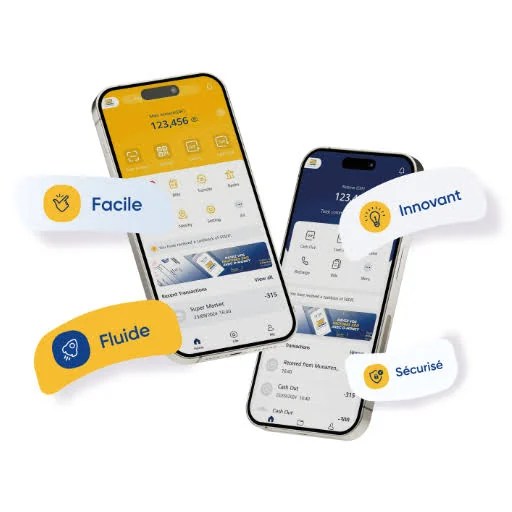
Djibouti already has a domestic digital-payment platform. D-Money, operated by Djibouti Telecom, supports money transfers and payments through mobile devices. Its balances represent conventional money within a managed service, whereas Bitcoin uses a public network that verifies transactions through independent nodes and proof-of-work consensus. A local Bitcoin exchange could connect the two financial environments, but no such D-Money integration was verified for the present article.
Operating a Bitcoin custody service creates additional technical responsibilities. Service providers must distinguish customer balances from corporate funds, reconcile internal records against on-chain transactions, protect signing keys and prepare for system failure. Earlier BitcoinVersus.Tech coverage of wallet backup and recovery illustrates the importance of key management; institutional implementations also require access governance and independent review.

Licensing is not evidence of widespread adoption
The amending anti-money-laundering law requires prior approval for covered commercial virtual-asset services. Exchanges, transfers and custody performed for customers fall within the framework. The circular also requires operational safeguards and client risk disclosures. A commercial provider license is distinct from ownership of one’s own Bitcoin keys; the article does not establish the legality of every possible private activity or offer individualized legal advice.

The country joins a broader examination of institutional digital-asset infrastructure alongside Czechia’s central-bank custody experiment, Denmark’s tax-accounting review and Bitcoin merchant payment software. Djibouti’s framework establishes conditions for regulated intermediaries, but does not establish a licensed Bitcoin exchange’s operation, national Bitcoin holdings, or merchant adoption figures. Those developments require separate evidence.
Featured photograph: Abass Chirdon, International Port of Djibouti, 2008, CC BY 3.0, cropped to landscape. The supporting videos are distinct historical resources and embedded playback was not independently verified.
We volunteer daily to ensure the credibility of the information on our platform is Verifiably True. If you would like to support our independent research, please scan the QR code below.



Leave a Reply