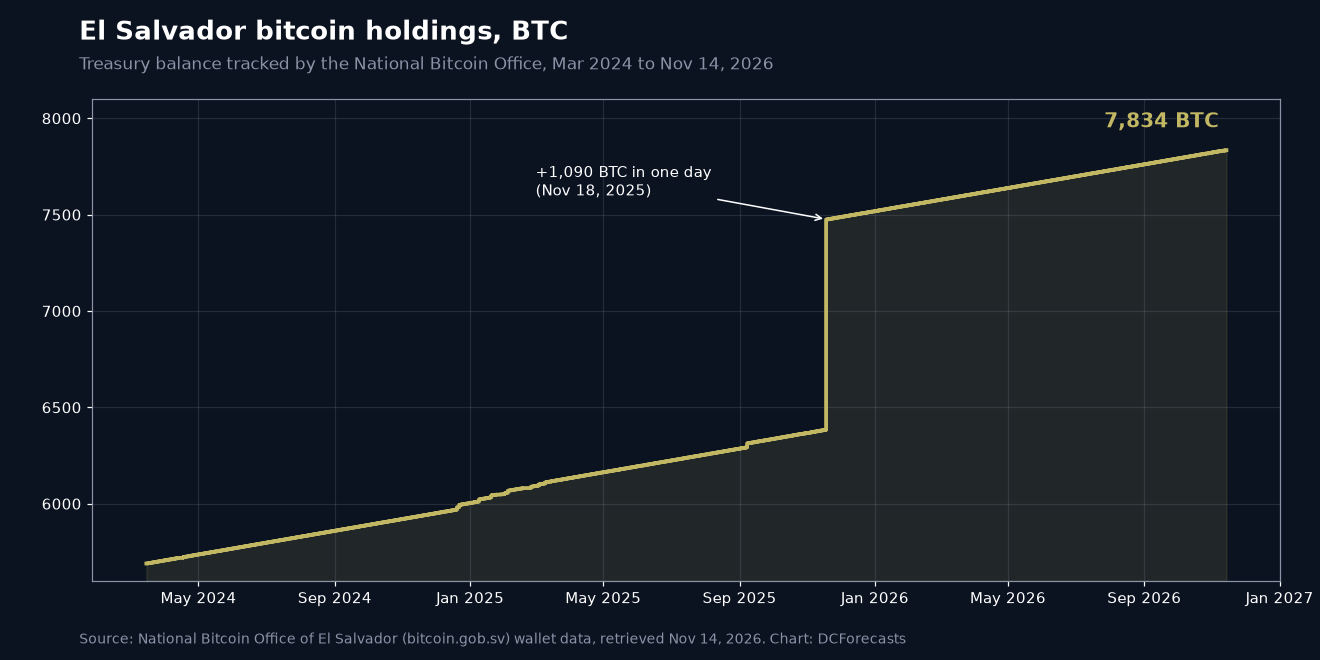
El Salvador’s publicly disclosed Bitcoin reserve addresses contained approximately 7,849.37 BTC on November 29, 2026, according to Corgano’s reconstruction of the National Bitcoin Office’s wallet data. The figure covers 20 disclosed addresses rather than every possible government holding. The International Monetary Fund’s October 1 review distinguishes documented donations from further accumulation, while calling for reduced public-sector exposure to Bitcoin-related operations. The distinction matters when evaluating the country’s reserve strategy.
What the blockchain actually establishes
Bitcoin’s unspent transaction output model makes it possible to reconstruct the balance associated with a disclosed set of addresses. An incoming transfer increases the balance if the funds originated outside that set. Moving coins among addresses within the set does not create new holdings. The ledger alone cannot reveal the contractual reason for a transfer, its acquisition price, or whether public money funded it. Readers can examine the official National Bitcoin Office dashboard and the transaction attributed to the November 29 one-bitcoin inflow in the office’s explorer. The explorer’s JavaScript display was not independently rendered during research.
| Snapshot (UTC) | Disclosed BTC |
|---|---|
| December 31, 2024 | 6,003.77 |
| December 31, 2025 | 7,518.37 |
| November 28, 2026 | 7,848.37 |
| November 29, 2026 | 7,849.37 |
Donations and public-sector accounting
The IMF staff representative’s October 1 statement identifies 1,090 BTC received in November 2025 and 344 BTC received by September 25, 2026 under a separate donation arrangement. The fund says those assets were segregated in identifiable wallets. The IMF’s executive board allowed a disbursement of about $138 million and granted waivers for unmet criteria involving Bitcoin accumulation. The fund’s position is that further accumulation beyond the documented donations is not envisaged. Earlier BitcoinVersus.Tech reporting examined the original lending conditions and the government’s historical reported reserve gain. Current wallet balances do not provide a complete cost basis or establish realized investment returns.
A different experiment on the streets
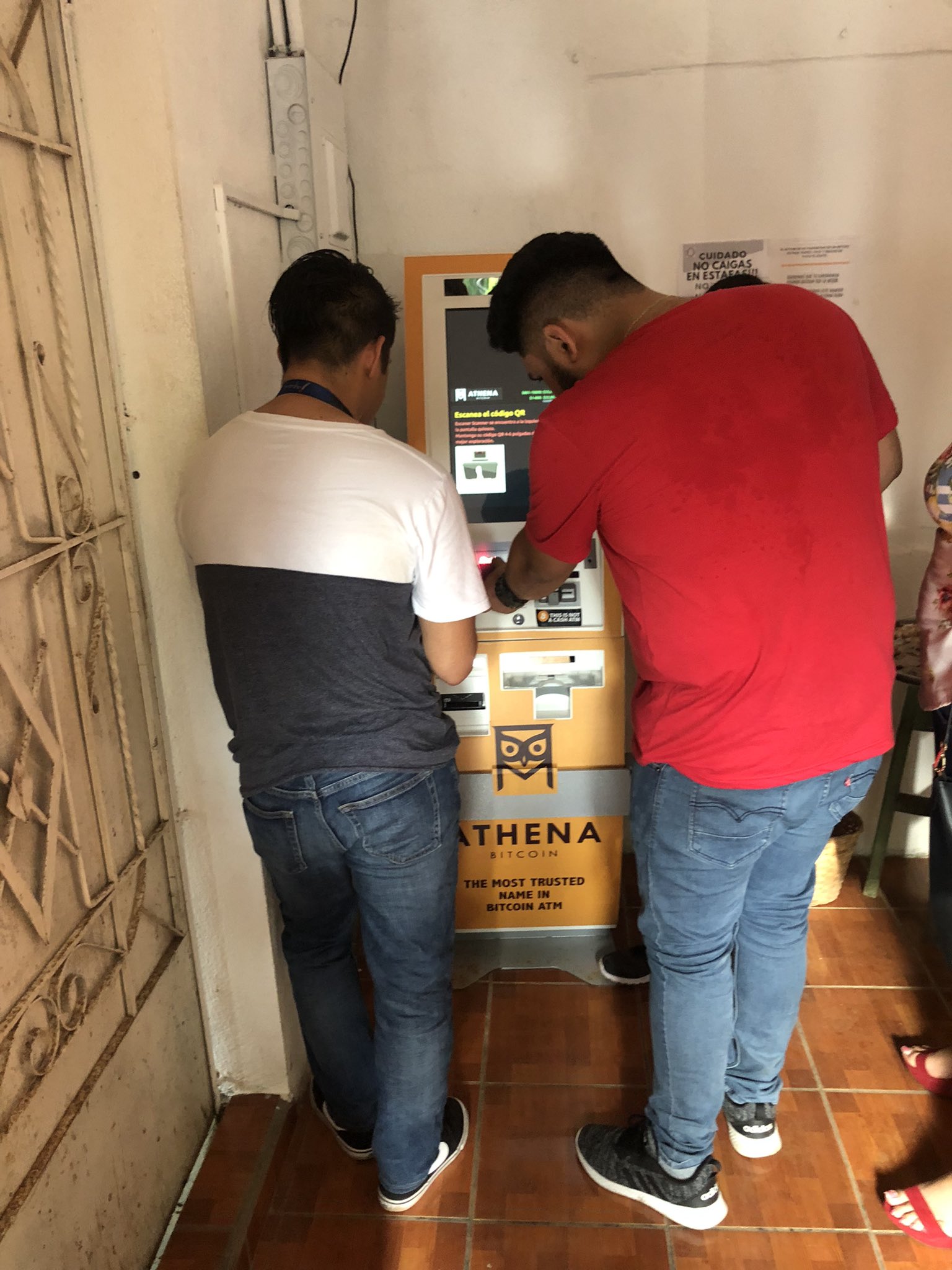
Government reserves and local merchant adoption are separate measurements. Bitcoin Magazine reported October 19 on a series of November events including a circular-economies summit scheduled for November 19–20 in El Zonte. The events demonstrate continued organized interest but do not establish transaction volumes. The 2025 amendments made acceptance voluntary; the IMF’s October 2026 review also confirms the transfer of majority control of the Chivo wallet to a private operator.
As with Dominican Republic’s merchant initiative, payment retention and repeated transactions would provide stronger evidence of practical adoption. Meanwhile, institutional key backup and recovery remain essential to reserve management. The published addresses provide useful transparency into quantities, but financial audits remain necessary to establish ownership, obligations and the origin of funding.
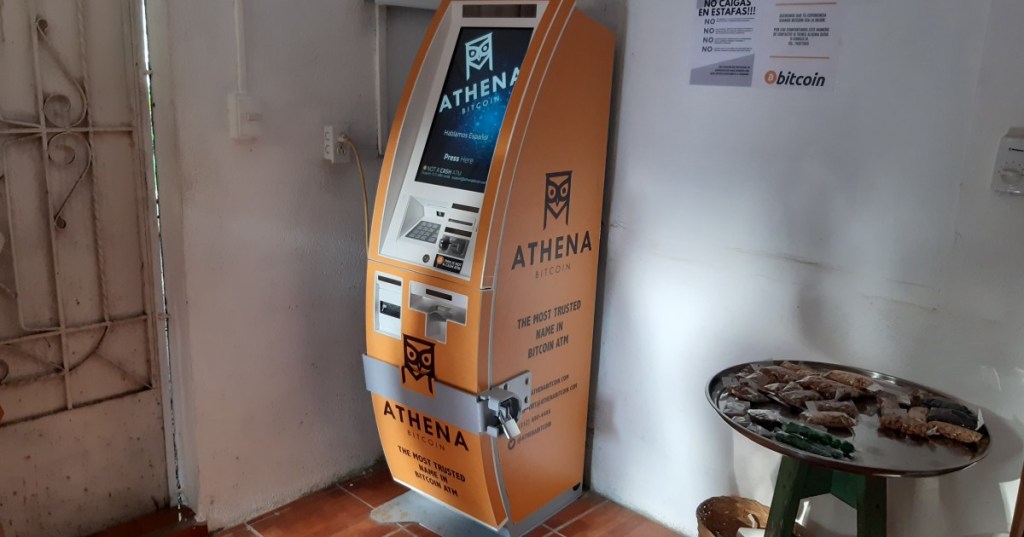
Featured photograph: Karlalhdz, Bitcoin ATM in El Zonte, June 2021, cropped under CC BY-SA 4.0. The video and live dashboard link to their original hosts; embedded playback and responsive presentation were not independently verified.
We volunteer daily to ensure the credibility of the information on our platform is Verifiably True. If you would like to support our independent research, please scan the QR code below.



Leave a Reply