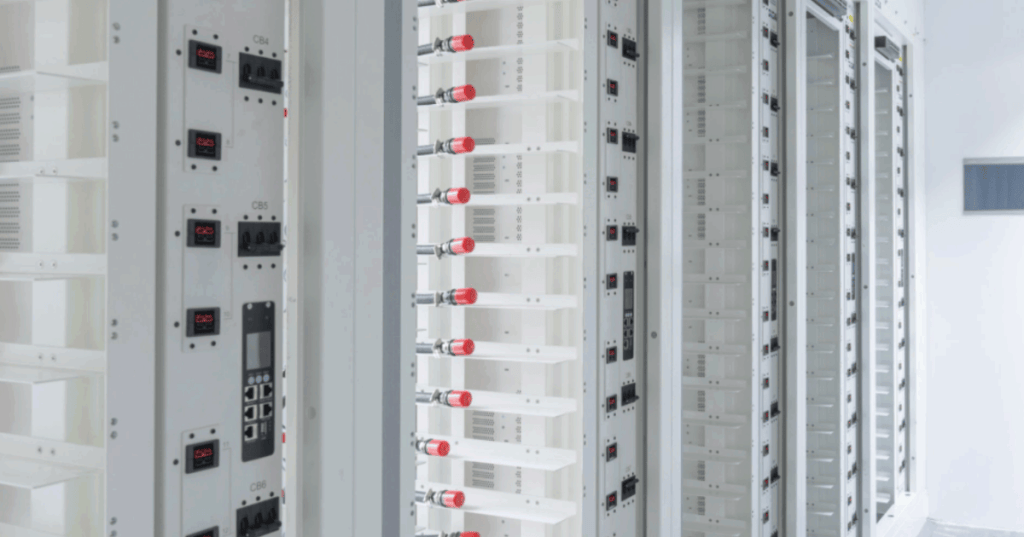
France Mining is developing an industrial heat-recovery installation in Hauts-de-France that would use electricity for computing and deliver the resulting thermal energy to a food-processing facility. Bitcoin.fr reported on October 19, 2026 that the initial 2.4 MW installation could expand to 4.8 MW. The developer’s FM01 project documentation targets production in the first quarter of 2027, contingent on financing. Unlike the operating residential systems examined in our Finnish mining heat report, the industrial installation remains a development project rather than verified commercial capacity.
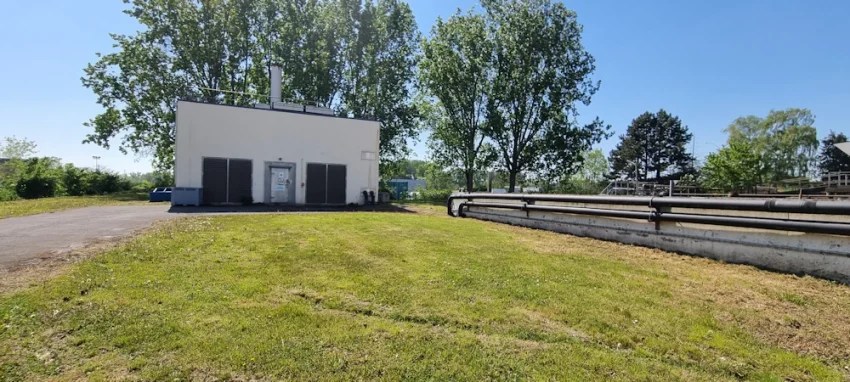
How mining heat enters an industrial process
An ASIC performs repeated SHA-256 computations using electrical energy. Nearly all electrical input eventually becomes heat, but delivering useful industrial heat requires more than operating mining equipment. France Mining proposes direct liquid cooling, with a heat exchanger transferring energy from the server cooling circuit to the host factory’s water loop. The separation allows both circuits to maintain their own fluid chemistry, pressure and flow requirements. The developer specifies a maximum delivery temperature of 80°C for FM01, which is a design specification rather than a measured operating temperature.
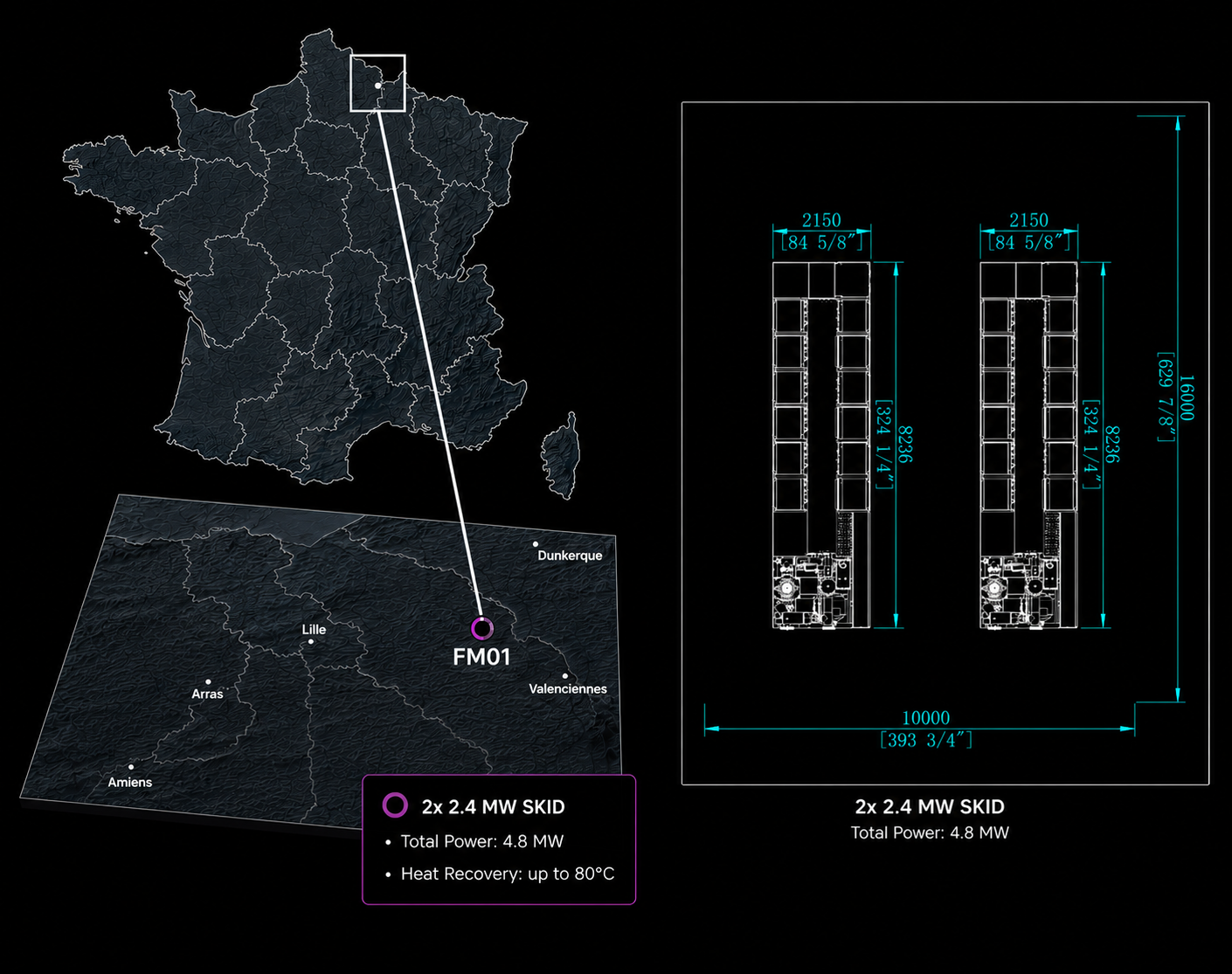
The useful thermal output depends on the coolant flow and its temperature change across the heat exchanger. Heat delivered in watts equals mass flow in kilograms per second multiplied by specific heat capacity and the temperature difference. Pumps, controls and electrical distribution introduce additional consumption. Industrial heat demand must also coincide with mining operation. A backup boiler or another heat source may be needed when computing is curtailed, equipment is serviced or the process requires a higher temperature. Our Austrian solar mining report examines a related approach on a smaller scale.
The annual energy target and operating constraints
At uninterrupted full load, 2.4 MW corresponds to 21.024 GWh of electrical energy over 8,760 hours. The developer forecasts approximately 17 GWh of annual useful heat, equivalent to about 81% of that full-load electrical reference. The ratio combines potential operating hours, heat recovery and other losses; it is not a measured heat-exchanger efficiency. At a hypothetical fleet efficiency of 15 J/TH and assuming the entire 2.4 MW were dedicated to ASICs, theoretical hashrate would be 160 PH/s. Actual hashrate cannot be established because the machine inventory and auxiliary power allocation have not been disclosed.

France Mining identifies computing sales, heat sales and compensation for reducing electrical demand as potential revenue streams. Its electricity procurement target is around €33/MWh, subject to the assumed procurement and tax conditions. That figure is neither a guaranteed tariff nor a realized operating cost. Curtailment may protect the economics of computing during expensive power intervals but can interrupt the thermal supply. The relationship between surplus electricity and flexible demand also appears in our British wind curtailment analysis.
What commissioning must demonstrate
The project’s ability to reduce natural gas consumption requires metered heat delivered to the industrial customer and evidence of the fuel actually displaced. Hourly electricity carbon intensity, boiler efficiency and supplementary heat affect the emissions calculation. The developer estimates annual avoided carbon dioxide emissions of roughly 3,570 tonnes; independent verification would require a defined baseline and operational data. As our Ethiopian mining electricity analysis illustrates, contracted power and actual supply must be separated. FM01’s important next milestones are financing, installation, commissioning and publication of metered electricity and heat data.
Featured illustration: France Mining, cropped from the developer’s rack illustration. Credited static media and an original-host video link are used because interactive playback and responsive presentation could not be independently verified.
We volunteer daily to ensure the credibility of the information on our platform is Verifiably True. If you would like to support our independent research, please scan the QR code below.



Leave a Reply