Japan’s Sakana AI announced Namazu Small on November 25, 2026, reporting that its 30-billion-parameter reasoning model surpassed NVIDIA’s 120-billion-parameter Nemotron 3 Super on the mean score across 25 selected benchmarks. The company’s benchmark appendix identifies major gains in web research and document grounding, alongside weaker closed-book knowledge results. Japan’s AI Watch covered the announcement on November 25. The model’s compact design follows a broader effort to improve inference efficiency, including the specialized architectures examined in our IBM–Micron compute-in-memory analysis.
Smaller parameter count, targeted training
Namazu Small originates from NVIDIA’s pretrained Nemotron 3 Nano base model. Sakana performed additional pretraining and post-training to improve practical research and document-processing tasks. Its mixture-of-experts architecture contains approximately 30 billion total parameters, with approximately three billion active for each token. Nemotron 3 Super has roughly four times as many total and active parameters. Expert routing can reduce computation per token compared with activating every parameter, but the inactive weights still require storage or access during inference. Routing overhead, memory traffic and the length of generated reasoning can affect actual latency and energy use. The company has not published a comprehensive comparative serving-cost measurement in the announcement.
The average hides important differences
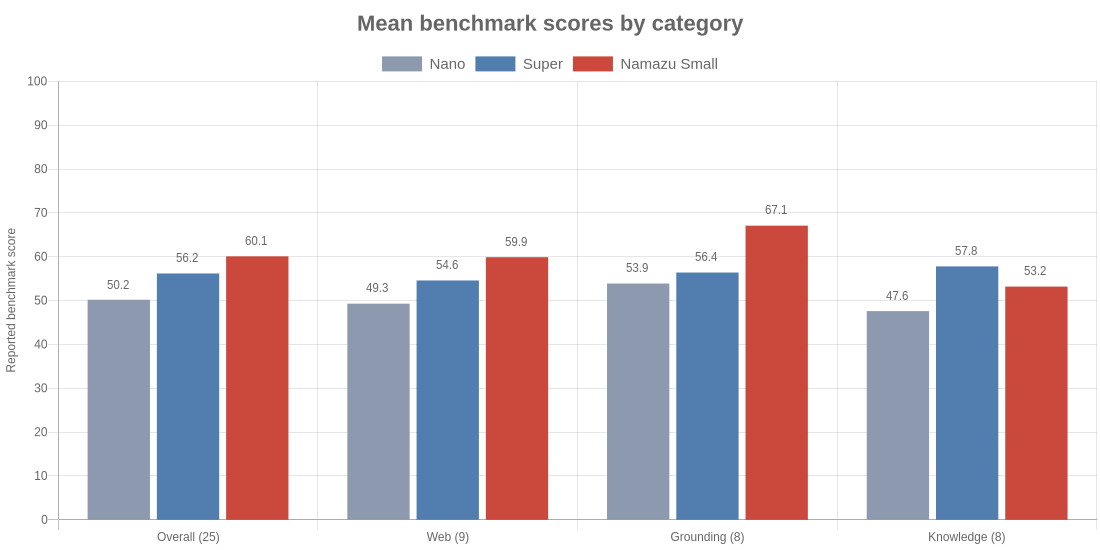
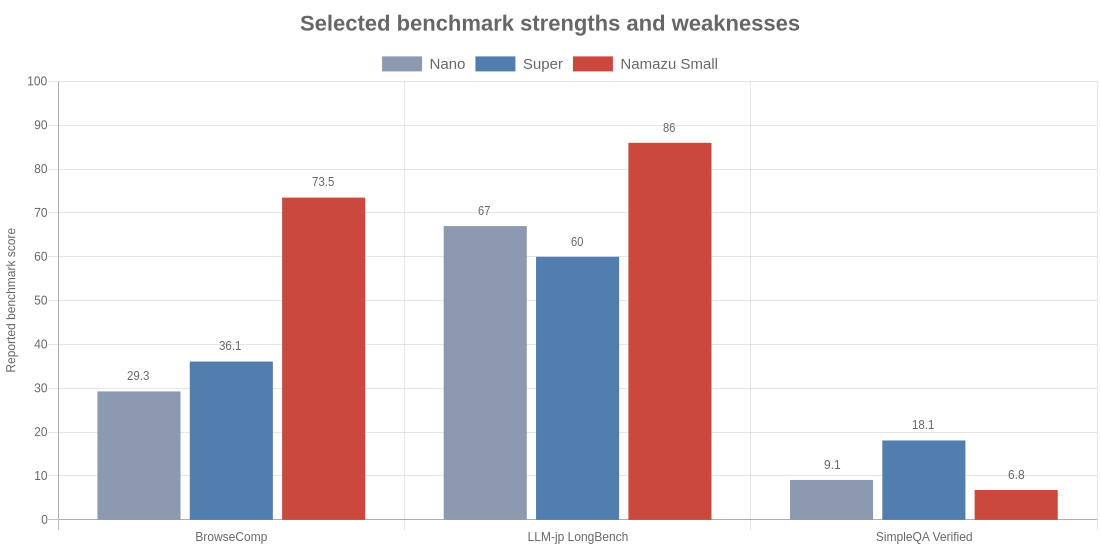
The company reports mean scores of 60.1 for Namazu Small, 56.2 for Nemotron 3 Super and 50.2 for Nano. Namazu Small leads Super by 3.9 points across the selected suite. Its grounding and instruction-following mean reaches 67.1 versus 56.4 for Super, while its knowledge mean trails Super by 4.6 points. On BrowseComp, the respective Namazu and Super scores are 73.5 and 36.1. On SimpleQA Verified, however, Namazu scores only 6.8 compared with Super’s 18.1. The comparison reflects selected benchmarks under the developer’s evaluation settings, not proof of universal superiority. Our Cognition coding-agent evaluation report illustrates the importance of task-specific measurement.
What local deployment would require
For a hypothetical 30-billion-parameter model, storing weights at sixteen bits requires approximately 60 GB of raw storage, compared with 15 GB at four bits before quantization metadata and runtime overhead. Actual memory requirements also depend on attention caches, concurrent users and model execution software. Sakana tested Namazu Small with a 262,144-token context limit and maximum generated output of 32,768 tokens. Those settings are evaluation boundaries rather than a guarantee of performance on every workstation. Our Bonsai quantization coverage examines another approach to reducing model storage.
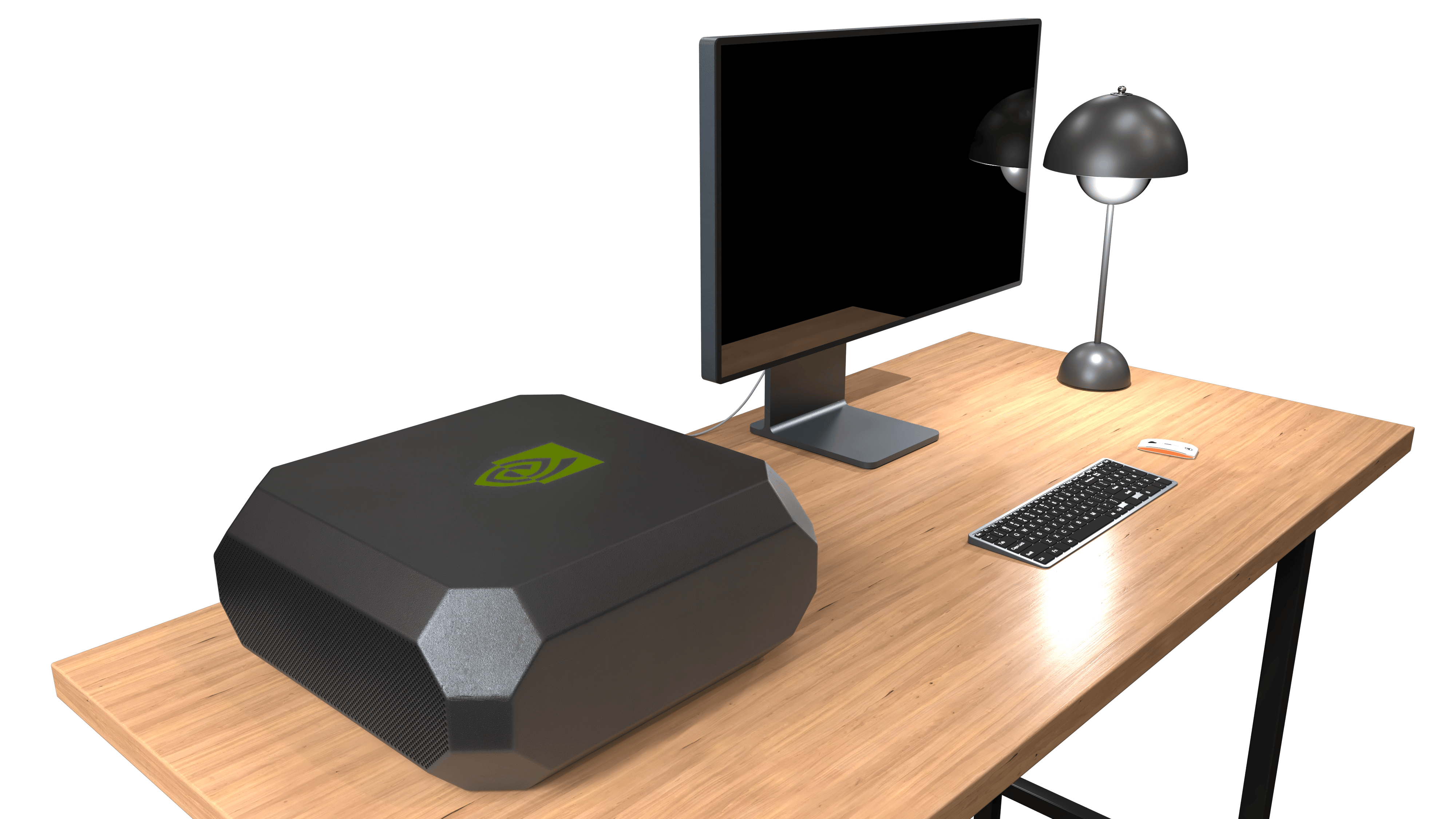
Sakana plans to announce on-premises availability details in early-to-mid December. No independently validated production throughput, supported hardware list or final licensing terms were established by the November announcement. Deployments must also consider document access permissions and whether external search sends queries outside the local environment. The model’s advantages may therefore depend as much on the surrounding tools and service architecture as on parameter count. Our disaggregated AI inference report explores related infrastructure decisions.
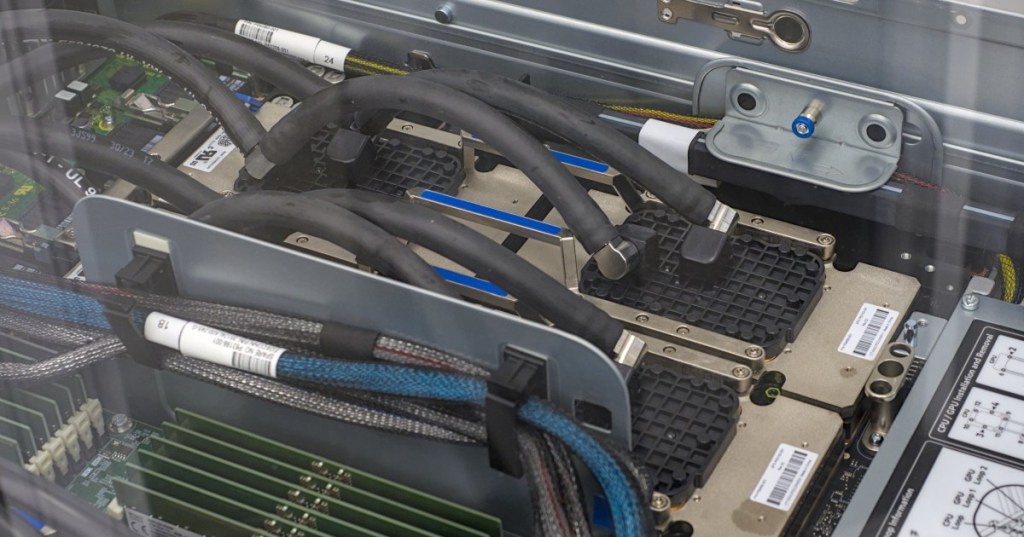
Further viewing: Sakana’s published research-response example. The 80-format SmartChart catalog was considered; grouped comparisons preserve the common benchmark scale. Featured photograph: Fukumoto / Wikimedia Commons, May 16, 2026, CC BY-SA 4.0, cropped. TSUBAME 4.0 hardware is illustrative, not evidence of Namazu training or deployment.
We volunteer daily to ensure the credibility of the information on our platform is Verifiably True. If you would like to support our independent research, please scan the QR code below.





Leave a Reply