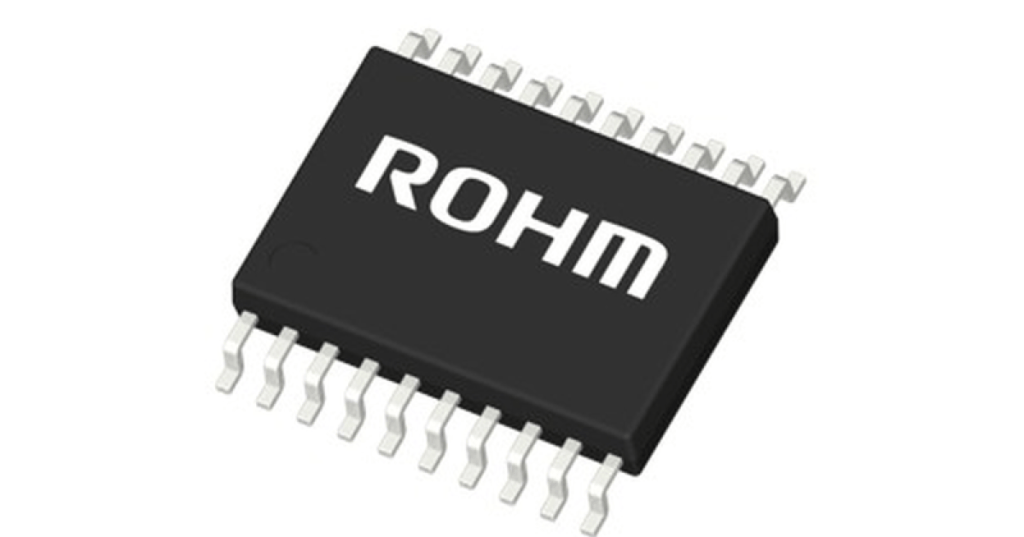
ROHM announced its BM85060FV power-factor-correction controller in an English-language release dated November 19, 2026, following a Japanese announcement on October 27. The manufacturer reports that the controller can support designs achieving 99% conversion efficiency in the 300–500 W power-supply class. Sales began in November. The announcement concerns a controller integrated circuit rather than a complete certified power supply. Understanding the difference between efficiency and power factor begins with the engineering of power quality.
Why a bridgeless rectifier matters
A conventional AC input stage uses a diode bridge to rectify alternating voltage. Current passing through two forward-biased diodes produces heat. A totem-pole power-factor-correction stage instead uses controlled semiconductor switches to perform rectification and shape input current. ROHM’s product documentation describes one high-frequency switching leg and another operating at mains frequency. Power factor describes real power relative to apparent power; conversion efficiency describes useful output relative to input. A circuit can have excellent power factor while still dissipating significant energy.
The controller supports critical conduction mode, where inductor current returns to zero at the boundary between switching cycles. Gallium nitride transistors can support rapid switching, permitting smaller magnetic components under suitable conditions. However, higher frequency also increases the importance of parasitic inductance, gate-drive timing, electromagnetic interference and thermal design. According to EDN’s November 25 reporting, the controller supports 25 kHz to 1 MHz switching. The upper limit is not a statement that every reference design operates at 1 MHz.
What two percentage points can mean for heat
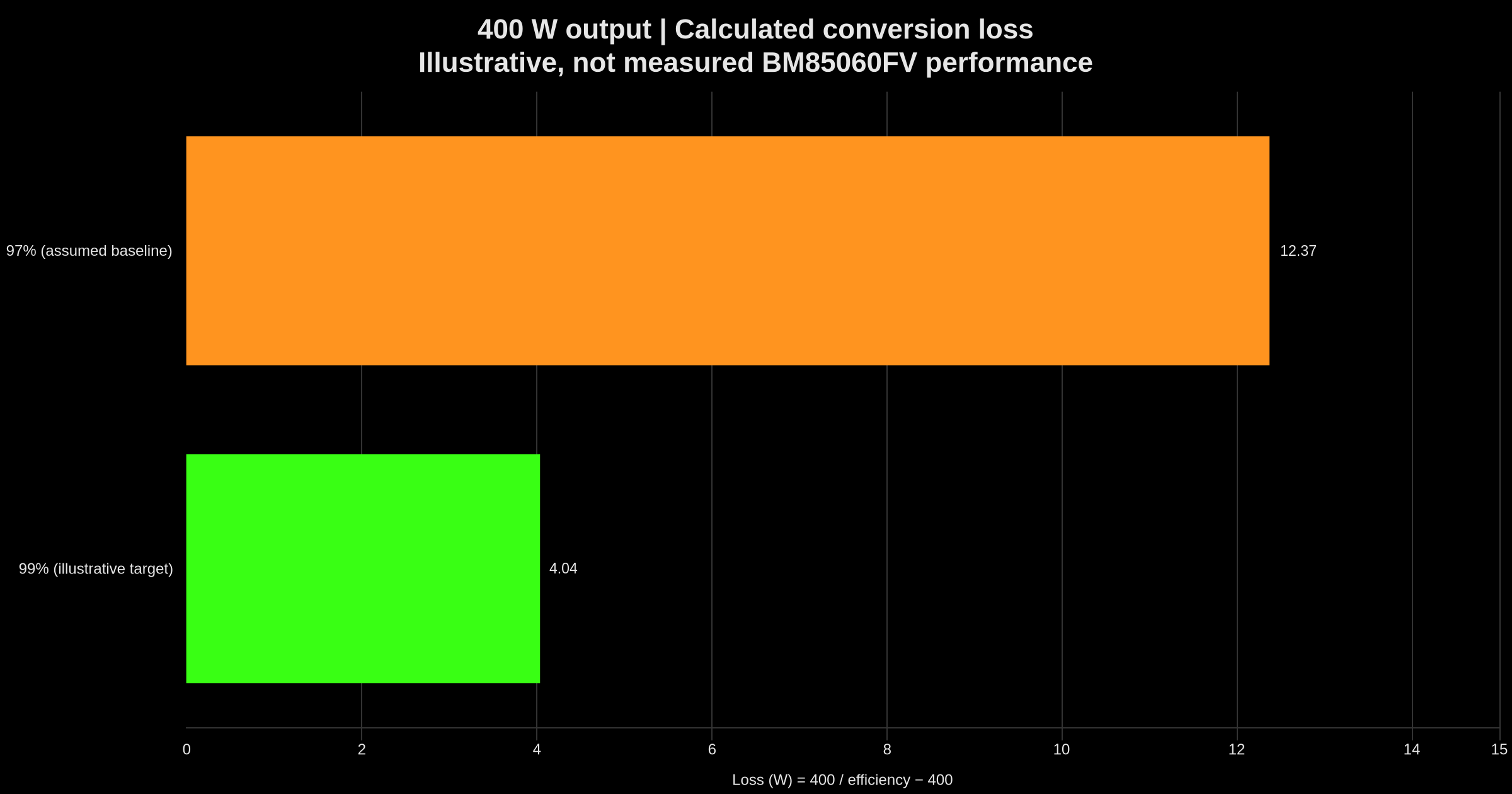
Consider two hypothetical converters delivering the same 400 W output. Using the basic electrical power relationships, input power equals output power divided by efficiency. Conversion loss equals input minus output. At an assumed 97% efficiency, loss is approximately 12.37 W; at 99%, it is 4.04 W. The difference is about 8.33 W, or 67% of the assumed baseline loss. These are illustrative calculations, not measurements of the ROHM controller or a competing product.
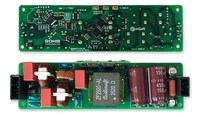
ROHM also reports 150 microamperes of controller current at no load, about 70% below its comparison products. Controller current alone cannot determine complete standby power because supply voltage and other circuit losses matter. The separate Würth Elektronik reference-board listing describes an actual board operating at approximately 370–409.5 kHz. That distinction between chip capability and implemented circuit conditions is important.
Implications for power-supply engineering
The component targets adapters, projectors and compact industrial equipment, rather than the larger rack-scale systems examined in our 27 kW server power-supply analysis. Designers still need to characterize efficiency across line voltage, load and temperature, measure harmonic emissions and confirm protection behavior. The broader data-center power-quality analysis illustrates why device performance and installation-level electrical behavior are separate measurements. The release expands available control options, but final compliance and reliability depend on the complete engineered system.
Featured image: ROHM product rendering via EDN.
BitcoinVersus.Tech Editor’s Note: We volunteer daily to ensure the credibility of the information on our platform is Verifiably True. If you would like to support our independent research, please scan the QR code below.

BitcoinVersus.tech is not a financial advisor. The platform reports on financial subjects purely for informational purposes.


Leave a Reply