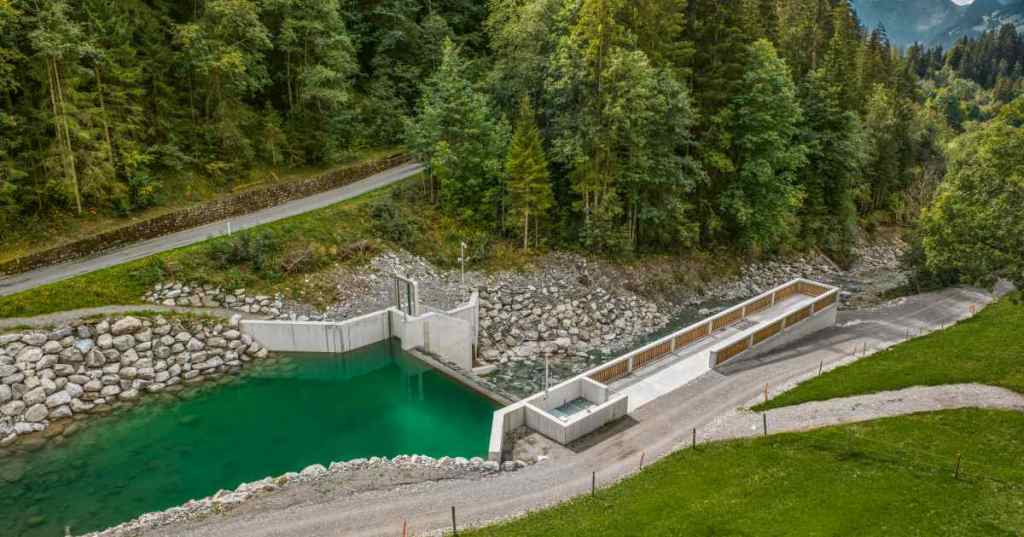
Swiss electricity producers BKW and aventron commissioned the Turbach hydroelectric station in Saanen on October 30, 2026, following approximately two years of construction. According to aventron’s commissioning announcement, the 2.5 MW installation is expected to generate around 7.3 GWh annually. The project cost approximately CHF 16 million. Like Norway’s Trongstadlia hydropower project, the Swiss station converts the energy of flowing water into electricity through a dedicated waterway and powerhouse.
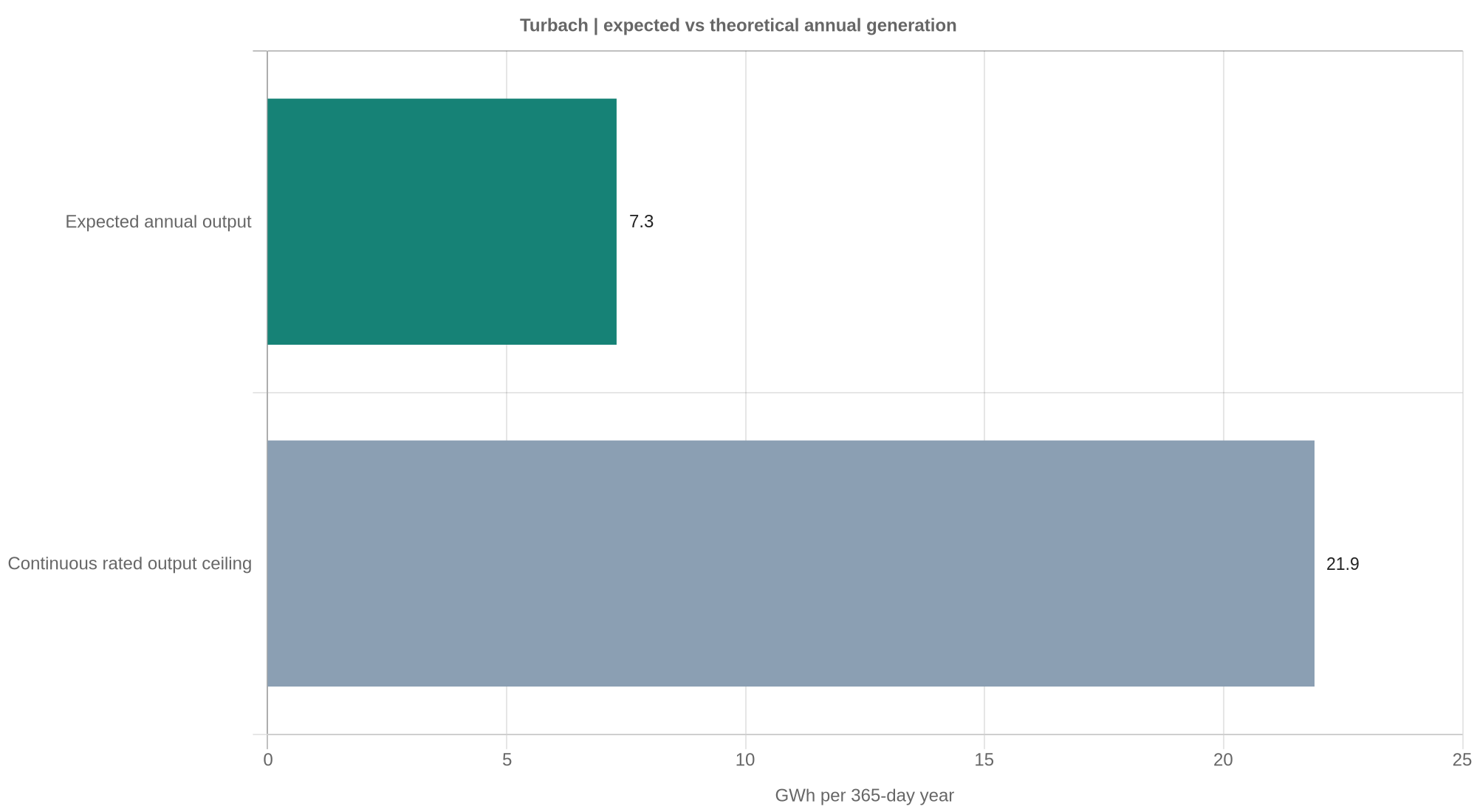
Expected generation versus installed capacity
A generating station rated at 2.5 MW could theoretically produce 21.9 GWh during a 365-day year if it operated continuously at rated power. The developer’s annual generation estimate of 7.3 GWh implies a capacity factor of approximately 33.3%, equivalent to 2,920 full-load hours or an annual average power of 0.833 MW. These are calculations based on projected production, not measured operating results. River flow, maintenance, environmental restrictions and seasonal changes affect annual output.
Engineering a run-of-river station
Turbach uses the natural elevation difference of the stream rather than relying on an extensive energy-storage reservoir. Water diverted into the intake passes through a pressure conduit to the generating equipment. The turbine converts hydraulic energy into rotation, and the coupled generator converts shaft work into electrical output. A turbine’s usable power depends on flow, net hydraulic head and conversion efficiency. A Pelton-type installation, such as the equipment planned for Bhutan’s Jomori development, extracts energy from high-velocity water jets.
Run-of-river plants have different dispatch constraints from pumped storage facilities such as Beijing’s approved Baihe project. Pumped storage moves water between reservoirs to shift energy across time. Turbach instead depends on naturally available stream flow and cannot be assumed to provide its rated output on demand throughout the year.
Construction costs and environmental constraints
The developers report investment of approximately CHF 6,400 per installed kilowatt. Dividing capital expenditure by nameplate capacity provides a construction-intensity metric rather than a levelized cost of electricity; financing, lifetime, operating expenditure and actual generation would be needed for a cost-of-energy assessment. BKW owns 55% of the project company and aventron owns 45%.
The Greater Geneva Bern area’s November 2 report describes minimum residual-flow measures and aquatic habitat improvements. Such obligations constrain water diversion while protecting the stream ecosystem. Regional generators add electricity to shared grids, but no dedicated computing customer has been announced. As with Indonesia’s Peusangan project, electrical commissioning is an important milestone; longer operating records will establish realized generation and reliability.
Featured photograph: aventron, Turbach water intake, October 2026.
We volunteer daily to ensure the credibility of the information on this platform is Verifiably True. If you would like to support to help further secure the integrity of our research initiative, please scan the QR code below.

For mobile scanning, open the article on another display and scan the QR code with a Bitcoin wallet. The voluntary donation amount is 5,000 sats. Verify the receiving address 3C9o19EH5HSiwEPyCTmEKzxhNCbo2X6TTb before sending.
BitcoinVersus.tech is not a financial advisor. This media platform reports on financial subjects purely for informational purposes.


Leave a Reply