Tech Docs
-

CScale exits stealth with ₿1,675 ($145 million) to build an optical scale-up interconnect designed to contain link failures without interrupting AI compute.
-

The U.S. Securities and Exchange Commission is proposing something crypto institutions have wanted for years: custody rules written specifically for digital assets instead of forcing Bitcoin and other tokens into a framework designed around paper certificates and conventional securities. The proposal, announced October 1, would create a tailored custody framework for registered investment advisers, registered…
-
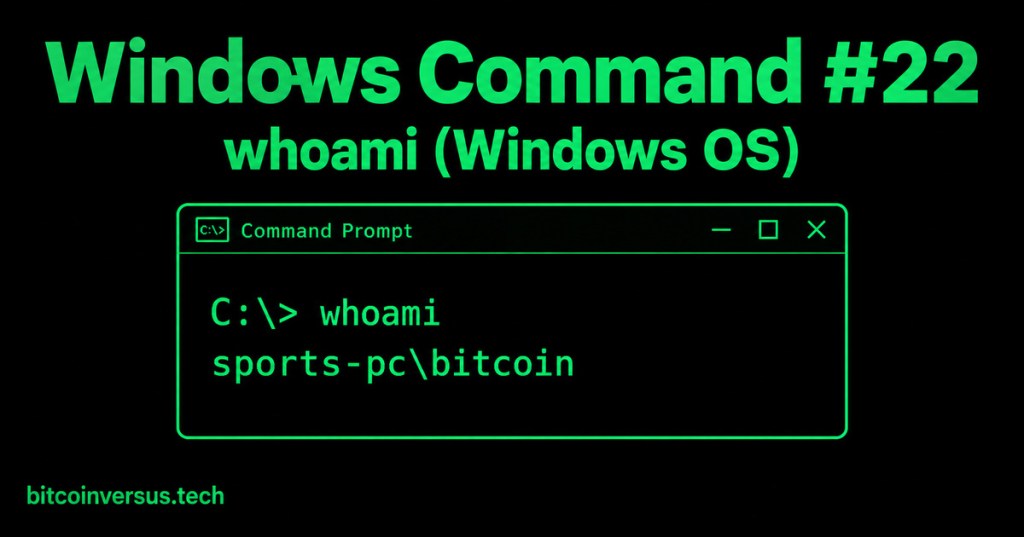
Check the account, SID, groups, and privileges used by a Windows terminal with whoami.
-

Astribot’s T1 arrives at IROS 2026 with cable-driven arms, 23 degrees of freedom, Lumo-2 embodied AI and a starting price near ₿0.216 ($18,000).
-

JEDEC announced JESD264, the first industry-wide silicon-photonics qualification and reliability standard for AI, datacenter and telecom infrastructure.
-

NEAR Intents says it knows who drained roughly ₿43.8 ($3.8 million) from its cross-chain infrastructure—and it just put the alleged attacker on a 48-hour clock. The figure is approximately ₿43.8 using a Bitcoin price near $86,700 and will move with BTC. The underlying exploit hit NEAR Intents’ Omni deposit-and-withdrawal infrastructure on October 1, forcing the…
-
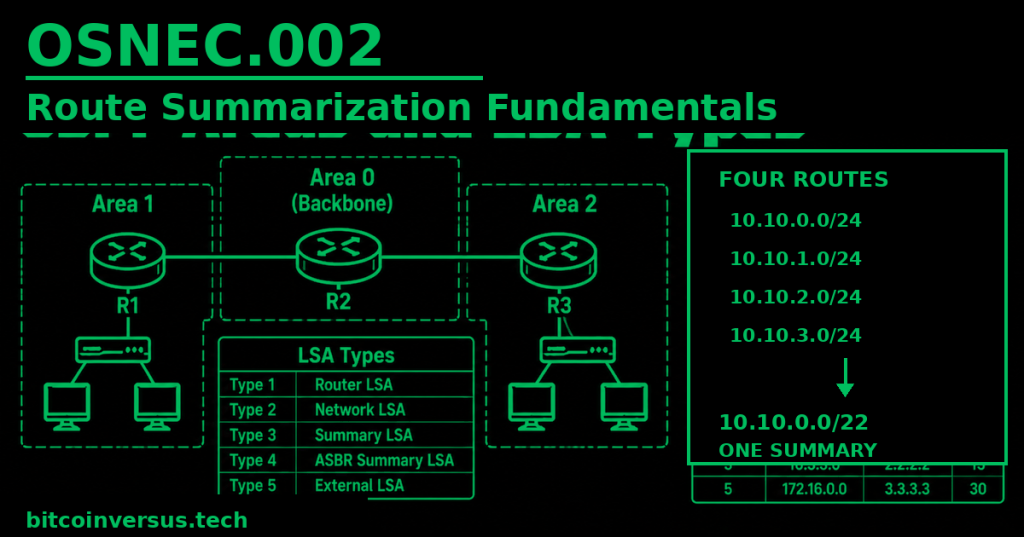
Large networks can learn hundreds or thousands of routes. Route summarization lets a router advertise one broader route that represents several smaller, contiguous networks. The result can be a smaller routing table and a cleaner routing design. This engineering lesson builds on OSNEC.001: OSPF Fundamentals. Here, the focus is the underlying summarization calculation before applying…
-
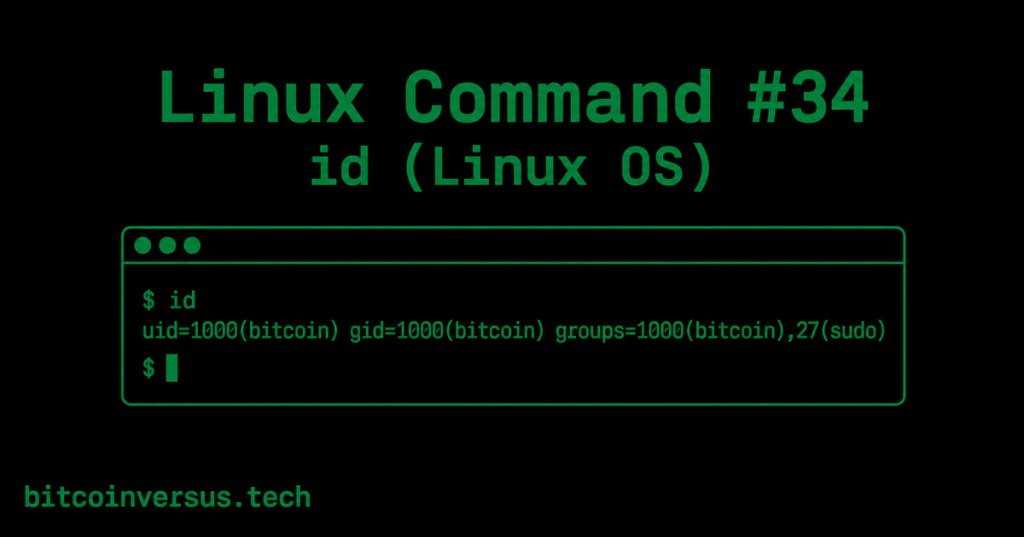
Learn how the Linux id command displays a user’s UID, primary GID, and supplementary groups for fast permissions troubleshooting.
-

A six-foot humanoid built for factories is now being pitched for one of the most unforgiving workplaces on Earth: the battlefield. Foundation Future Industries’ Phantom MK-1 is a roughly human-sized black humanoid the company is developing for defense and industrial work. NBC News put the machine in the national spotlight this week, showing Phantom walking,…
-

Armv8-M is a 32-bit processor architecture designed for microcontrollers, embedded systems, IoT devices, industrial controllers, secure hardware, sensors and other systems where low power consumption, deterministic behavior and a relatively small silicon footprint are important. It belongs to Arm’s M-profile architecture family, rather than the higher-performance A-profile used by application processors or the R-profile designed…
-
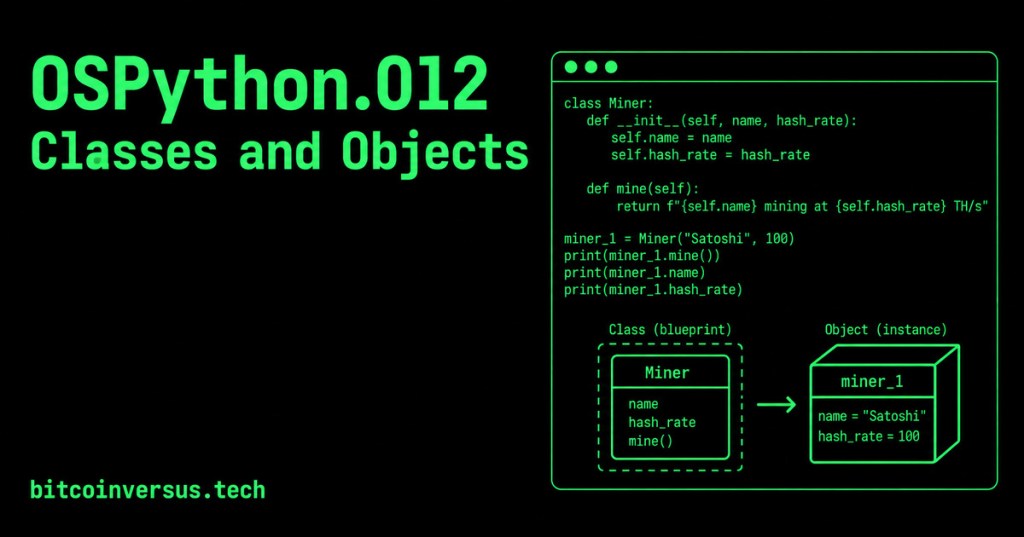
Learn how Python classes act as blueprints, how objects store their own attributes, and how methods add reusable behavior.
-
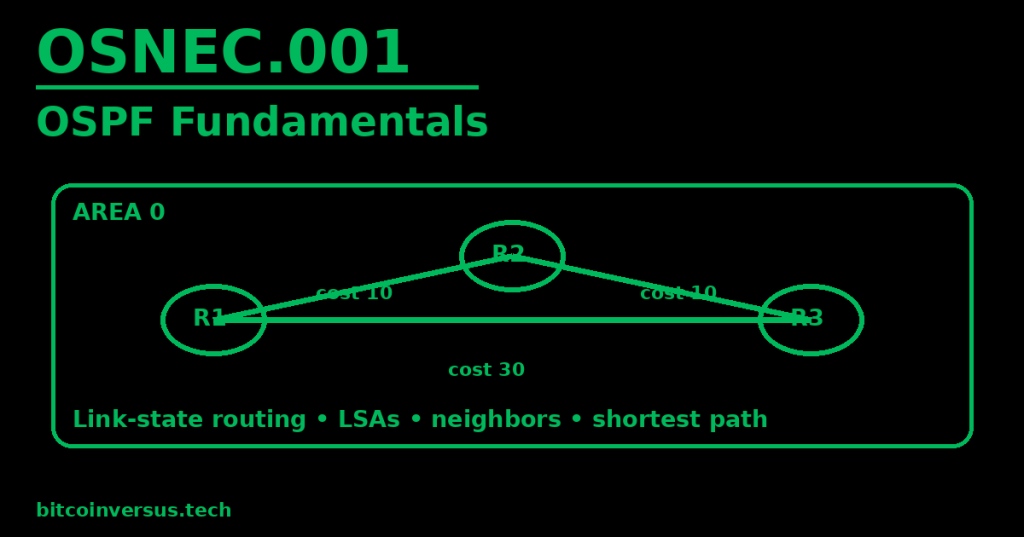
OSPF stands for Open Shortest Path First. It is an open-standard link-state interior gateway protocol used by routers to learn network topology and calculate routes inside an autonomous system. This is the first Open-Source Networking Engineer Certification (OSNEC) lesson. The technician pathway teaches device addressing and verification; the engineer pathway now moves into routing behavior,…

