Trending News
-

Understand alternating current, cycles, frequency, period, RMS voltage, and phase with plain-language definitions and a worked paper exercise.
-
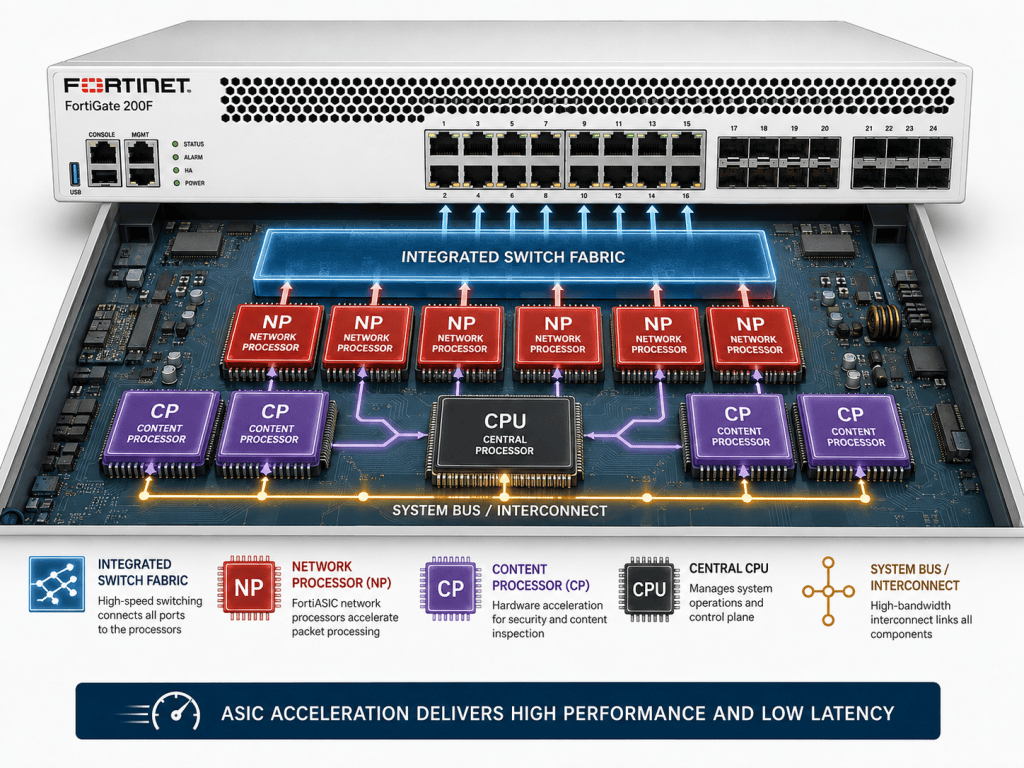
Fortinet builds purpose-designed Application-Specific Integrated Circuits, or ASICs, into FortiGate firewalls to accelerate networking and cybersecurity workloads that would otherwise consume resources on a general-purpose CPU. Fortinet refers to these chips collectively as Security Processing Units, or SPUs. Rather than forcing the main processor to handle every packet, encryption operation, security inspection and forwarding decision…
-
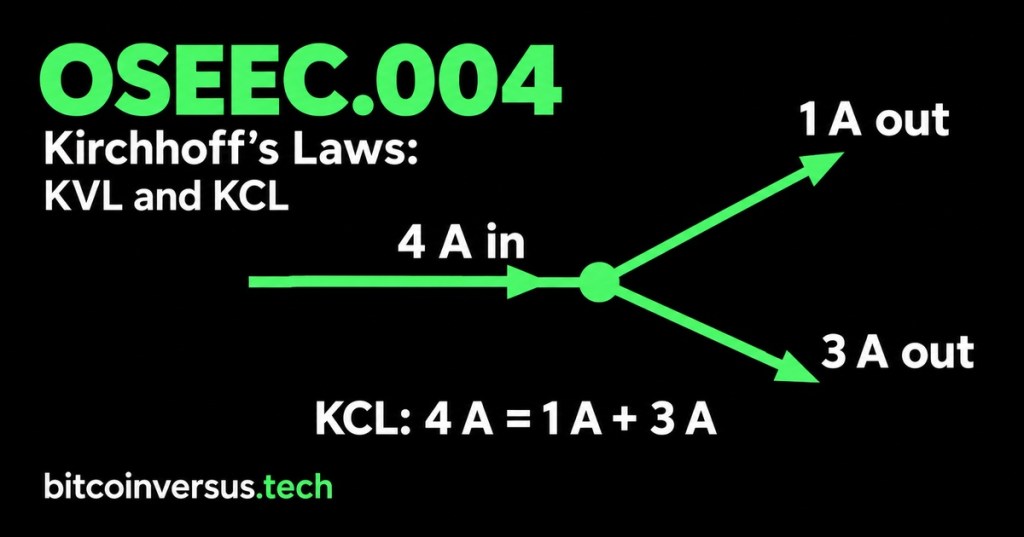
Learn to balance current at a junction and voltage around a loop using Kirchhoff’s laws, with worked DC examples and paper exercises.
-

Efficient Computer has raised $97 million to push its unconventional dataflow processor architecture from battery-constrained robots and embedded systems toward the data center, while its first Electron E1 chips move into volume production. The company said on September 29 that the Series B values Efficient Computer at $650 million and brings total capital raised to…
-

DeepSeek and Huawei are pushing the software side of China’s AI chip stack closer to the hardware, open-sourcing programming infrastructure for Huawei Ascend accelerators and expanding TileLang as a higher-level path for writing optimized AI kernels. Reuters reported on September 30 that DeepSeek and Huawei worked together on programming tools for Ascend AI chips, including…
-
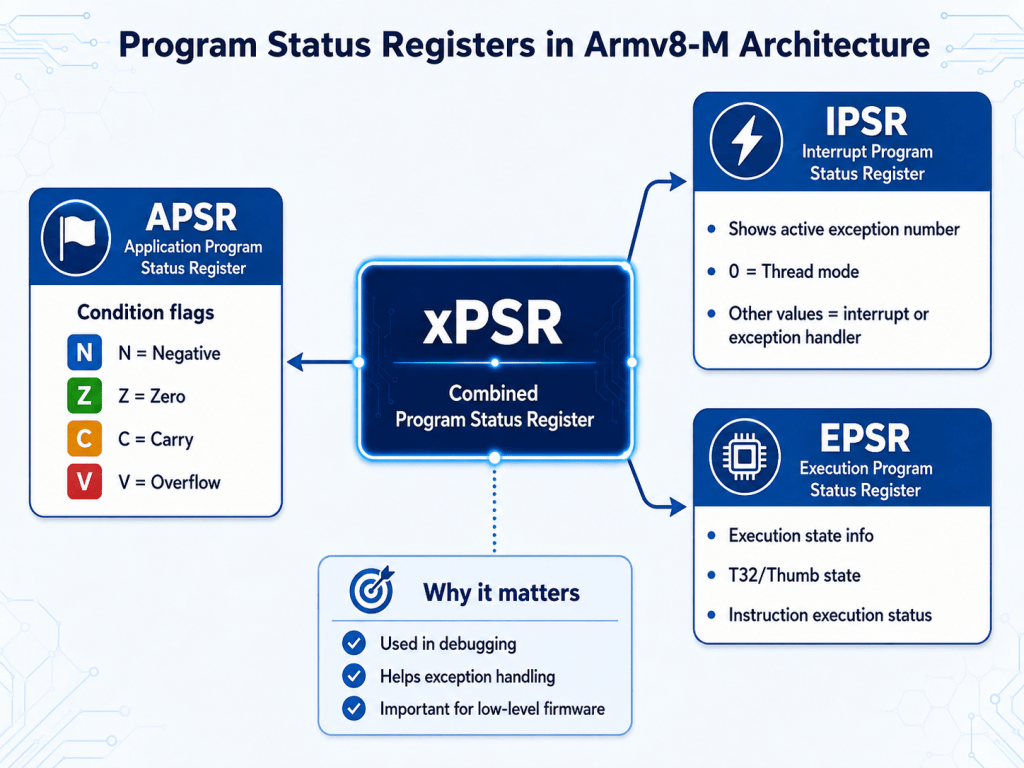
The Program Status Registers, or PSRs, in Armv8-M store information about the processor’s current execution state, arithmetic results and active exception. Armv8-M organizes this information into three primary views: the Application Program Status Register (APSR), Interrupt Program Status Register (IPSR) and Execution Program Status Register (EPSR). These can also be viewed together through the combined…
-

Samsung Electronics and five affiliates are investing $1 billion in Helix Digital Infrastructure, linking semiconductors, data centers, power, batteries, cooling and fiber in a broader AI infrastructure strategy.
-

The 256 Foundation is trying to turn Bitcoin mining’s most proprietary layers into interchangeable open-source building blocks, and its first private in-person fundraiser in San Francisco put the complete stack in front of operators, engineers, donors and vendors. The nonprofit’s September 15 account says attendees at Presidio Bitcoin worked directly with four projects: Ember One…
-

MIPS and Xcelsa Labs are applying artificial intelligence to a difficult semiconductor problem: optimizing production-scale processor logic quickly while proving that the rewritten design remains functionally equivalent to the reference. AI moves into custom-silicon optimization The companies announced a strategic, non-exclusive partnership on September 29 combining MIPS’ workload-focused RISC-V platforms with Xcelsa’s Apex design-optimization system.…
-
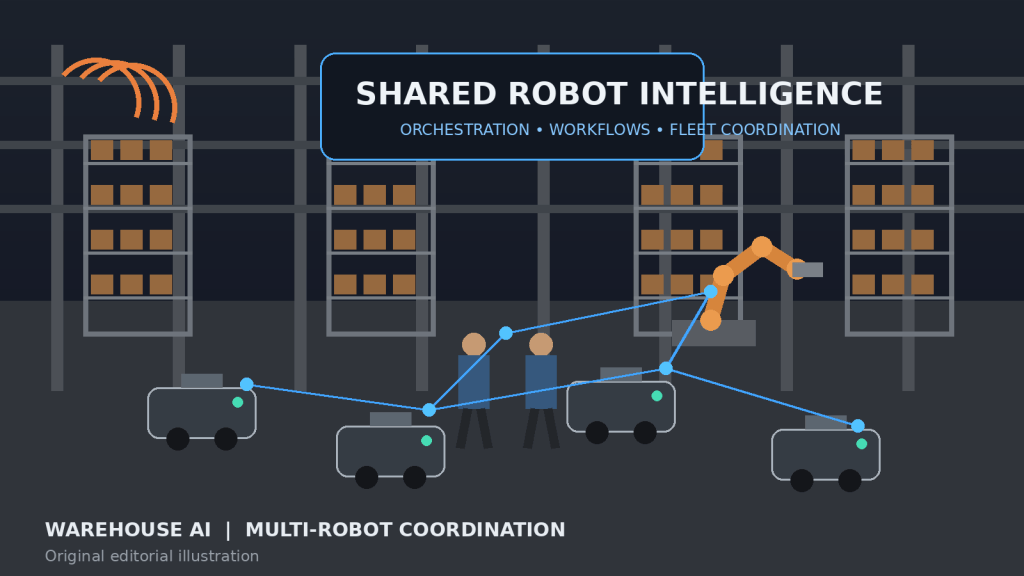
Destro AI has raised $8 million in seed funding to scale a software layer designed to coordinate different warehouse robots, people and workflows as one operating system. The company announcement says the round was co-led by Base10 Partners and Bonfire Ventures, while independent funding coverage confirms participation from CoFound Partners and says Destro plans to…
-

A Bitcoin miner that deliberately cuts hashrate can expose a subtle weakness in some mining-pool variable-difficulty controllers: the machine slows down, but its assigned share difficulty may remain calibrated for the faster miner it used to be. Bitcoin Optech highlighted the issue on September 18 after mining engineer Eric Price published a detailed controller analysis.…
-
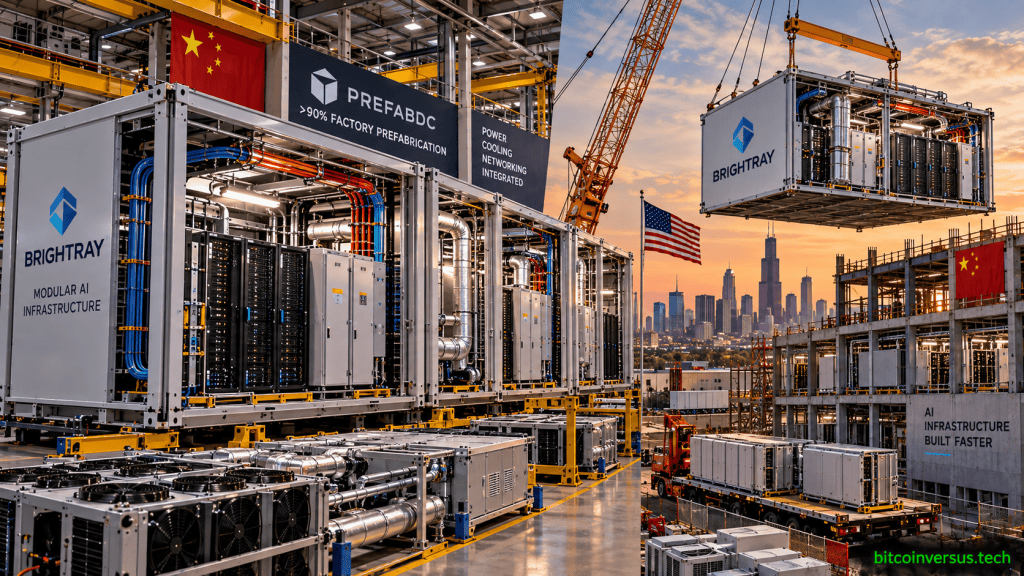
Chinese data-center manufacturers are looking at the U.S. AI construction boom with a different proposition: build most of the data center in a factory, ship the modules to the site and assemble them like an industrial product. The approach is the focus of the CNBC report supplied with this story. Brightray, a Singapore-registered AI infrastructure…

