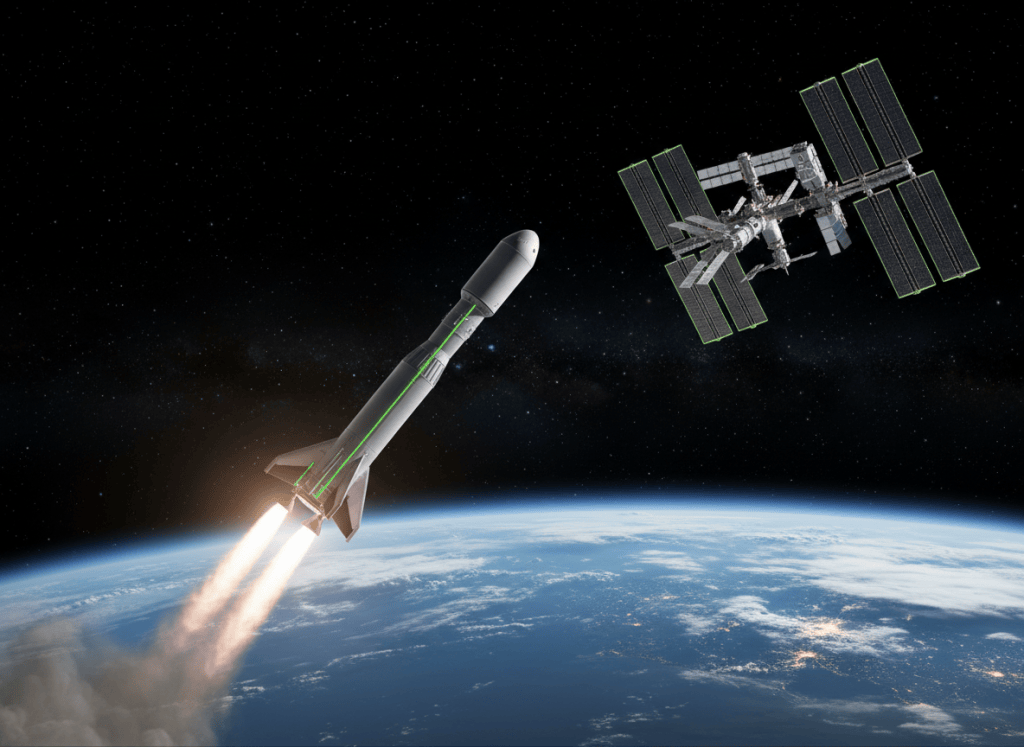
NASA has awarded SpaceX three additional astronaut transportation missions to the International Space Station, extending the company’s role in the agency’s Commercial Crew Program through the end of the station’s planned operational era.
The September 18 NASA contract announcement adds Crew-15, Crew-16 and Crew-17 to SpaceX’s Commercial Crew Transportation Capability contract. NASA values the modification at $946 million, bringing the total value of SpaceX’s CCtCap contract to approximately $5.92 billion and the number of missions ordered under it to 17.
More Than Three Rocket Launches
The award covers more than launching astronauts aboard Falcon 9 and Dragon. NASA says the firm-fixed-price modification includes ground operations, launch, in-orbit operations, return and recovery, cargo transportation and the ability for Dragon to serve as an emergency lifeboat while docked to the International Space Station.
NASA certified SpaceX for crew transportation in November 2020. Since then, Dragon has become a regular component of the station’s crew-rotation infrastructure. Crew-12 is currently associated with the station’s Expedition 75 operations, while NASA and SpaceX are preparing Crew-13 for a launch no earlier than early October 2026. The Crew-13 mission page lists Jessica Watkins, Luke Delaney, Joshua Kutryk and Sergey Teteryatnikov as the four-person crew.
Commercial Space Infrastructure Keeps Expanding
The contract modification is another example of government space programs increasingly relying on commercially operated launch and spacecraft infrastructure. BitcoinVersus.tech recently covered SpaceX’s $1.6 billion Space Force contract for 18 launches, a separate program showing how reusable launch systems are being integrated across both civil and national-security missions.
The engineering challenge is broader than the rocket itself. Human spaceflight requires launch-pad infrastructure, flight computers, communications, life-support systems, propulsion, docking hardware, mission-control networks and recovery operations to function as one system. Dragon must also remain available as an emergency return vehicle during its stay at the station.
Operations Through 2030
The period of performance for the three newly ordered missions runs through 2030. NASA says maintaining two commercial crew partners remains part of its strategy for continued access to the station. The new SpaceX orders therefore provide additional transportation capacity while NASA continues planning for the transition from the International Space Station to future commercial destinations in low Earth orbit.
For the commercial space industry, Crew-15 through Crew-17 represent something less experimental and potentially more important: repeatable transportation infrastructure. The missions extend an operational system that must repeatedly move people and cargo between Earth and orbit while meeting NASA’s human-spaceflight certification and safety requirements.
That transition—from demonstration flights to recurring infrastructure—is one of the clearest measures of how commercial spaceflight has matured during the past decade.
BitcoinVersus.Tech Editor’s Note:
We volunteer daily to ensure the credibility of the information on this platform is Verifiably True. If you would like to support to help further secure the integrity of our research initiatives, please donate here: 3C9o19EH5HSiwEPyCTmEKzxhNCbo2X6TTb
https://x.com/1BitcoinVersus/status/1937006164555993338
BitcoinVersus.tech is not a financial advisor. This media platform reports on financial subjects purely for informational purposes.


Leave a Reply