Meta’s new Muse AI agent is pushing the AI race beyond model benchmarks and into something Meta already has at enormous scale: user context.
Yahoo Finance highlighted the shift on September 22, arguing that while rivals such as OpenAI and Anthropic compete heavily on raw model performance, Meta’s advantage may come from understanding what users watch, save, discuss and buy across its platforms. That context could make an AI agent more useful when it moves from answering questions to taking actions such as shopping, booking and managing tasks.
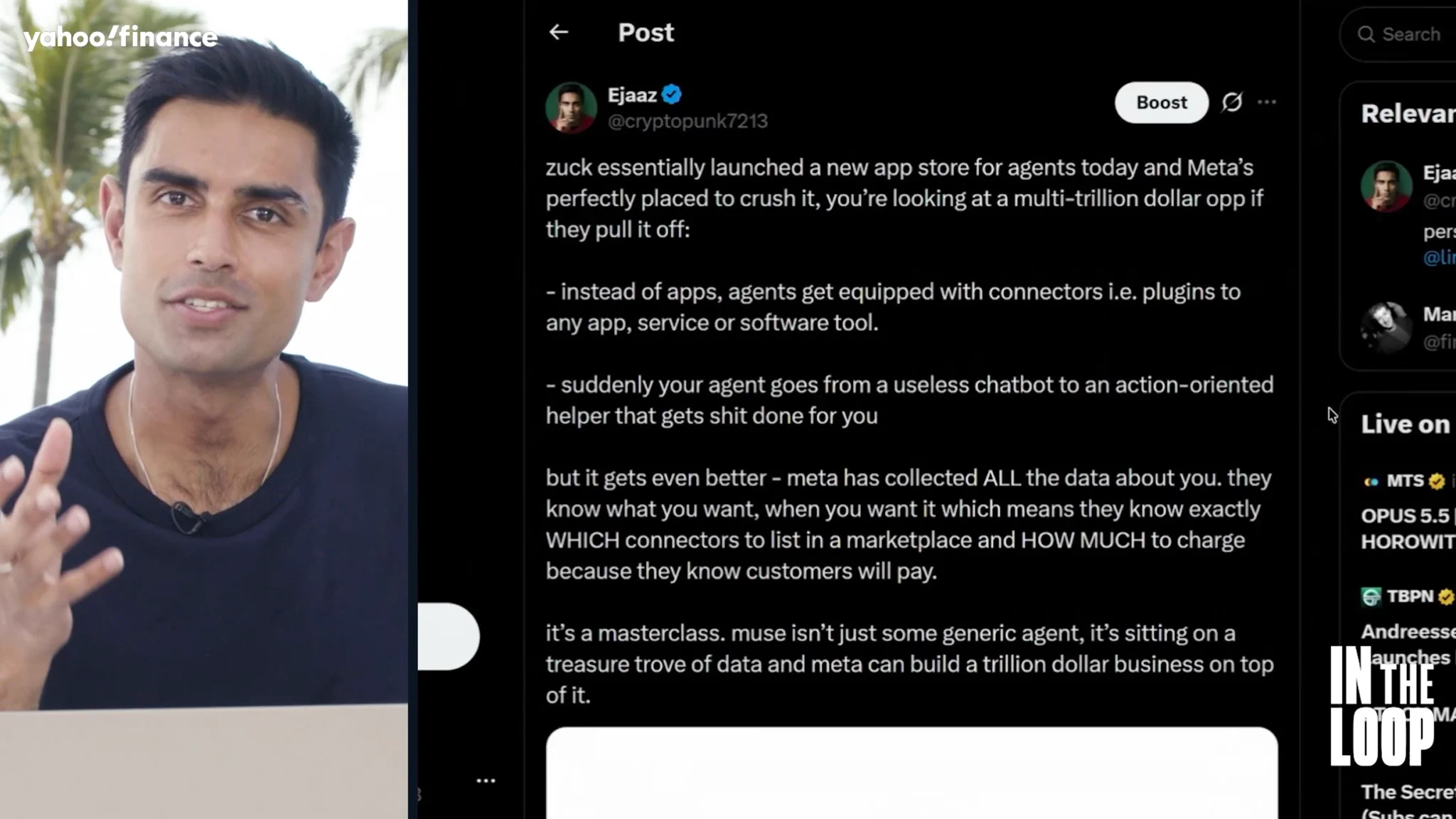
Meta is competing on context, not just model scores
Meta introduced Muse as a personal AI agent designed to complete tasks for users. According to Meta’s announcement, the agent can handle actions including email, travel, forms and shopping. The company says sensitive actions require user approval and describes security controls intended to isolate agent activity.
The larger engineering story is the architecture around the model. Personal AI agents combine foundation models with memory, browsers, identity systems, secure execution environments, payment systems and human approval gates. The model itself is only one component of the finished product.
Shopping could become a major AI battleground
If an agent understands a user’s preferences and can safely act on them, AI becomes more than a chatbot. It becomes an interface between the user and online services. That raises the possibility that major AI platforms could increasingly compete over who controls the path between a person’s intent and a completed transaction.
That also creates important trust questions. An agent capable of acting for a user needs clear permissions, secure handling of credentials and understandable approval boundaries. The more context an AI system receives, the more important those safeguards become.
Why this matters
Yahoo Finance’s observation points toward a broader change in the AI market. The next competitive advantage may not come solely from having the highest-performing foundation model. Companies may differentiate themselves through the data, infrastructure, software integrations and trusted context surrounding their models.
For Meta, its enormous consumer-platform footprint could become especially important if Muse develops into an agent capable of turning personal context into useful actions. The key question is whether users will trust an AI system with enough information and authority to do that.
Sources
BitcoinVersus.Tech Editor’s Note:
We volunteer daily to ensure the credibility of the information on this platform is Verifiably True. If you would like to support to help further secure the integrity of our research initiatives, please donate here: 3C9o19EH5HSiwEPyCTmEKzxhNCbo2X6TTb


Leave a Reply