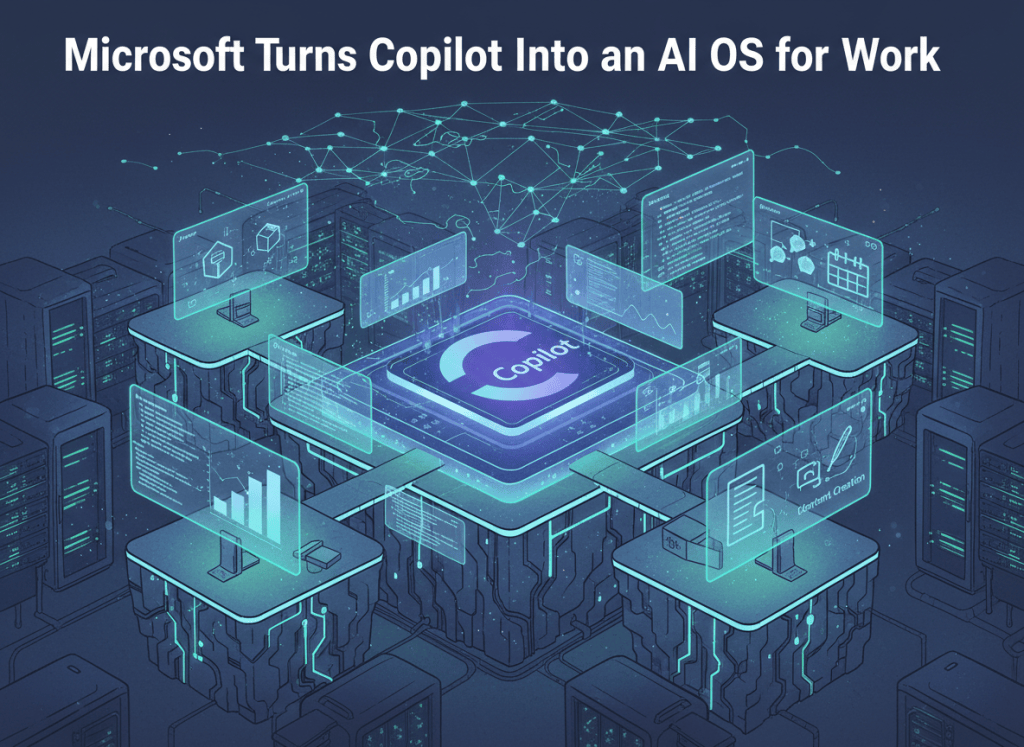
Microsoft is turning Copilot from an AI assistant into a much broader place for getting work done.
The company introduced a major Copilot redesign built around three areas called Home, Code and Autopilot. Microsoft CEO Satya Nadella described the strategy as building Copilot into a new operating system for work that can span different AI models, devices and tasks.
Copilot Is Becoming More Than a Chatbot
Home combines Copilot Chat with Cowork, Microsoft’s system for handing longer jobs to AI. Microsoft is also bringing full Word, Excel and PowerPoint capabilities into Copilot so users can create and edit real Office files without constantly moving between applications.
Code is designed to let people describe an application or automation in normal language and have Copilot build it. Microsoft says the feature uses technology related to GitHub Copilot.
Autopilot goes further. Microsoft describes it as a persistent AI agent with its own identity, memory and access to approved tools. It can continue working in the background after a user leaves the computer.
Why It Matters
The important change is that Microsoft is trying to make Copilot a place where work happens, rather than simply a box where people ask AI questions.
A worker could potentially start with a question, ask Copilot to build a spreadsheet, turn the results into a presentation, create a small internal application and delegate follow-up work to an AI agent without leaving the same environment.
That puts Microsoft more directly into the growing competition over AI agents and AI workspaces. OpenAI, Anthropic and other companies are also building systems that can move beyond answering prompts and perform longer, multi-step tasks.
The Rollout Will Take Time
The new capabilities are not becoming universally available at once. Microsoft says Home and Code will begin rolling out through its Frontier early-access program, while Autopilot is expanding into private preview. Feature availability will depend on account type and rollout stage.
Microsoft is also introducing more usage-based billing for intensive agent work. That reflects an important difference between conventional software and AI agents: an agent that works for minutes or hours can consume far more computing resources than a short chatbot conversation.
Microsoft’s larger bet is clear. The company wants Copilot to become the layer connecting AI models, Office applications, company data, coding tools and autonomous agents. Whether workers actually adopt that model of computing will determine whether Copilot becomes something closer to an operating environment or remains another application in the Microsoft ecosystem.
Sources: Microsoft, September 25, 2026; additional reporting from GeekWire and Yahoo Finance.
Related BitcoinVersus.tech coverage: YouTube AI voice translation · Qualcomm Snapdragon AI · Local AI smart glasses · QBit physical AI
BitcoinVersus.Tech Editor’s Note: We volunteer daily to help ensure the credibility of information on this platform is verifiably true. BitcoinVersus.tech is not a financial advisor. This article is independent reporting and educational content for informational purposes only.


Leave a Reply