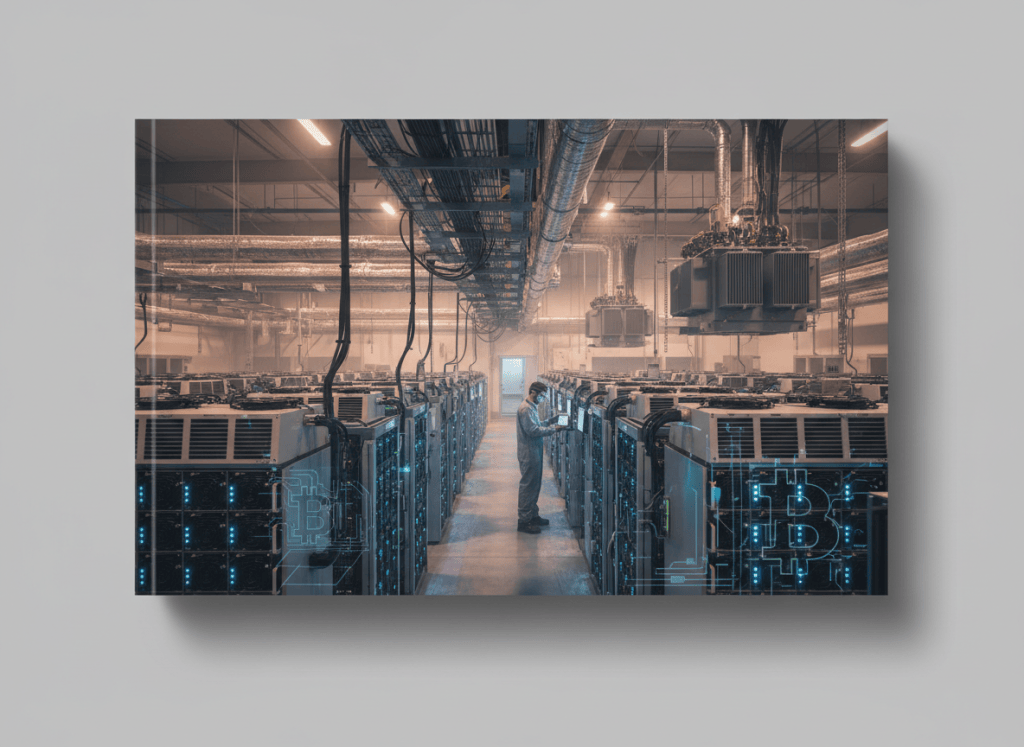
When a Bitcoin mining site accumulates machines running on only two of three hashboards, the obvious fix can look deceptively simple: move good boards between chassis until more complete miners are hashing. A new September 24 field guide from ASIC Master argues that the idea is sound—but only when technicians treat hashboard compatibility as an electronics problem rather than a model-name problem.
The practical lesson is important for operators managing mixed fleets of WhatsMiner and Antminer hardware. Matching the miner family alone is not enough. ASIC type, chip count, board revision, performance bin, EEPROM data and temperature-sensor configuration can determine whether a donor board behaves like a factory-matched component or becomes the next fault in the rack.
Consolidation Turns Partial Miners Into Complete Ones
ASIC Master’s new consolidation guide uses a straightforward fleet example: if forty miners are each operating on two boards, redistributing compatible working boards can create twenty-six complete three-board machines while the remaining empty chassis wait for repair. The hardware count does not change, but more of the powered fleet can operate as complete miners.
That matters because a hashboard is not just a passive replaceable PCB. It carries the SHA-256 ASIC chain, power domains, sensors and board-specific identification data. BitcoinVersus.tech recently covered how Braiins OS 26.09 expanded ASIC power and startup diagnostics; consolidation is the physical counterpart to that software visibility. Before moving hardware, the technician needs to know exactly which board is failing and exactly what the proposed replacement is.
WhatsMiner Matching Goes Down to the ASIC Bin
For WhatsMiner hardware, the guide recommends matching the model and variant, ASIC type, chip count, approximate terahash rating and then the chip bin. The board itself can expose its physical layout through markings such as domains multiplied by chips per domain. Firmware data can go deeper through the pcb and chip_data fields.
That last field can reveal why two boards that look interchangeable are not necessarily equivalent. ASIC chips are electrically characterized and binned after fabrication. A board assembled from a different performance bin can have a different stable voltage-frequency envelope. Mixing bins can therefore create tuning problems, errors or unstable operation even when the chassis name looks right.
MicroBT’s own support documentation reinforces the broader compatibility point. Its spare-parts compatibility guidance distinguishes control-board families by cooling platform and says failed hashboards are handled through repair rather than individual retail board sales. Older official WhatsMiner error-code documentation also identifies inconsistent hashboard chip type as a condition requiring the correct board.
Antminer Boards Add Revision, EEPROM and Sensor Checks
The same principle applies on Bitmain equipment, although the identifiers differ. ASIC Master’s guide points technicians toward the Antminer model version, hashboard layout, bin label and temperature-sensor type. It also notes that physically compatible boards can sometimes require EEPROM-related work before the miner accepts the combination.
Bitmain’s own ANTMINER troubleshooting documentation lists abnormal hashboard hardware versions, PIC faults, temperature-sensor faults and EEPROM faults among conditions associated with hashboard failure and protection. That is a useful reminder that a board swap can cross several layers of hardware identity at once.
The issue becomes more important as fleets modernize. BitcoinVersus.tech has tracked the shift as S21-generation machines increasingly replace S19-generation hardware, while PowerCompute reported 39% more hashrate per miner swap. A site holding several generations and revisions needs tighter component records, not looser ones.
A Better Field Procedure Starts With Inventory Data
The safest consolidation workflow is therefore administrative before it is mechanical. Record each miner serial number, board identifiers, ASIC type, chip count, revision and bin. Group only genuinely compatible boards. Check warranty status before opening machines. Label donor chassis and removed boards so a temporary consolidation does not erase the repair history.
That approach also makes the repair bench more efficient. Instead of receiving a pallet of anonymous failed boards, technicians can receive batches already tied to miner serials, error histories and known-good sibling boards. For operators, the result is a cleaner separation between three decisions: keep hashing, repair the failed board, or retire the chassis.
This is increasingly relevant as the performance gap between generations widens. BitcoinVersus.tech recently reported Auradine’s 600 TH/s air-cooled AH3880 at 9.8 J/TH and has continued tracking the industry’s push toward lower joules per terahash. As individual machines become more productive, recovering a complete miner from partially working inventory can have greater operational value—but only if the boards actually belong together.
The Takeaway for Mining Technicians
Hashboard consolidation is not random parts swapping. Done correctly, it is controlled fleet maintenance: identify the failing chain, verify the donor board at the component and firmware-data level, preserve the service record and return complete machines to production while failed boards move to repair.
The difference between a successful consolidation and another troubleshooting ticket can be one board revision, one sensor, one EEPROM mismatch or one ASIC bin. In a large mining operation, those small identifiers are infrastructure data.
BitcoinVersus.Tech Editor’s Note
Support independent technology reporting: BTC donations may be sent to 3C9o19EH5HSiwEPyCTmEKzxhNCbo2X6TTb.
Follow BitcoinVersus.tech on X/Twitter for Bitcoin mining, ASIC hardware, AI infrastructure, semiconductor and data-center reporting.
Disclaimer: BitcoinVersus.tech is not a financial advisor. This media platform reports on financial subjects purely for informational purposes.


Leave a Reply