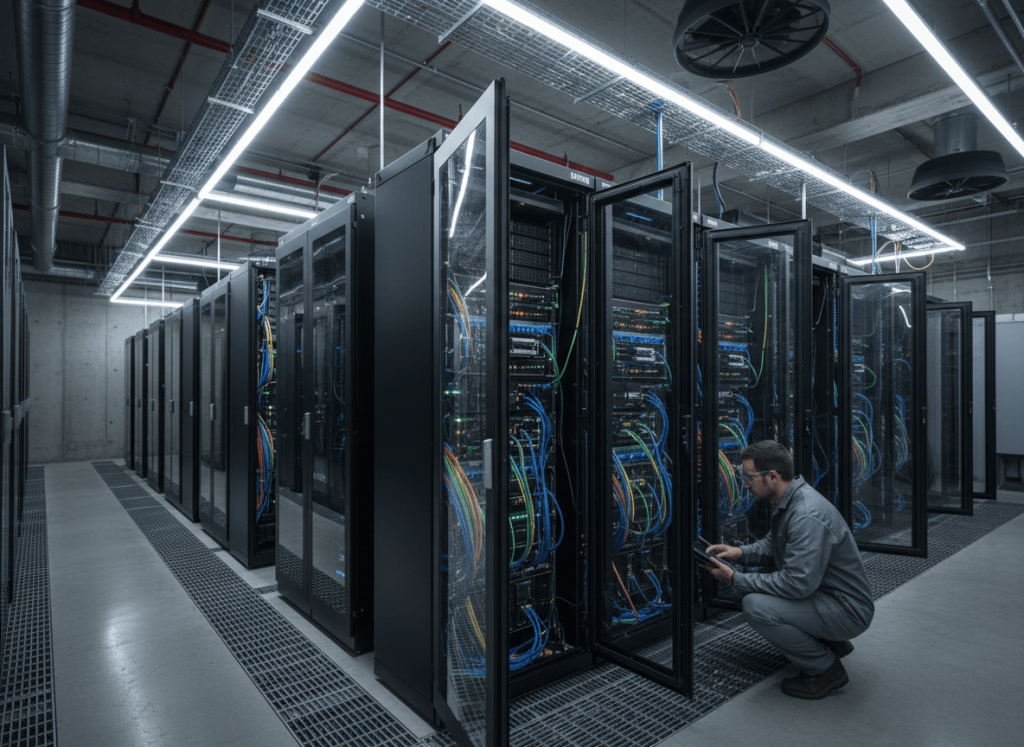
Luxor Technology is expanding beyond its Bitcoin-mining roots with a dedicated AI infrastructure business, bringing its experience in power markets, hardware procurement, logistics and compute trading into the rapidly growing GPU data-center sector.
The company announced the expansion September 24 alongside a new San Francisco office. The move illustrates how infrastructure companies built around Bitcoin mining are increasingly applying the same operational skills to artificial intelligence computing.
From Bitcoin Mining to AI Compute
Luxor built its business around Bitcoin mining services including mining pools, ASIC markets, firmware, hashrate derivatives and energy-related infrastructure. AI data centers require different computing hardware, but many of the physical constraints are familiar: large electrical loads, specialized servers, cooling, networking, logistics and access to reliable power.
Luxor says its new business will provide infrastructure and market services across the AI compute lifecycle. The company named Tenki as part of the platform and said it intends to support physical compute contracts and over-the-counter derivatives as the market develops.
Compute Is Becoming a Tradable Resource
One of the more interesting parts of Luxor’s strategy is its attempt to apply market infrastructure developed around Bitcoin hashrate to AI computing. GPU time is increasingly bought through cloud contracts and specialized providers, but the market remains fragmented across hardware generations, locations, contract lengths and service levels.
A more standardized market could make compute capacity easier to price, finance and hedge. Luxor’s experience building markets around mining hardware and hashrate gives it a logical starting point, although AI compute contracts have different performance, networking and software requirements.
Mining Infrastructure Has Skills AI Needs
The crossover between Bitcoin mining and AI is becoming increasingly visible. Both industries need large power allocations, data-center construction, equipment sourcing, cooling systems and technicians capable of keeping dense computing hardware online.
There are important differences. Bitcoin ASICs perform a narrow hashing workload and can often tolerate remote locations and simpler network connectivity. AI clusters depend on expensive GPUs, high-speed interconnects, storage, low-latency networking and more complex software stacks.
The Numbers Still Need to Arrive
Luxor’s launch announcement does not disclose contracted AI capacity, customer commitments or revenue for the new business. That makes the expansion strategically notable but still early. The next meaningful milestones will be deployed megawatts, GPU capacity, customer contracts and measurable compute-market activity.
For the Bitcoin-mining industry, the move is another example of expertise developed around energy-intensive hashing being repurposed for a broader computing market. The physical infrastructure may be similar, but success will depend on whether Luxor can translate its mining-market experience into the more demanding economics of AI clusters.
Sources: Luxor Technology and industry reporting from ASIC.tools.
BitcoinVersus.Tech Editor’s Note: We volunteer daily to ensure the credibility of the information on this platform is Verifiably True. If you would like to support to help further secure the integrity of our research initiatives, please donate here: 3C9o19EH5HSiwEPyCTmEKzxhNCbo2X6TTb
Disclaimer: BitcoinVersus.tech is not a financial advisor. This media platform reports on financial subjects purely for informational purposes.
Related BitcoinVersus.tech coverage: Luxor mining stack into AI · Cango adds AI GPUs · Soluna Bitcoin-to-AI campus · Bitdeer Malaysia AI expansion


Leave a Reply