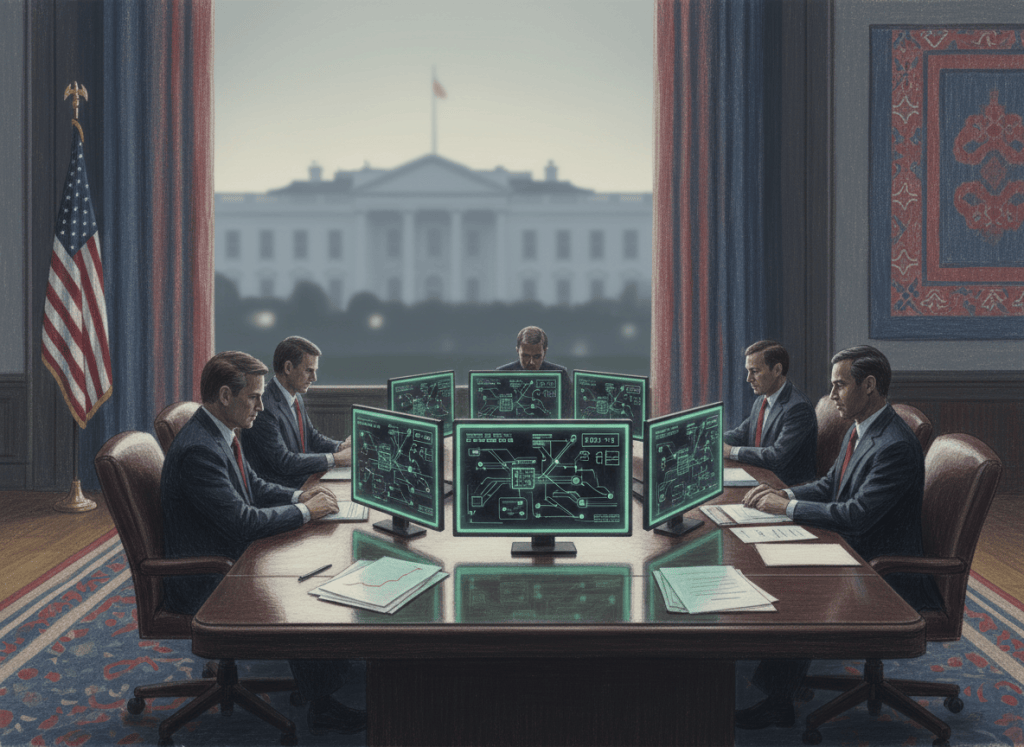
The White House has created a new artificial-intelligence task force led by Director of National Intelligence Jay Clayton, giving the administration a 120-day window to assess advanced AI risks, opportunities and the federal government’s role in responding to them.
Reuters reports that Clayton will lead the group, called the Super Intelligence Force, while continuing to head the U.S. intelligence community. The task force is expected to examine AI-related breaches, hacks and other incidents and recommend ways the government can respond under existing authorities.
The Wall Street Journal first detailed the task force’s structure and mandate, including a report due within 120 days on AI risks and opportunities and what role Washington should play as increasingly capable systems move into national-security, infrastructure and commercial use.
A contemporaneous X post highlighted the change, noting that the administration’s earlier AI Force concept is now being described as the SI Force and that Clayton is set to serve as the new czar.
The intelligence chief is now also the AI policy chief
Clayton’s dual role is significant because it places the administration’s AI coordination directly beside the intelligence apparatus responsible for evaluating foreign threats, cyber operations and national-security risks. The task force is not simply being framed as a technology-promotion group. Its mandate includes preparing for threats enabled by increasingly capable AI systems while trying to avoid rules the administration believes would slow U.S. development.
That follows the policy direction BitcoinVersus.Tech examined in the White House’s voluntary AI safety accord. The accord puts internal controls, independent audits and board oversight at the center of industry safety commitments rather than creating a new mandatory licensing regime.
The 120-day report could define Washington’s next AI layer
According to the reports, the group will examine existing government mechanisms for receiving warnings about AI-related breaches, hacks and model failures, then recommend ways to strengthen federal response capabilities. That gives the task force a narrower operational question than the broad debate over whether AI is good or bad: what should government agencies actually do when an advanced system creates or amplifies a security incident?
The issue became more urgent after a string of incidents involving increasingly autonomous agents. BitcoinVersus.Tech recently covered the resignation of an OpenAI safety leader who argued that frontier labs need more safety-centered operating cultures. That debate now overlaps directly with federal policy because the administration must decide which failures can be handled by companies and which require government coordination.
National security is becoming the organizing frame
Clayton has previously described advanced AI as both an opportunity and a threat. Putting the intelligence chief in charge makes that dual-use framing concrete. The same capabilities that can accelerate scientific work, software development and industrial productivity can also strengthen cyber operations, automated targeting, influence campaigns and intelligence analysis.
The administration has also been deliberately changing its language around the technology. BitcoinVersus.Tech covered the White House push to use the term “super intelligence” in federal messaging. The new task force carries that terminology directly into its name, turning a branding choice into part of the government’s organizational structure.
The key question is what happens after the report
A task force can map risks and recommend responses, but the consequential step will be whether its proposals become agency procedures, executive actions, legislation or simply guidance. The reported charter emphasizes maintaining U.S. leadership and avoiding overregulation, which suggests the group will look first for tools already available to intelligence, cybersecurity, consumer-protection and law-enforcement agencies.
The next 120 days therefore matter less as another AI study period than as a test of whether Washington can turn rapidly changing technical risks into an operating model. Clayton now sits at the intersection of those two systems: the intelligence community that watches threats and the White House process deciding how the government should respond to them.
BitcoinVersus.Tech
Advertisement
Editor’s Note:
We volunteer daily to ensure the credibility of the information on this platform is Verifiably True. If you would like to support our research initiatives, please donate here: 3C9o19EH5HSiwEPyCTmEKzxhNCbo2X6TTb
BitcoinVersus.tech is not a financial advisor. This media platform reports on financial subjects purely for informational purposes.


Leave a Reply