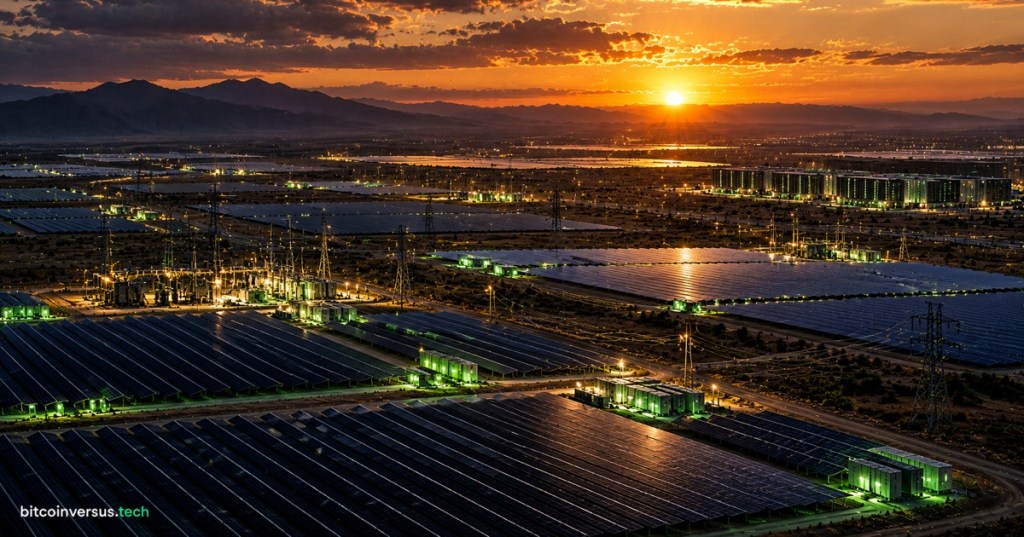
A nearly three-quarter-gigawatt solar portfolio is changing hands in two U.S. regions where electricity demand is rising quickly.
Exus Renewables North America has acquired four utility-scale solar projects from ibV Energy Partners totaling 715 MWp, or about 0.715 GWp, across Wisconsin and Louisiana.
Four Projects Add Up to 715 MW
The portfolio consists of Maple Grove Solar 1 and 2 in Barron County, Wisconsin, totaling 310 MWp; Bayou Teche Solar in St. Mary Parish, Louisiana, at 125 MWp; and Bayou Chicot Solar in Evangeline Parish, Louisiana, at 280 MWp.
The transaction announcement says Exus will advance all four projects through their next development stages. Exus CEO Jim Spencer said the projects are particularly attractive because they may be able to interconnect quickly in markets where demand growth is outpacing available generation.
Why the Data-Center Connection Matters
Reuters reported that Exus is already discussing electricity offtake with technology companies and utilities and expects agreements could emerge within weeks. The projects sit in regions where data-center construction is helping push electricity demand higher.
That is increasingly the central issue for large power projects: developers are not just asking where sunlight, land and transmission exist. They are asking where large new customers will need hundreds of megawatts over long periods.
715 MW Is a Power Rating, Not Daily Energy Production
For readers following these projects, the unit matters. The 715 MW figure describes the portfolio’s peak photovoltaic capacity rating. It does not mean the projects will generate 715 MWh every day or produce 715 MW continuously overnight.
BitcoinVersus.Tech’s MW vs. MWh easy guide explains the difference: MW measures power at a moment in time, while MWh measures energy accumulated over time.
Grid Access May Be the Most Valuable Part of the Deal
Reuters reported that ibV began working on grid connections for these projects about five years ago. That development work matters because a solar project with land and panels but no timely interconnection can sit idle while demand grows elsewhere.
In today’s AI infrastructure market, speed-to-power is becoming a competitive advantage. A project that can reach the grid sooner may be worth substantially more to a utility, hyperscaler or industrial customer than a theoretically larger project trapped deep in an interconnection queue.
Solar Can Sit Beside the Grid or Behind the Meter
These Exus projects are utility-scale developments, but the broader data-center market is experimenting with several architectures. Some campuses buy solar generation through the grid under long-term power agreements. Others are exploring generation placed directly on the customer side of the meter.
Our behind-the-meter power explainer shows how the second model works: on-site generation serves the campus first, reducing the amount that must be imported through the utility meter.
Compute Is Becoming a New Anchor Customer for Solar
Solar developers historically built around utility procurement, corporate renewable-energy targets and state clean-energy mandates. AI is adding another source of demand: enormous digital loads looking for large blocks of power with predictable long-term pricing.
BitcoinVersus.Tech recently covered NetworkOcean running an NVIDIA H100 from floating solar. That experiment is tiny compared with a 715 MW portfolio, but both sit on the same spectrum: compute infrastructure is increasingly being designed around where energy can be produced.
What Happens Next
Financial terms of the acquisition were not disclosed. Exus still has development, construction and offtake work ahead before these projects become operating power plants.
But 715 MW is already large enough to matter. If the portfolio advances on schedule and secures major buyers, Exus will have positioned nearly 0.72 GW of solar directly in markets where power-hungry data centers and other large industrial users are searching for new generation.
BitcoinVersus.Tech
BitcoinVersus.tech is not a financial advisor. This media platform reports on financial subjects purely for informational purposes.


Leave a Reply