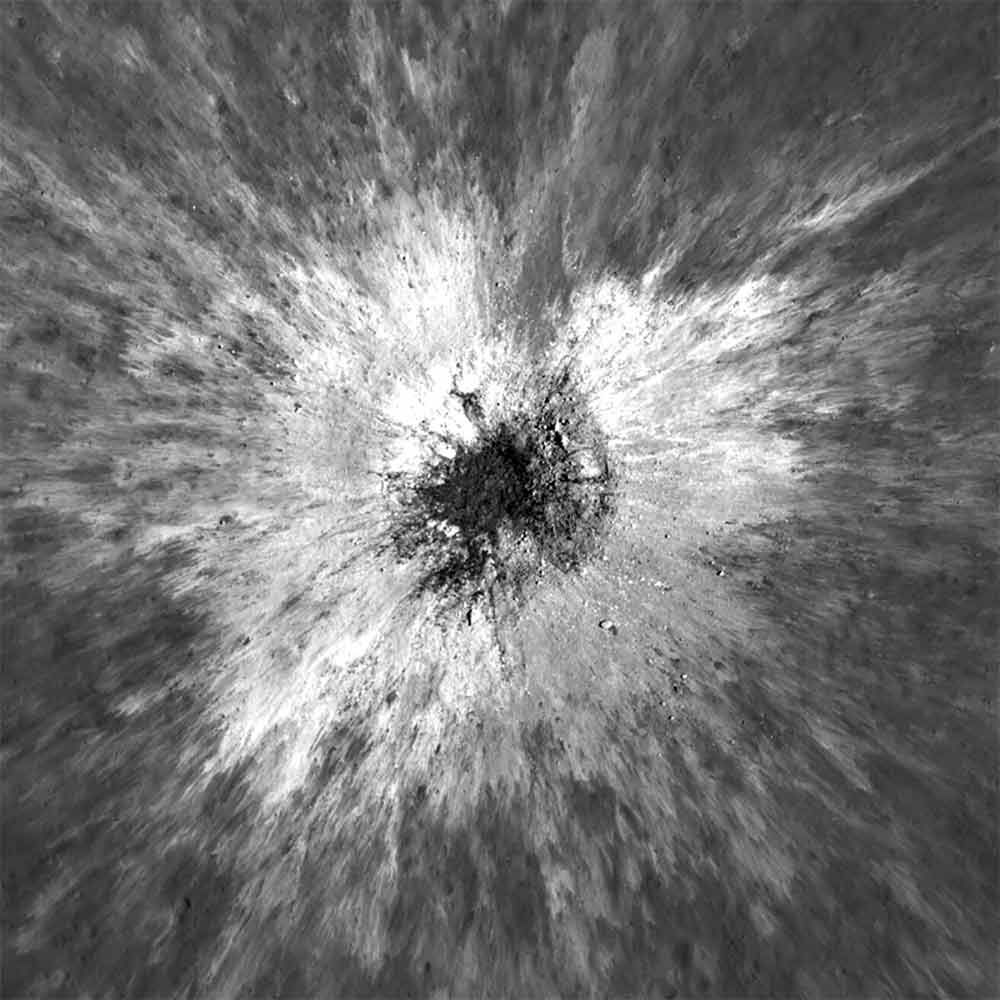
The Moon looks permanent from Earth, but it is still changing. NASA’s Lunar Reconnaissance Orbiter has identified a fresh impact scar called McGetchin crater, measuring about 222 meters (728 feet) wide and 43 meters (141 feet) deep.
The crater formed sometime between April 11 and May 22, 2024, when a comet or asteroid fragment roughly the size of a three- to six-story building slammed into the lunar surface. Scientists estimate an impact this large happens on the Moon only about once every century or longer.
SETI Institute researchers discuss what the fresh lunar impact reveals about the Moon’s surface.
The crater was hiding in plain sight
The impact itself was not seen when it happened. Instead, image-processing specialist Robert Wagner found the site in 2025 while comparing years of Lunar Reconnaissance Orbiter imagery. A bright patch surrounded by a dark halo stood out from the surrounding terrain, signaling that something had recently blasted and rearranged the regolith.
That is one reason long-running spacecraft matter. LRO has been mapping the Moon since 2009, giving scientists a before-and-after record detailed enough to catch changes that would otherwise disappear into a landscape already covered with ancient craters.
The weird part is the cold spot
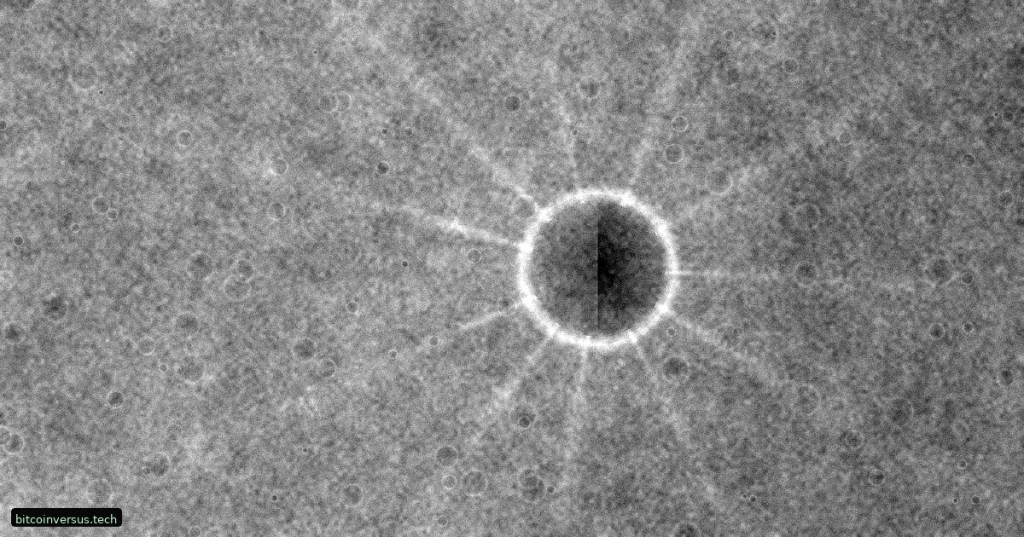
The hole itself is only part of the story. Follow-up measurements from LRO’s Diviner thermal instrument found a roughly 7-kilometer-wide cold spot around the crater. At night, parts of that disturbed region are about 8 to 9 degrees Celsius cooler than surrounding lunar terrain.
According to UCLA’s Diviner team, the impact appears to have “fluffed up” the lunar regolith over a much larger area than the crater itself. Looser material is less dense and does not retain nighttime heat as effectively.
That means a collision only a few hundred meters across can mechanically change the Moon for kilometers around it. The effect matters to future exploration because surface density, rocks and loose soil all influence how landers, rover wheels and construction systems interact with the ground.
Planetary-science communicator Emily Lakdawalla highlights the newly discovered McGetchin crater and LRO’s before-and-after observations.
The Moon is more active than it looks
Earth erases many impact scars through weather, oceans, vegetation and plate tectonics. The Moon lacks those processes, so fresh impacts remain visible and can be compared directly with older terrain. McGetchin gives scientists a rare chance to watch lunar geology happen on a human timescale rather than infer it from scars billions of years old.
The finding also fits a broader shift in how the Moon is being treated: not simply as a distant object, but as a place where communications, navigation and surface infrastructure will increasingly matter. BitcoinVersus has recently covered NASA’s work on 5G and Wi-Fi 6 for the Moon, Nokia’s experiment putting a 4G cellular network on the lunar surface, and the evolving plan for Artemis III.
A once-in-a-century laboratory
Scientists estimate that a McGetchin-size impact should occur only about once every 130 years. Because LRO happened to be watching both before and after the event, researchers now have an unusually clean natural experiment: a crater with a known formation window, detailed imagery and thermal measurements of how far the disturbance spread.
The Moon did not suddenly become active. We simply got good enough at watching it to catch the change.
Editor’s Note: BitcoinVersus.Tech covers unusual science, engineering and technology developments for educational and informational purposes.
Disclosure: This article is informational and does not constitute financial, investment or product-purchase advice.


Leave a comment