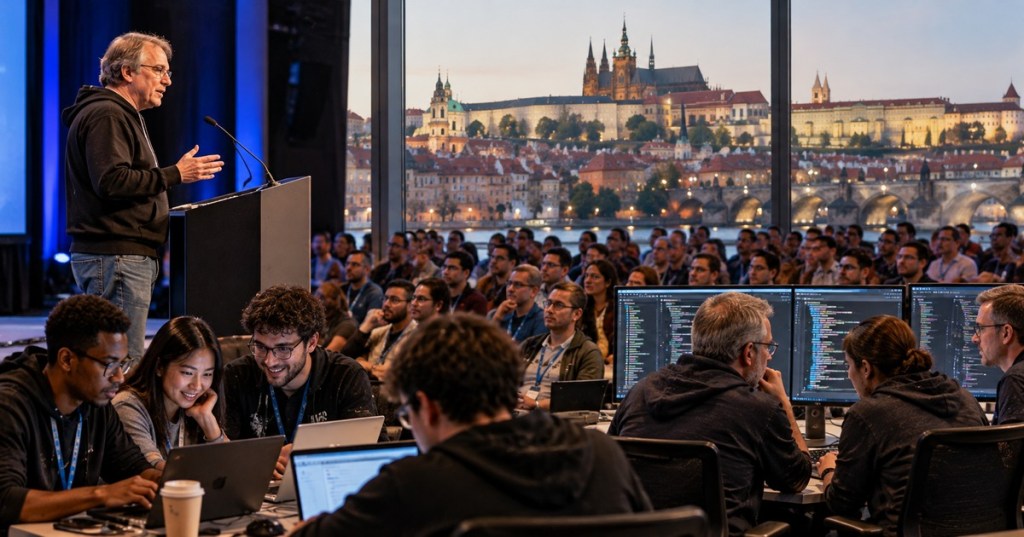
Linus Torvalds says AI can make programming feel accessible again for beginners — but he also says developers need much more caution when the code matters. Speaking with Dirk Hohndel at Open Source Summit Europe in Prague, the Linux and Git creator described AI as a useful entry point into programming while warning that serious engineering still requires people who understand the system they are changing.
The remarks came during the Linux Foundation’s October 7–9 Open Source Summit + Embedded Linux Conference Europe, where a featured conversation with Torvalds was part of the official program. The Linux Foundation’s event announcement framed the summit around Linux’s 35th anniversary, open-source infrastructure, AI security, cloud-native systems, and safety-critical software.
AI Can Lower the Entry Barrier
Torvalds’ argument is less about replacing programmers than about making the first steps feel less discouraging. Modern software is polished, enormous, and often built on layers of frameworks, libraries, automation, and tooling. A beginner comparing a first project with a production application can feel like there is an impossible gap between the two.
The Stack reported that Torvalds called AI a “wonderful gateway drug” for programming and said it can help newcomers build something that feels relevant much sooner. TechRadar similarly reported that he sees AI as useful for beginners while drawing a sharp distinction between personal experimentation and high-stakes software work.
That position fits the broader shift already visible across software development. AI coding tools can generate boilerplate, translate between languages, explain unfamiliar APIs, and help a new programmer get a prototype running faster. BitcoinVersus.Tech has been following the same trend through stories such as Google Playground turning prompts into playable games and the recurring debate around vibe coding.
The Warning Is About Judgment
Torvalds is not arguing that AI-generated code should be trusted automatically. His caution is almost the opposite: the more powerful the tool becomes, the more important it is for the person using it to know what the correct result should look like.
For a toy project, a strange UI choice or inefficient function may be an annoyance. In an operating-system kernel, firmware image, safety system, financial platform, or production network, a plausible-looking mistake can become a real reliability or security problem. That difference between experimentation and production is one reason the Linux kernel depends so heavily on review, maintainership, regression testing, and long-term technical context.
Torvalds has also repeatedly rejected the idea that Linux should become an anti-AI project. The more interesting question is therefore not whether AI belongs in software development, but how projects preserve engineering judgment when the cost of generating code, patches, and reports falls dramatically.
The Maintainer Bottleneck Is Getting Bigger
The Prague discussion also focused on a less glamorous side of AI coding: maintainers can now receive more patches, vulnerability reports, and suggested fixes than human reviewers can comfortably process. Some reports identify real problems. Others are redundant, poorly explained, generated without understanding, or aimed at code that has not changed in years.
That changes the economics of open-source maintenance. Generating a report can take seconds; validating it may still require an expert to reproduce the issue, study history, inspect architecture, test a fix, and decide whether the change creates a regression somewhere else. The bottleneck moves from producing candidate work to deciding which candidate work deserves trust.
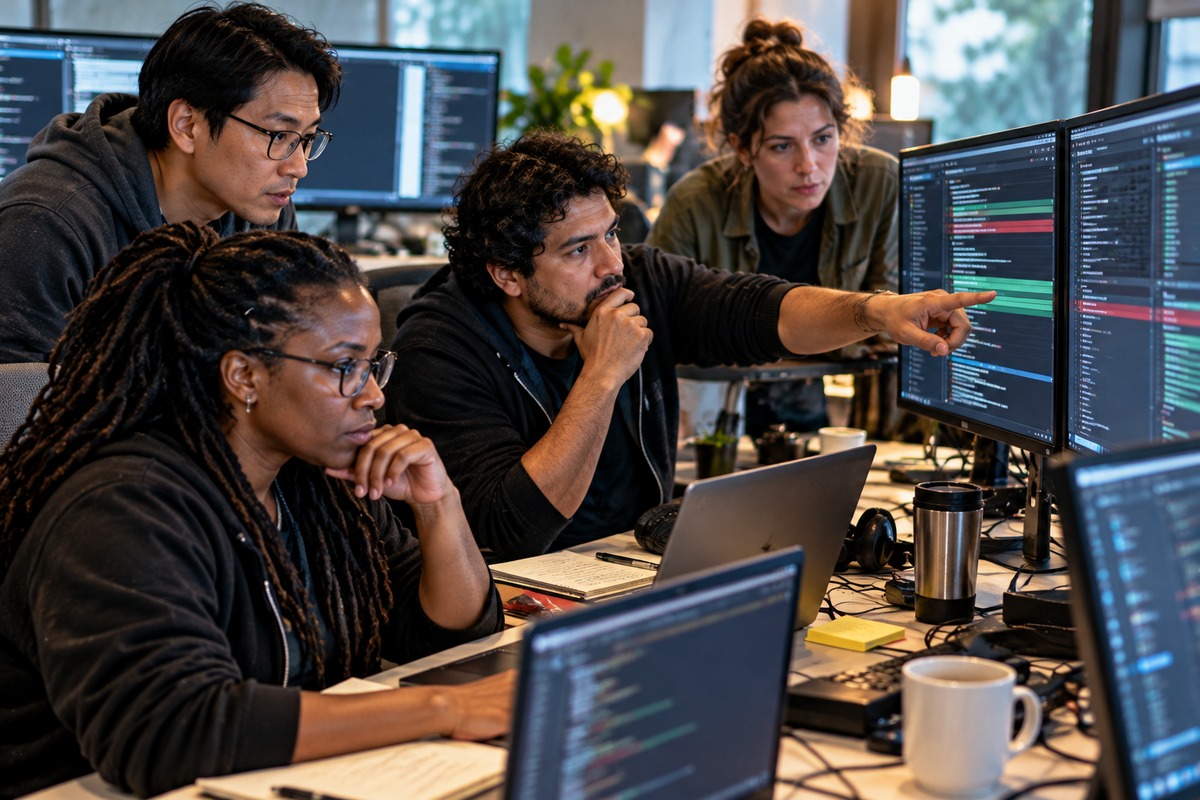
BitcoinVersus.Tech recently covered a similar pressure point in Linux 7.3-rc6 and the normalization of AI-assisted kernel work. The pattern is becoming clearer: AI can increase useful output, but it can also increase the amount of material humans must filter.
Why This Matters for New Programmers
The strongest part of Torvalds’ argument may be educational. Learning to program has always involved feedback loops: write something, run it, break it, understand why, and improve it. AI can shorten the time between an idea and a working experiment. That can make the experience more rewarding, especially for people who would otherwise stop before reaching the point where programming becomes fun.
But faster feedback is not the same thing as deeper understanding. Someone who asks an AI model to produce a network service, driver, database query, or memory-management routine still needs enough knowledge to recognize unsafe assumptions, race conditions, insecure defaults, poor error handling, and incorrect behavior.
That suggests a practical learning model: use AI to get moving, then use the generated code as material to study. Ask why a function works, trace the control flow, test edge cases, change one part manually, and learn the tools beneath the abstraction. AI can become a bridge into programming rather than a substitute for learning it.
Open Source May Need More Automated Review, Too
If AI increases the volume of candidate patches and bug reports, open-source projects will probably need better automated triage as well. That does not necessarily mean letting one model approve another model’s code. It can mean deduplicating reports, checking whether a patch builds, reproducing tests, identifying likely regressions, tracing code ownership, and ranking issues before a human maintainer spends time on them.
The irony is that AI may create both sides of the workload: more code to inspect and more tools for inspecting it. Torvalds’ position is useful because it avoids the simplest two extremes. AI coding is neither magic nor automatically worthless. It is a new layer of leverage, and leverage makes judgment more important, not less.
The Bigger Shift
Linux itself has spent 35 years showing what happens when software becomes easier to share, inspect, and improve at global scale. AI changes a different constraint: it makes software easier to generate. The open-source ecosystem now has to learn how to preserve quality when contribution volume can grow faster than human review capacity.
For beginners, that may be an opportunity. For experienced maintainers, it is a systems problem. Torvalds’ Prague message connects both sides: AI can help people discover programming, but the closer software gets to infrastructure that matters, the more valuable technical understanding becomes.
Sources and Context
- Linux Foundation — Open Source Summit Europe 2026 schedule and featured conversation
- The Stack — Torvalds on AI coding, beginners, and maintainer pressure
- TechRadar — Torvalds on AI as a programming entry point and caution for serious work
- Linux Foundation on LinkedIn — Open Source Summit Europe and Torvalds featured conversation
Editor’s Note
The featured and body artwork in this story are original BitcoinVersus.Tech editorial illustrations, not photographs of Linus Torvalds or the Prague event. The article distinguishes Torvalds’ reported remarks from BitcoinVersus.Tech analysis.
We volunteer daily to ensure the credibility of the information on this platform is Verifiably True. If you would like to support our research initiatives, please donate here: 3C9o19EH5HSiwEPyCTmEKzxhNCbo2X6TTb
BitcoinVersus.Tech content is provided for informational and educational purposes.


Leave a Reply