
An API and an SDK both help developers build software, but they solve different problems. An API defines how one piece of software can interact with another. An SDK gives developers a broader collection of tools for building software for a particular platform, service, operating system, or device.
The simplest distinction is this:
API = a communication interface.
SDK = a development toolkit.
An SDK may contain libraries that call an API for you, but an API does not have to come with an SDK. A developer can often call an API directly using HTTP requests even when no official SDK exists.
What an API does
An application programming interface is a defined way for software to expose functions, data, or services to other software. The API describes what can be requested, what inputs are expected, and what kind of response comes back.
MDN describes an API as a set of features and rules that lets software interact programmatically rather than through a human-facing interface.
A web API might expose endpoints such as:
GET /users/123
POST /payments
GET /weather?city=Seattle
A developer sends a request in the required format, the remote service processes it, and the API returns data or performs an action.
What an SDK does
A software development kit is broader. It packages tools developers need to build for a particular environment.
MDN defines an SDK as an integrated collection of tools for developing software for a specific framework, operating system, or platform. An SDK can contain libraries, command-line tools, compilers, debuggers, documentation, emulators, testing tools, sample code, and API clients.
An API is usually the contract
Think of an API as a contract. It says: if your software sends this kind of request, using these parameters and permissions, the system will respond in this defined way.
The API itself does not necessarily tell you how to organize your entire application. It exposes capabilities that your application can use.
This becomes especially important in cloud computing. Our older 2025 cloud-computing overview explains how modern applications depend on remote servers, databases, storage, networking, and other services. APIs are often the interfaces that let software reach those cloud resources.
An SDK makes the contract easier to use
Suppose a cloud service exposes an API that requires an authenticated HTTPS request with headers, a JSON body, retries, error handling, and response parsing.
You could write all of that manually. An SDK can wrap those details in a language-friendly method such as:
client.create_user(name="Alice")The SDK may construct the request, sign it, send it to the correct endpoint, decode the response, and return a useful object to your program.
You can use an API without an SDK
Imagine a weather service publishes a REST API. The documentation tells you the endpoint, authentication method, parameters, and response format.
You can call that API directly with tools such as curl, Python’s HTTP libraries, JavaScript fetch(), or another network client. No SDK is required.
This is where basic network concepts still matter. A web API ultimately depends on protocols, addresses, ports, TLS, DNS, and transport connections even when an SDK hides those details from the application developer.
You can also have an SDK that does much more than call APIs
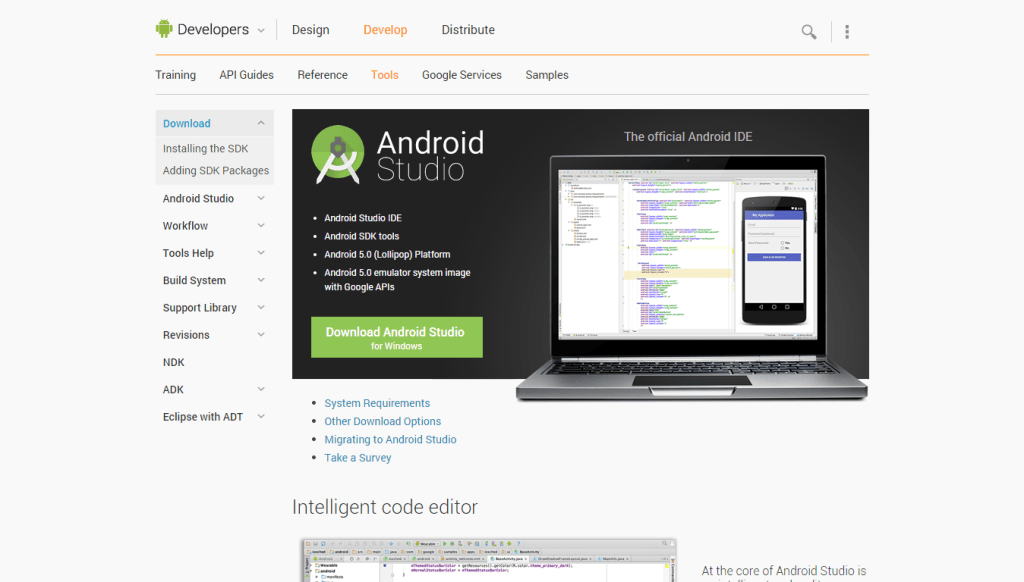
The Android SDK is a good example. It provides libraries and APIs, but it also includes build tools, debugging utilities, platform packages, emulators, device tools, and other components needed to create Android applications.
Game engines, robotics platforms, embedded systems, cloud providers, payment processors, and semiconductor companies can all publish SDKs containing different combinations of tools depending on what developers need to build.
SDKs are often installed like packages
Modern SDK components are often distributed through package managers. A Python SDK might be installed with pip, a JavaScript SDK through npm, a Java dependency through Maven or Gradle, and a .NET SDK package through NuGet.
That connects directly with our 2025 overview of Python’s pip package manager. Installing a vendor SDK can look like installing any other package, but what arrives may include API clients, authentication helpers, models, retry logic, and utilities specifically designed for that platform.
An SDK can depend on multiple APIs
An SDK does not have to map one-to-one with one API. A cloud SDK might expose storage, database, identity, logging, and compute services through one package family. Internally, those methods can call many separate APIs.
The SDK gives developers a more consistent programming experience even when the services behind it have different endpoints and request structures.
API vs. SDK in a payment app
Suppose you are building a checkout application.
- The payment API defines endpoints for creating charges, issuing refunds, and retrieving transaction records.
- The payment SDK may provide language-specific functions, authentication helpers, object models, error types, webhook utilities, testing tools, and example code that make those API endpoints easier to use.
Your application may depend on both at the same time: the API is the service interface, while the SDK is the developer toolkit that helps your code use that interface correctly.
API vs. SDK
| Question | API | SDK |
|---|---|---|
| What is it? | An interface or contract for software interaction | A toolkit for developing software on a platform |
| Main purpose | Expose functions, data, or services | Make development easier and more complete |
| Can it include code libraries? | The interface itself may be exposed through libraries or endpoints | Yes, commonly |
| Can it include a debugger? | Usually no | Yes |
| Can it include an emulator? | No | Yes |
| Can it exist without the other? | Yes | Yes, although SDKs often expose or wrap APIs |
| Typical example | REST endpoint | Android SDK or cloud-provider language SDK |
| Who uses it? | Software communicating with another system | Developers building software |
Where this fits in full-stack development
A full-stack developer may touch both concepts constantly. Front-end code calls APIs. Back-end services publish APIs. Cloud platforms provide SDKs. Mobile applications depend on platform SDKs. Authentication providers ship SDK libraries that wrap identity APIs.
BitcoinVersus was already documenting that broader learning path in our 2024 full-stack development article. Understanding the difference between an interface and a toolkit is one of the small concepts that makes a much larger software stack easier to understand.
Which one should you use?
If a service has a well-supported SDK for your programming language, the SDK can save development time by handling repetitive integration work. It may also provide safer defaults and more consistent error handling.
Direct API access can still be preferable when you need complete control, want to avoid a large dependency, are using an unsupported language, need a newly released endpoint that the SDK has not added yet, or want to understand exactly what is happening on the wire.
The easiest way to remember it
An API tells your software how to talk to another system. An SDK gives you tools to build software for that system.
The API is the interface. The SDK is the toolbox. In many modern platforms, the toolbox includes a convenient client for using the interface.
BitcoinVersus.Tech Editor’s Note: API and SDK are broad software-engineering terms. Their exact packaging varies by platform. Some SDKs are small client libraries, while others include compilers, emulators, debuggers, build systems, command-line tools, documentation, and multiple API clients.
Follow BitcoinVersus.Tech for software, APIs, cloud computing, Linux, networking, firmware, data centers, semiconductors, and emerging technology.
Support independent technology reporting: Bitcoin donations help fund BitcoinVersus.Tech research and publishing.
Disclaimer: BitcoinVersus.Tech provides technology news and education for informational purposes only.


Leave a Reply